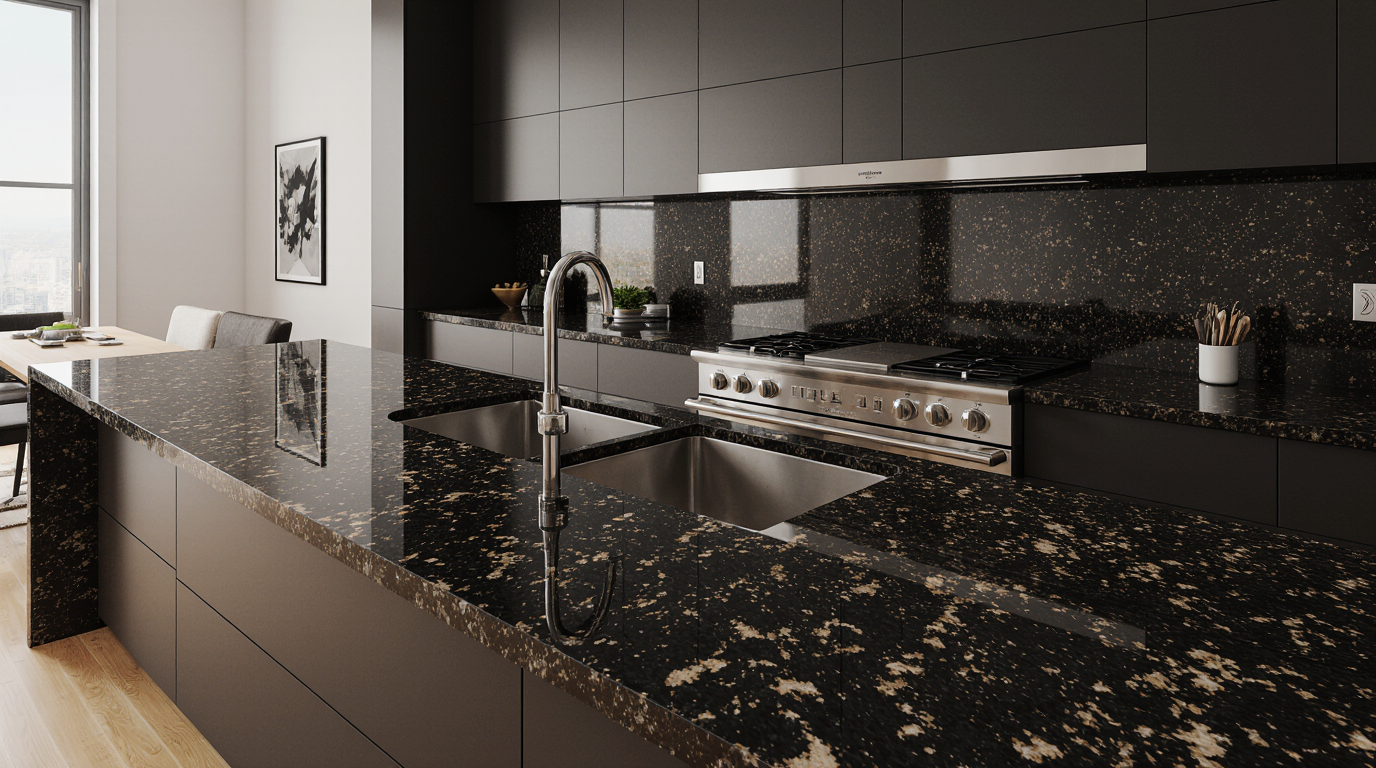
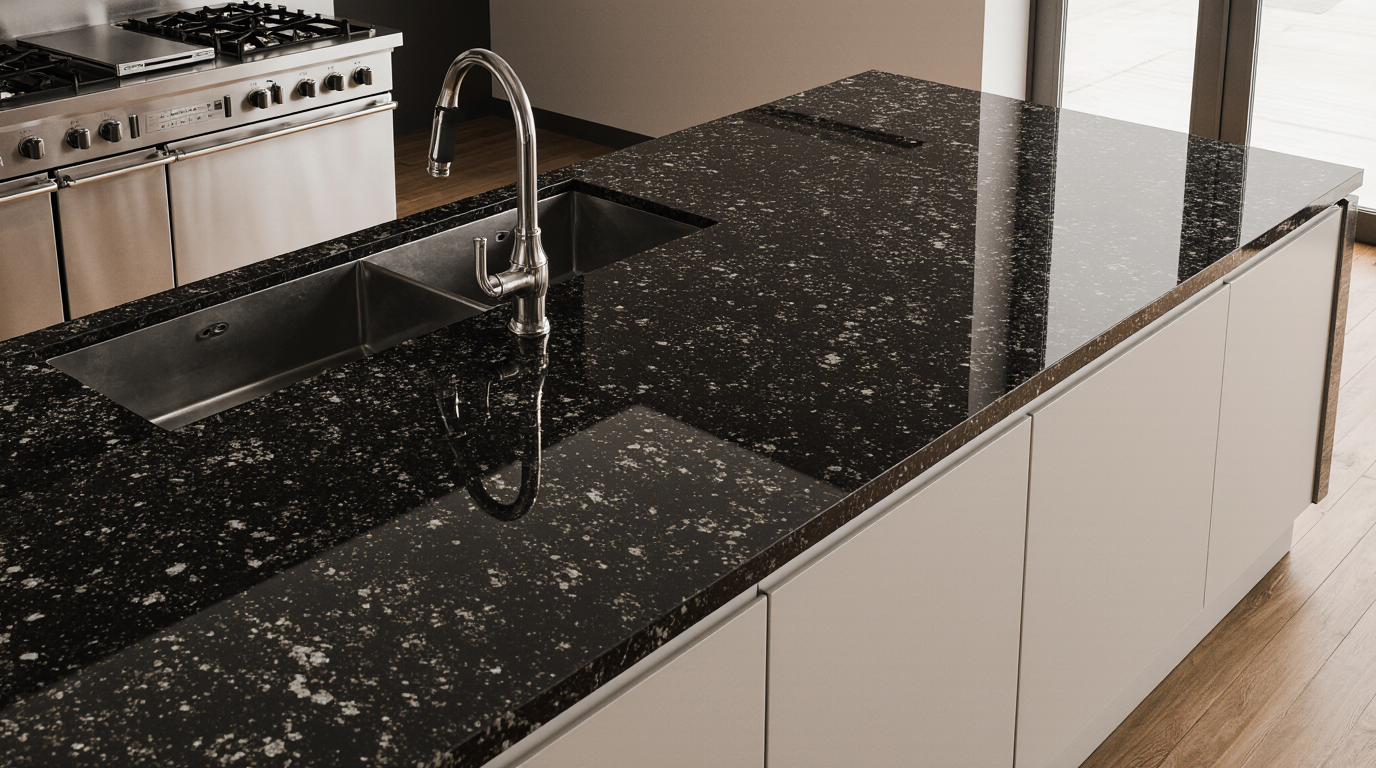
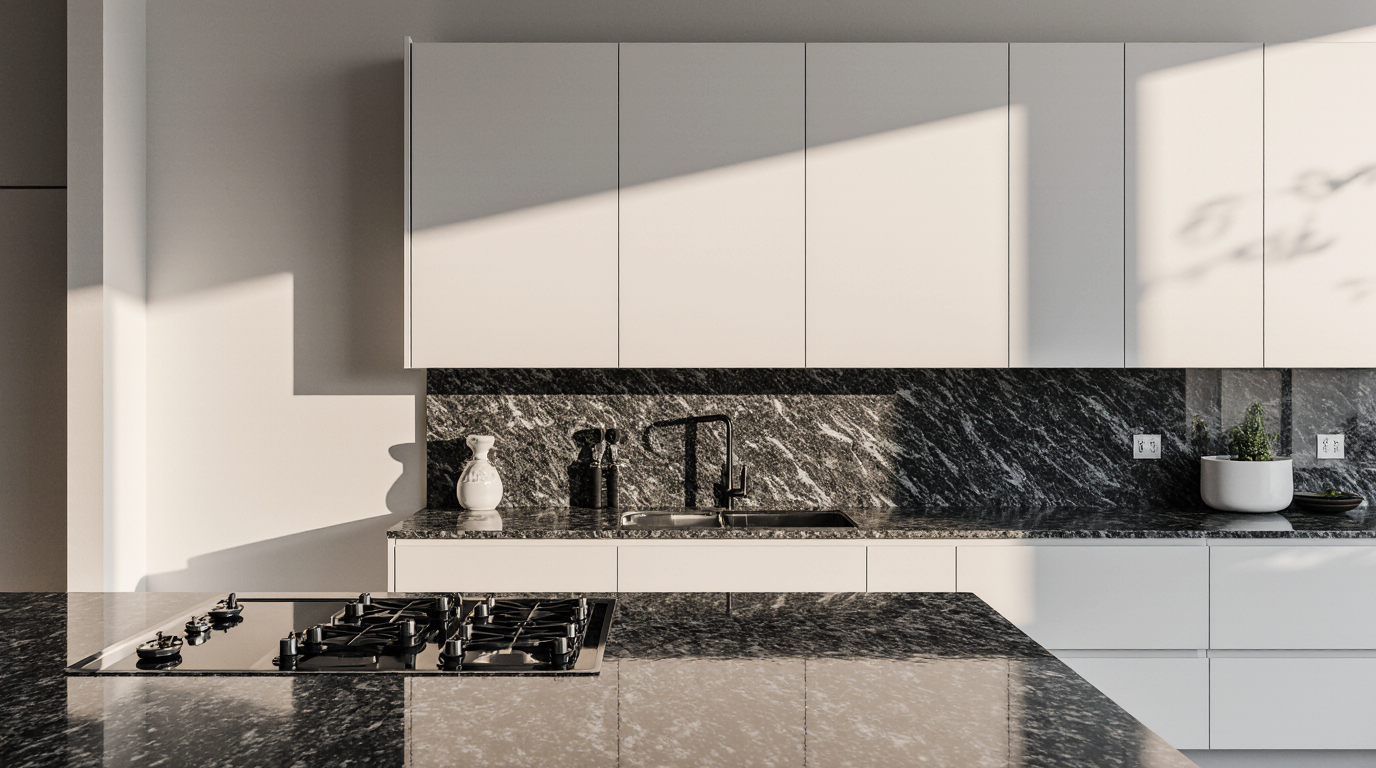
When I see Black Galaxy granite specified for a kitchen in Sarasota County, my first thought isn't about its stunning
When I see Black Galaxy granite specified for a kitchen in Sarasota County, my first thought isn't about its stunning copper flecks; it's about the cabinetry underneath. I've been called to too many properties, from Siesta Key condos to homes in The Lake Club, to fix cabinet doors that have swollen from humidity and refuse to close properly, compromising the entire aesthetic of the expensive stone. The root cause is almost always the use of standard MDF or particleboard cores that act like a sponge in our coastal air, a fatal flaw when paired with a heavy, unforgiving material like granite.
My non-negotiable protocol involves engineering the cabinet boxes with a marine-grade plywood core, the same material trusted in shipbuilding. More critically, I implement a three-stage sealing process on every single cut edge before assembly. This isn't a standard practice, but it's what creates a completely impervious barrier against the moisture and salinity we face, especially in waterfront properties. This method doesn't just prevent swelling; it ensures the structural integrity needed to support a heavy granite slab for decades without any sagging or joint failure.
The result is cabinetry that performs as flawlessly as the Black Galaxy granite looks. It's the difference between a kitchen that looks good for a year and one that maintains its precision and function through countless Florida summers. The visual alignment of doors and drawers remains perfect, and the investment is protected against the specific environmental challenges of living on the Gulf Coast.
Diagnosing the Architectural Space for Black Galaxy
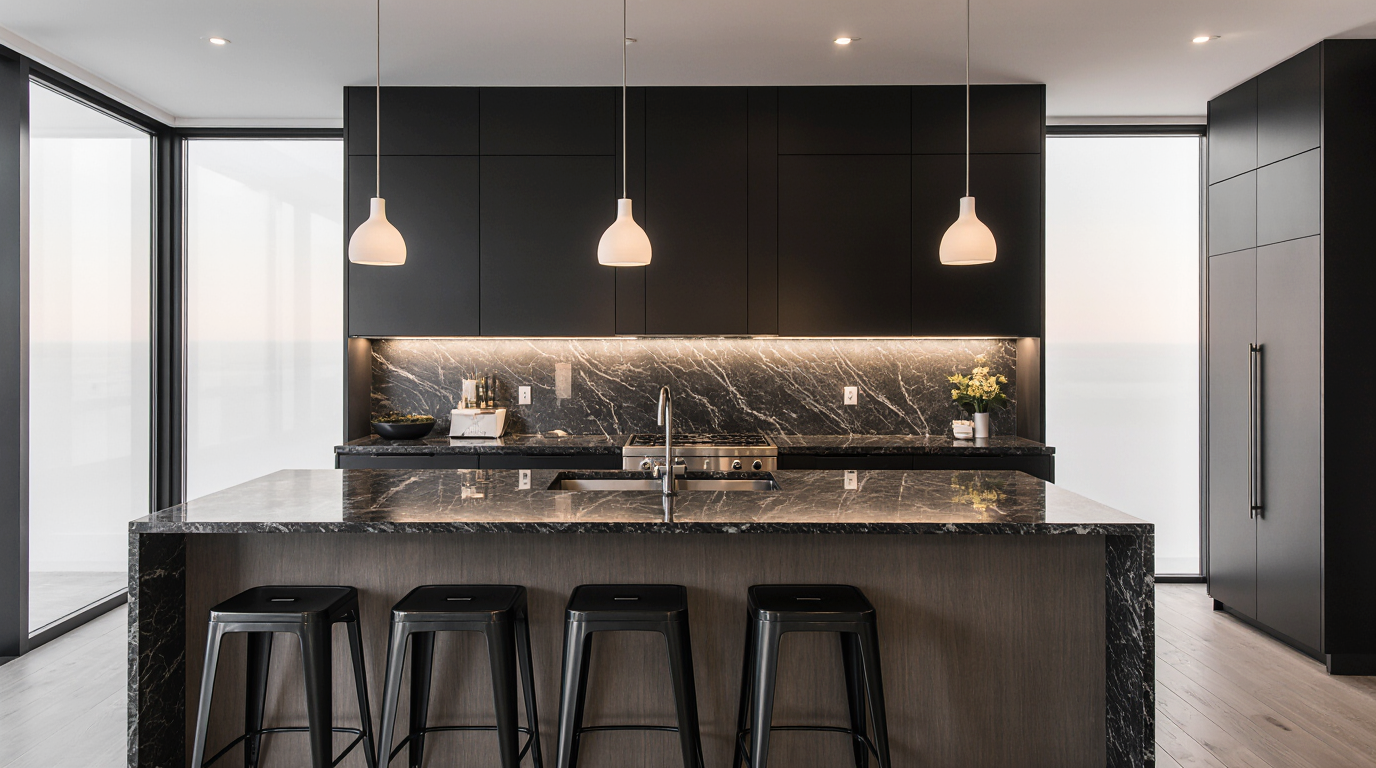
Before a single piece of wood is cut, my process begins with an analysis of the home's specific environment and light. In a modern Lakewood Ranch home with expansive windows, the natural light can make Black Galaxy's copper flecks appear brilliant and active. For these spaces, I often recommend a matte or satin finish on the cabinetry to prevent visual competition. Conversely, in a Mediterranean revival home in a more shaded area of Sarasota, the same granite can appear muted. Here, I engineer integrated LED under-cabinet lighting at a specific color temperature (around 3000K) to bring the stone's character to life, ensuring it doesn't become a monolithic black void.
The Technical Deep-Dive: Materials and Hardware Specification
The success of the project hinges on components the client will never see. While a marine-grade plywood core is the foundation, the adhesives and hardware are just as critical. I exclusively use Type 1 PVA adhesives for all joinery, as their waterproof properties provide a secondary defense if the outer sealant is ever compromised. For hardware, the standard zinc-plated options from big-box stores will corrode within two years on a Lido Key property. My standard specification is 316 stainless steel for all hinges and drawer slides, which offers maximum resistance to the salt-laden air, ensuring smooth, silent operation for the life of the kitchen. This material choice increases the lifespan of the cabinet's functional hardware by over 300% in our local climate.
Fabrication and Installation: A Zero-Tolerance Process
My fabrication process is built around precision to properly support a dense stone like Black Galaxy. Once the design is finalized, every component is cut via CNC for accuracy within a hundredth of an inch. The assembly follows a specific protocol:
Reinforced Cabinet Boxes: All base cabinets designed to sit under the granite are built with integrated solid wood stretchers at the top front and back. This provides a crucial structural web that prevents the cabinet from racking or bowing under the stone's immense weight, a common failure point I've observed in mass-produced cabinetry.
Edge Banding and Sealing: Every raw edge of the plywood is sealed before the final veneer or paint is applied. This meticulous, time-consuming step is the single most effective defense against moisture wicking into the wood core.
Assembly with Pocket-Hole Joinery: I utilize high-strength pocket-hole joinery, which creates an incredibly strong mechanical bond. This is superior to the simple dowel or staple construction found in lower-quality cabinets, which can loosen over time with humidity fluctuations.
Final Installation and Precision Tuning
The final stage on-site is about accommodating the realities of a building. Walls are rarely perfectly plumb or straight. I use a technique called back-scribing, where the back edge of the cabinet is custom-trimmed to match the exact contour of the wall, creating a seamless, built-in look with no unsightly gaps. After the cabinets are installed and leveled to a 1/32-inch tolerance, I perform a final adjustment of all door and drawer alignments. This ensures that every reveal is perfectly consistent, a detail that is immediately noticeable when framing a high-contrast stone like Black Galaxy.
Is your current cabinetry designed with this level of material science and engineering, or is it merely a decorative box fighting a losing battle against Sarasota's climate?
Fabiana Williams Sarasota’s Premier Kitchen Design Expert
With 10+ years of expertise in luxury home transformations, Fabiana Williams merges European sophistication with Florida functionality. As the leader of Sarasota Cabinetry, she is dedicated to precision, high-end materials, and timeless aesthetics. Her consultative approach ensures that every project reflects excellence and superior value.
By: Fabiana Williams – Expert Kitchen Design Consultant in Sarasota
Tags
price of granite countertops
affordable granite countertops
discount granite countertops
discount granite countertops near me
average cost of granite countertops
Black Galaxy Granite Countertops in Sarasota FL
?Will installing Black Galaxy Granite Countertops ruin the look and feel of my kitchen?
In my experience with high-end kitchen renovations, Black Galaxy Granite Countertops enhance the overall aesthetic and increase the property value. With proper installation, the countertops can last for decades without compromising the kitchen's appearance. Durability and longevity are key benefits of this premium material. Most homeowners underestimate the impact of a well-designed countertop on the overall kitchen ambiance, and Black Galaxy Granite is a game-changer in this regard.
?What makes Black Galaxy Granite Countertops a better choice than other materials?
After working on numerous kitchen renovation projects, I've found that Black Galaxy Granite outperforms other materials in terms of stain resistance and heat tolerance. Its unique veining pattern also adds a touch of sophistication to any kitchen design. When choosing between Black Galaxy Granite and other options, consider the long-term benefits and the potential return on investment.
?What's the typical process for installing Black Galaxy Granite Countertops?
The installation process for Black Galaxy Granite Countertops generally takes 3-5 business days, depending on the complexity of the project. Our team will measure and template the countertops, fabricate them in our workshop, and then install them in your kitchen. We'll also ensure a seamless transition between the countertops and other kitchen features.
?How much will it cost to install Black Galaxy Granite Countertops in my kitchen?
The cost of Black Galaxy Granite Countertops can vary depending on the size of your kitchen and the number of countertops needed. On average, you can expect to pay between $80 and $150 per square foot, depending on the complexity of the design and the materials required. We'll provide a detailed quote for your specific project after assessing your kitchen's needs.
?What kind of warranty or guarantee do you offer for your Black Galaxy Granite Countertop installations?
We offer a 5-year warranty on all our Black Galaxy Granite Countertop installations, covering defects in materials and workmanship. Our team is committed to ensuring your satisfaction with the final product, and we'll work with you to address any issues that may arise during the warranty period.
?How long does it take to install Black Galaxy Granite Countertops near me?
The installation time for Black Galaxy Granite Countertops typically ranges from 3-5 business days, depending on the complexity of the project and the size of your kitchen. Our team will work efficiently to minimize disruptions to your daily routine, and we'll ensure that the final product meets your expectations.
?Are Black Galaxy Granite Countertops worth the investment?
In my experience, Black Galaxy Granite Countertops are a worthwhile investment for homeowners who value durability, aesthetics, and increased property value. While the upfront cost may seem high, the long-term benefits and return on investment make it a smart decision for those who prioritize quality and style in their kitchen design.
?How do I care for and maintain my new Black Galaxy Granite Countertops?
To maintain the beauty and longevity of your Black Galaxy Granite Countertops, regular cleaning and sealing are essential. We recommend applying a food-safe sealant every 6-12 months to protect the surface from stains and spills. Additionally, avoid using harsh chemicals or abrasive cleaners, as they can damage the material.
Need pool services?
Contatct us for a free quote
Black Galaxy Granite Countertops in Sarasota FL
Explore other versions and models available in your area.
Reviews · Black Galaxy Granite Countertops in Sarasota FL
See what other customers say and share your experience.
Leave a comment
It takes less than a minute. Your feedback helps others.
Latest Comments
D
Daniel White
People often overlook how much the edges of black galaxy granite countertops get damaged over time from daily wear and tear, which can really affect their overall appearance.
L
Laura Lewis
I've had my Black Galaxy Granite Countertops for years now and I gotta say, they still look stunning - the durability is insane too.
Get Your Free Quote
Join 300+ happy homeowners in Sarasota.
Takes less than 60 seconds. Your data are safe with us.
Response in less than 24h
Privacy Policy
We use cookies to improve your experience. By clicking "Accept", you consent to our use of cookies.