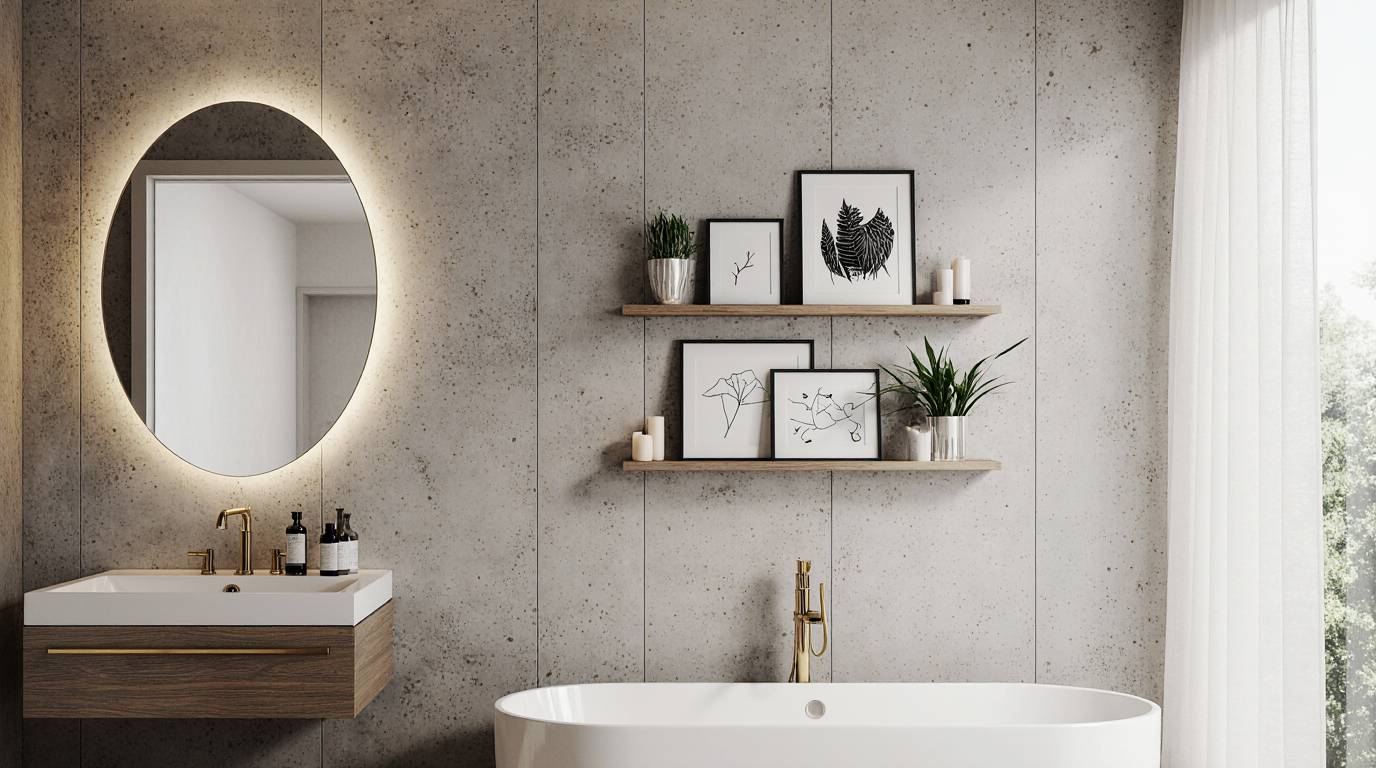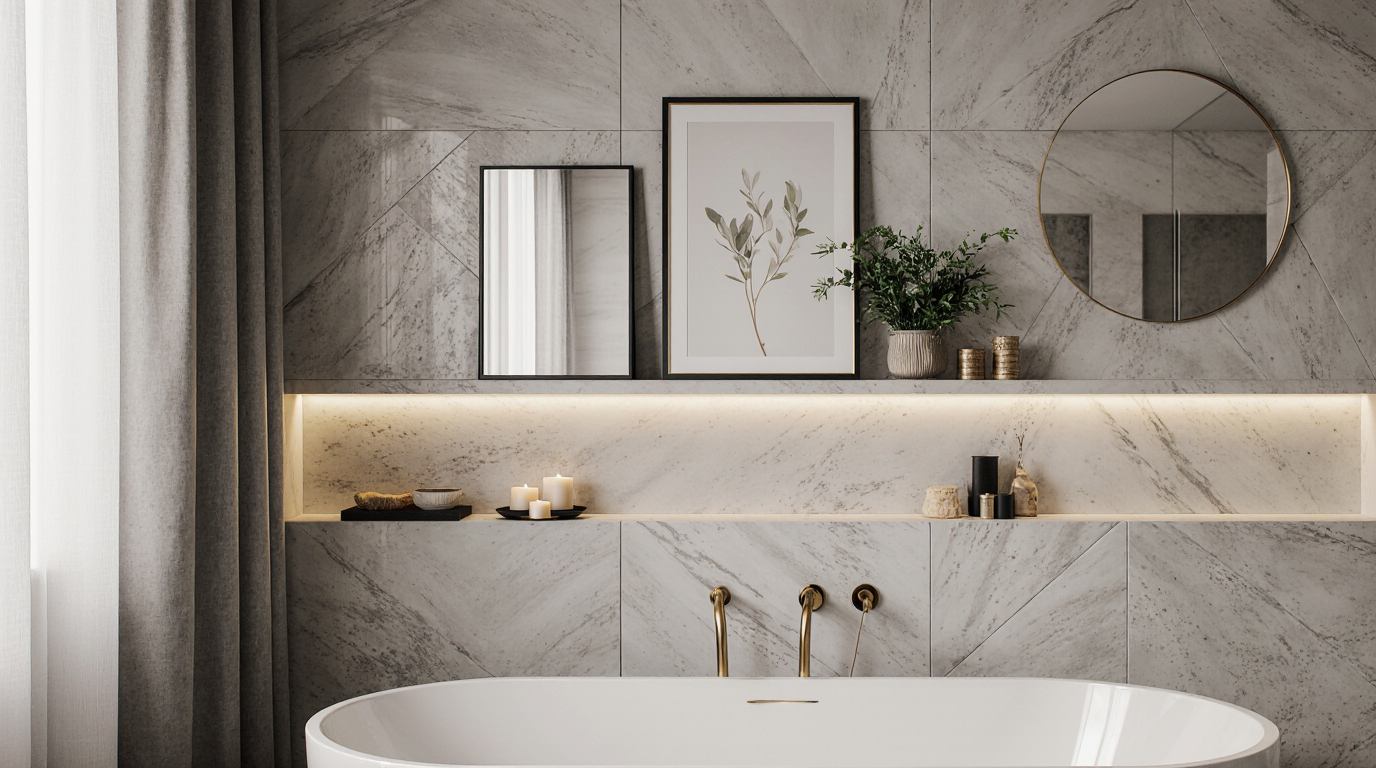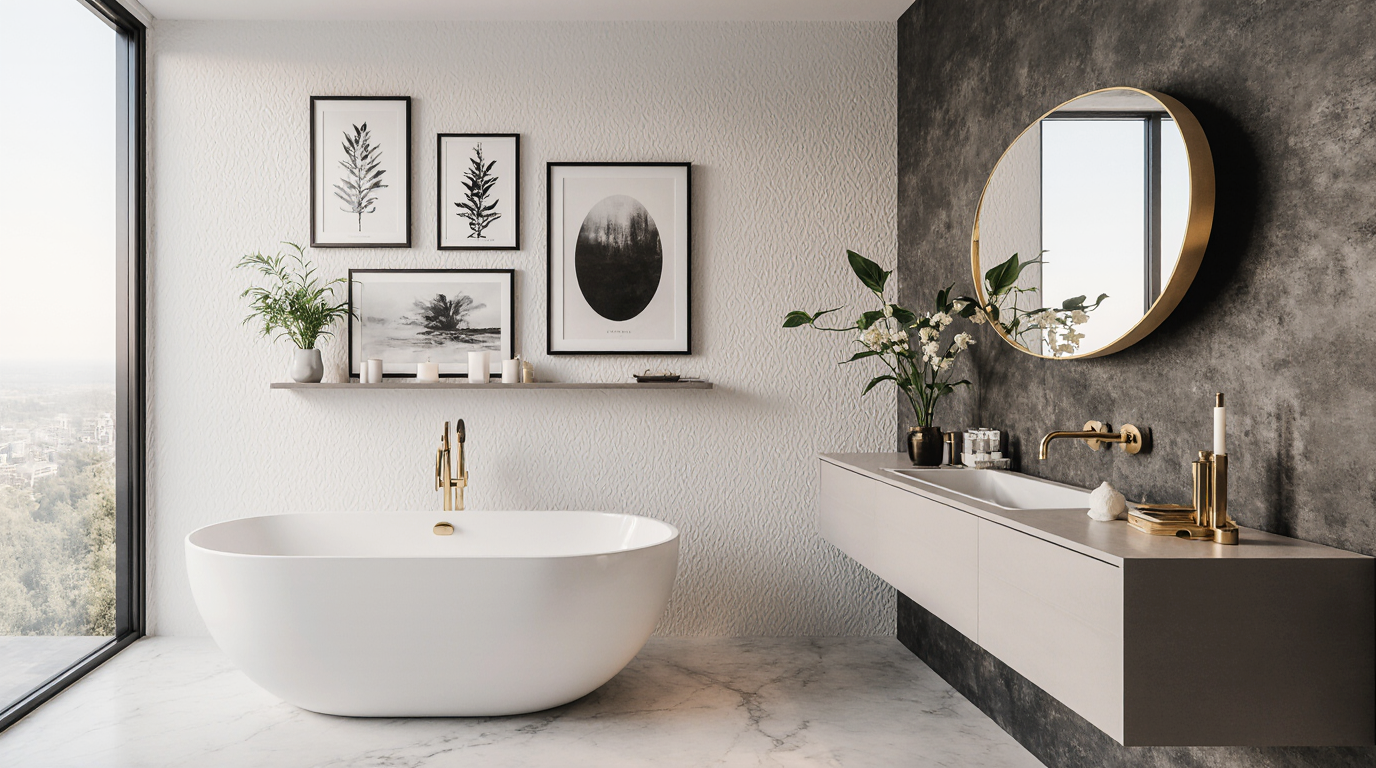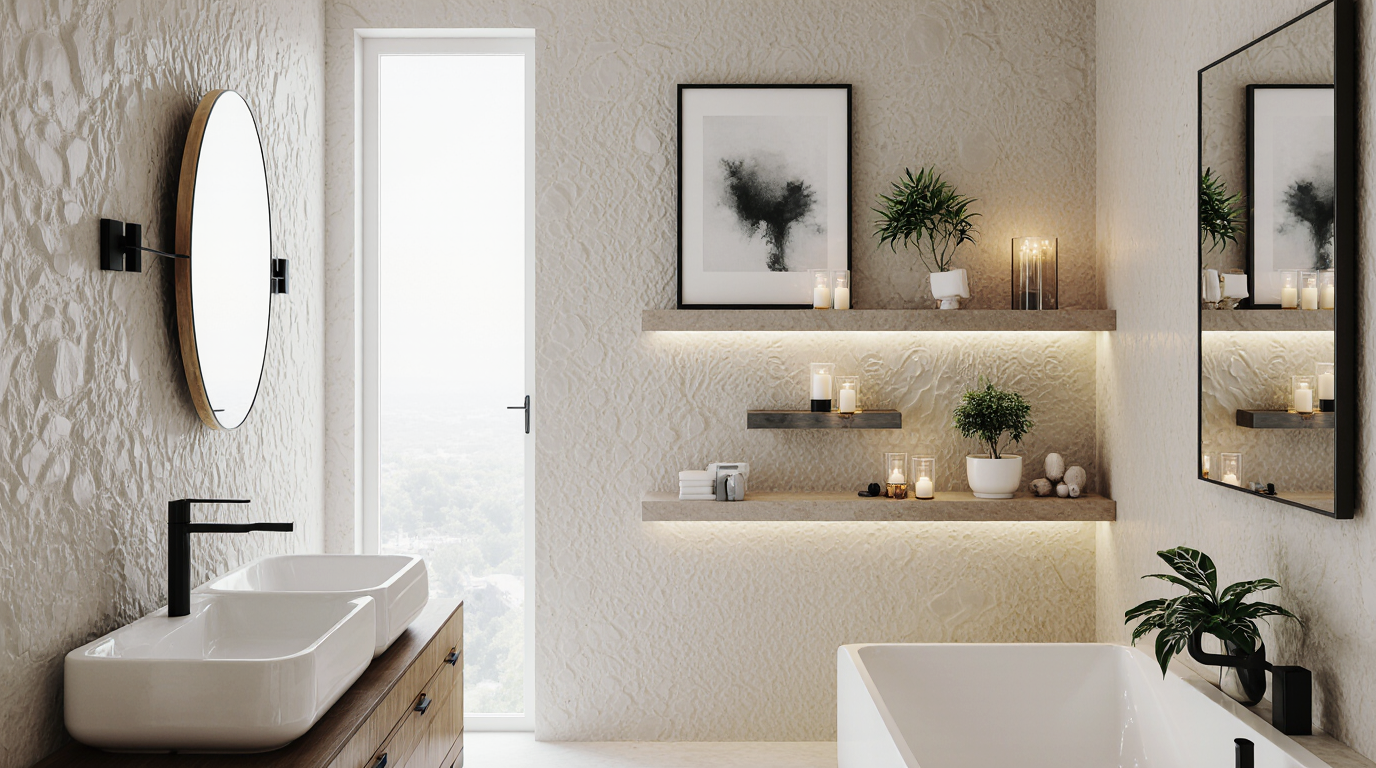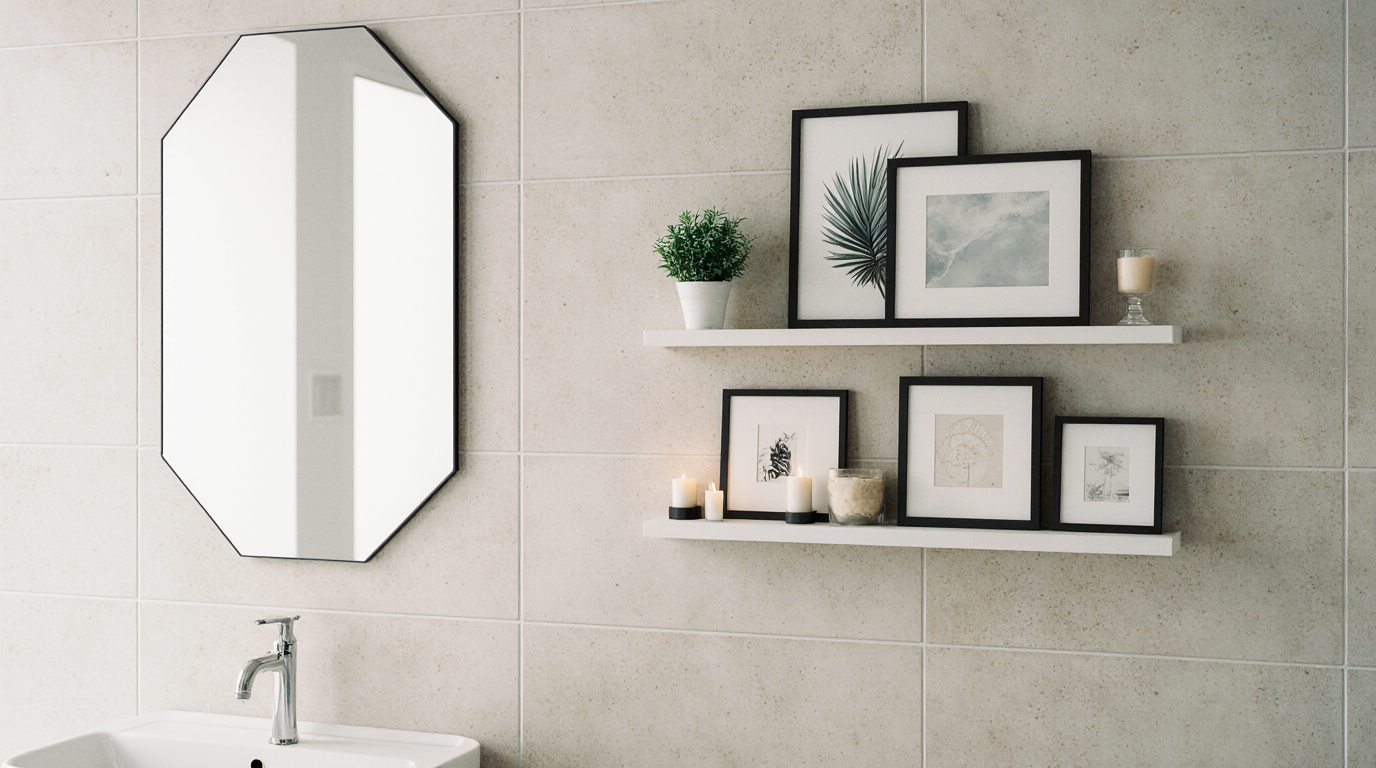
The most critical decision for bathroom wall decor in Sarasota isn't the color, the pattern, or even the material itself. It’s the wall preparation and waterproofing system behind it. I’ve seen more high-end tile and stone projects fail from moisture intrusion due to a poorly prepared substrate than from any other cause. What you don’t see is what determines the longevity of what you do see, especially in our humid Gulf Coast environment.
Your Executive Summary for Sarasota Bathroom Walls
From my 15 years working on projects from historic downtown condos to new builds on Longboat Key, success with bathroom
From my 15 years working on projects from historic downtown condos to new builds on Longboat Key, success with bathroom walls here hinges on a climate-first approach. We fight a constant battle against humidity, salt, and potential mildew. Aesthetics are important, but they must be built on a foundation of moisture management. The goal is a finish that looks pristine not just on day one, but after five years of Sarasota summers.
- Waterproofing is Non-Negotiable: A topical, liquid-applied waterproofing membrane (like RedGard or Schluter-KERDI) over cement backer board is the standard of care, even outside the direct shower area.
- Material Performance Over Trends: Prioritize materials with low porosity and inherent moisture resistance, such as porcelain tile, quartz slabs, or high-quality vinyl wallpaper designed for wet environments.
- Ventilation is Part of the System: A high-CFM (Cubic Feet per Minute) exhaust fan, properly sized and vented directly outside, is as crucial as the wall material itself.
- HOA Pre-Approval is Mandatory: In many Sarasota communities, particularly condos, wall modifications require review by an architectural committee, which can add 30-60 days to your project timeline.
The Planning Failures That Lead to Costly Redos
The most common missteps I see in Sarasota are born from underestimating our environment. Homeowners select materials based on photos from magazines or projects in dry climates, and the results are predictably disappointing. The focus must shift from pure design to durable design engineering.
The Single Most Expensive Mistake: Ignoring Substrate and Ventilation
The costliest error is applying a premium finish over an inadequate substrate. I was called to a project on Siesta Key where a client had beautiful, large-format marble slabs installed on their master bathroom walls. Within two years, dark spots and mildew were blooming through the grout lines. The installer had used standard moisture-resistant drywall (“green board”) instead of a fully waterproofed cement board system. The constant humidity had saturated the gypsum core, creating a perfect environment for mold. The fix required tearing out thousands of dollars of marble to address the hidden failure. The true cost was not just the material, but the complete demolition and reinstallation, all because the initial $800-$1,200 investment in proper waterproofing was skipped.
The Process for a Humidity-Proof Wall Project
A successful bathroom wall project in Sarasota is a multi-step process that front-loads technical planning. It’s less about picking colors and more about building a sealed, resilient envelope that can handle our climate’s demands, especially for those with small bathrooms where steam and moisture concentrate.
Key Selection Criteria for Sarasota Homeowners
When evaluating options, your checklist must be localized. What works in Arizona will fail here. I guide clients to filter their choices through these specific lenses:
- Salt Air Corrosion Resistance: For any metallic finishes or fixtures (including mirror frames), are they rated for coastal environments or made of 316L stainless steel, solid brass, or a marine-grade powder coat?
- VOC Content and Mildew Inhibitors: Does the paint or adhesive contain low volatile organic compounds (VOCs) and high-quality mildewcides? Florida's humidity accelerates the off-gassing of chemicals and provides a breeding ground for mold.
- HOA Compliance Documentation: Can the contractor provide a clear scope-of-work document and material specification sheet formatted for a typical Sarasota HOA or condo association review?
- Wind-Borne Debris Code Impact: If the bathroom has an exterior window, does the wall design interfere with or properly integrate with hurricane shutter anchor points or impact window frames? This is a Florida Building Code consideration often overlooked in purely aesthetic plans.
Comparing Wall Finishes for a Sarasota Bathroom
Choosing a wall finish involves a trade-off between upfront cost, long-term durability, and maintenance. The table below outlines the practical realities for our local market, where humidity is the primary adversary.
| Wall Finish | Typical Cost (Installed) | Humidity/Mildew Resistance | Long-Term Maintenance |
|---|---|---|---|
| High-Quality Acrylic Paint (Bath/Spa Formula) | $4 - $7 per sq. ft. | Good, but requires pristine ventilation and regular cleaning. Susceptible to surfactant leaching. | Repainting every 3-5 years is common to maintain appearance and mildew resistance. |
| Porcelain/Ceramic Tile | $15 - $40+ per sq. ft. | Excellent. The material is impervious, but grout lines are the weak point and require sealing. | Minimal. Grout may need periodic deep cleaning or resealing every few years. |
| Solid Surface Slabs (e.g., Quartz) | $60 - $150+ per sq. ft. | Superior. Non-porous and seamless, eliminating grout lines where mold can grow. | Extremely low. Simple cleaning is all that's required. The ultimate low-maintenance solution. |
When Tile or Slabs Are Not the Right Choice
Despite their durability, solid surfaces aren't always the best fit. For a historic home in Gillespie Park, a client wanted to preserve the original plaster walls. Tiling over them would have been destructive and out of character. In this case, we opted for a specialized mineral-based paint that allows the walls to breathe, coupled with a significantly upgraded ventilation system. The trade-off was accepting higher maintenance for the sake of historic preservation, a conscious choice that made sense for that specific project.
A Safe Hiring and Installation Checklist
Vetting a contractor in Florida goes beyond checking for a license. You need someone who understands our specific building science challenges. I advise clients to use this checklist before signing any contract.
- Verify the contractor holds a current, state-issued Certified Building or Residential Contractor license, not just a local business license.
- Request proof of both General Liability and Workers' Compensation insurance specific to Florida.
- Ask for project examples in coastal or waterfront properties on Siesta Key or Lido Key, and inquire specifically about their waterproofing methods.
- Ensure the written proposal details the substrate preparation and waterproofing product to be used by brand name (e.g., Schluter-Systems, LATICRETE Hydro Ban).
- Confirm the plan for ventilation, including the CFM rating of the fan and the exhaust route.
- Clarify who is responsible for preparing and submitting the design package to your HOA or condo board.
- The contract should reference compliance with the current Florida Building Code, particularly Chapter 7 regarding moisture protection.
Decisions That Determine the Outcome
Two clients can start with the same budget and the same bathroom, yet end up with vastly different outcomes. The difference lies in a few key decisions made early in the process, long before a single tile is purchased.
The Exact Moment Most Homeowners Get It Wrong
The critical mistake happens at the very beginning: falling in love with a decorative vanity mirror or a specific tile and trying to force the project to revolve around it. The correct approach is the opposite. First, you must solve the technical challenges of the space—waterproofing, ventilation, and lighting. Once you have a plan for a durable, dry, and well-lit “box,” you can then select the finishes that fit within that proven system. Starting with the decorative elements almost guarantees that the technical necessities become afterthoughts or budget casualties.
Practical Answers for Bathroom Projects in Sarasota
Navigating the local specifics of a renovation can be frustrating. Here are answers to common operational hurdles I see on projects throughout Sarasota County.
What Are Typical HOA Design Review Requirements?
Most Sarasota HOAs, especially in communities like Palmer Ranch or in downtown condos, require a formal submission for any bathroom wall modifications. This package usually needs to include detailed drawings, a list of all materials (including waterproofing products), the contractor's license and insurance, and a project timeline. The review process itself can take anywhere from two weeks to two months. Failure to get prior approval can result in fines and a stop-work order.
Does a Simple Wall Refinish Require a Permit?
Generally, cosmetic updates like painting or installing wallpaper do not require a permit from Sarasota County. However, if your project involves moving or altering plumbing, electrical wiring (like adding a new vanity light), or changing any structural elements, a permit is absolutely required. If you are replacing drywall with tile backer board, it's a gray area, but best practice is to confirm with the Sarasota County Permitting office. When in doubt, a quick call can save you a massive headache.
How Does the Florida Building Code Affect Wall Anchoring?
A key provision of the FBC, especially in our High-Velocity Hurricane Zone (HVHZ) adjacent region, relates to how heavy items are secured. A heavy, decorative vanity mirror or floating shelves cannot simply be anchored into drywall. The code implicitly requires secure fastening to structural members (studs). For very heavy items like stone slabs or oversized mirrors, I often engineer additional blocking within the wall framing before the walls are closed up. This ensures the decor can withstand vibrations and structural shifts without becoming a hazard.