
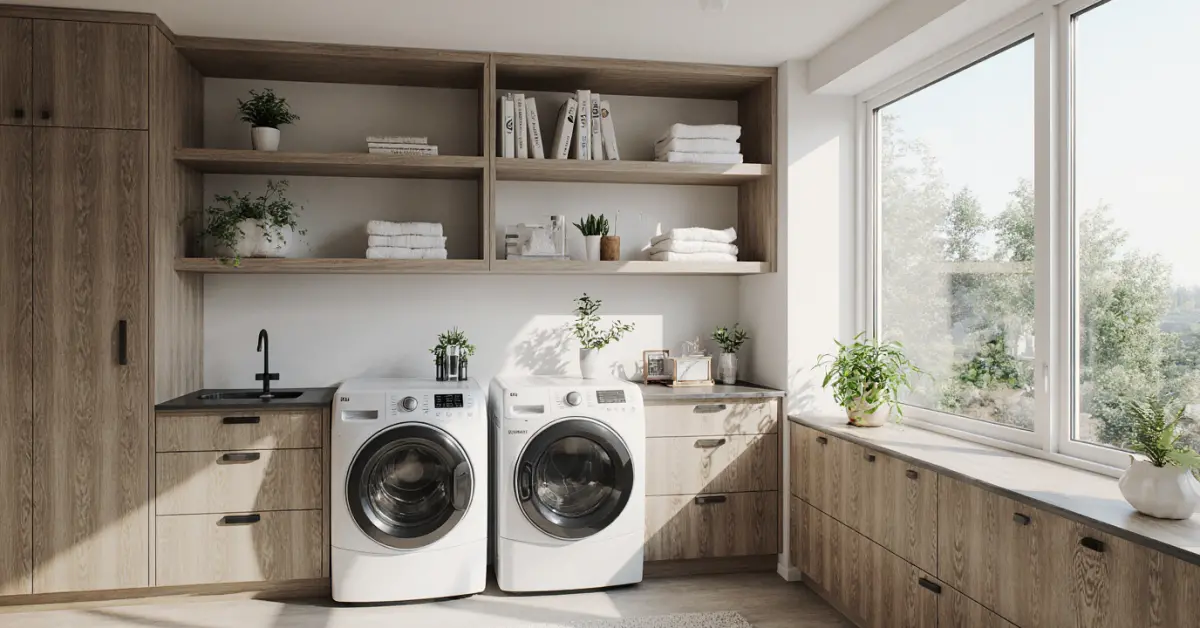
In Sarasota County, a standard mechanical permit for relocating a dryer vent can take up to 10 business days for review, and that’s before any HOA approvals. For a homeowner in a high-rise condo on Longboat Key, this isn't just a minor delay; it's a critical timeline constraint that dictates the entire project's feasibility. The real challenge in designing a bathroom-laundry combination here isn’t just fitting appliances into a tight space—it’s navigating the technical and regulatory hurdles imposed by our unique coastal environment.
Executive Summary: A Resilient Bathroom-Laundry Combo for the Sarasota Climate
From my hands-on experience designing these hybrid spaces from Palmer Ranch to Lido Shores, success hinges on moisture
From my hands-on experience designing these hybrid spaces from Palmer Ranch to Lido Shores, success hinges on moisture management, not just layout. A poorly planned combo room in our humid climate becomes a breeding ground for mold and premature material failure. The single most important factor is creating a sealed, well-ventilated envelope that can handle steam from the shower and heat from the dryer simultaneously. This requires a technical approach that many off-the-shelf design ideas simply ignore.
- Ventilation is Non-Negotiable: A high-capacity, humidistat-controlled exhaust fan (rated for at least 110 CFM) is the minimum requirement. Ventless heat-pump dryers are often a superior choice in condos where exterior venting is restricted.
- Material Selection is Defensive: Standard drywall and MDF cabinets will fail. The baseline specification should be moisture-resistant drywall (purple board), marine-grade plywood for cabinetry, and corrosion-resistant hardware.
- Waterproofing is Comprehensive: Waterproofing membrane must extend beyond the immediate shower area, often covering the entire floor and moving up the walls in the laundry zone to create a contained "wet room" environment.
- HOA and Condo Board Pre-Approval: In communities like The Landings or in downtown high-rises, noise and vibration from laundry units, along with venting plans, are major points of scrutiny that must be addressed with technical drawings before any work begins.
The Critical Planning Failures I See in Sarasota Projects
The most common mistakes in these projects are rooted in underestimating Sarasota's environmental pressures. Clients often focus on tile and fixture aesthetics while overlooking the foundational elements that prevent long-term damage. A frequent error is treating the laundry addition as a simple appliance install rather than a full-scale wet-room construction project, leading to compromised waterproofing and ventilation.
The Most Expensive Failure: Ignoring Airborne Salinity and Humidity
The costliest mistake I’ve seen is specifying standard interior-grade hardware and fixtures for a home west of the Trail or on the keys. A client on Siesta Key insisted on a particular designer faucet and cabinet pulls without checking their material composition. Within 18 months, the chrome was pitting and the internal hinges on the custom cabinets were showing surface rust from the constant salt in the air. The fix required replacing all hardware with 316-grade stainless steel, a 30-40% material cost increase that could have been incorporated initially for a fraction of the retrofitting and labor expense.
How a Combined Bathroom-Laundry Renovation Unfolds in Practice
A successful project follows a strict sequence, beginning with technical feasibility, not design. The first step is always a mechanical assessment to determine venting paths, electrical load capacity, and plumbing tie-ins. Only after confirming that the infrastructure can support both functions do we move to layout and material selection. This process prevents homeowners from investing in a design that is ultimately unbuildable or prohibitively expensive to execute.
Selection Criteria for a Sarasota-Based Contractor
Choosing the right team is crucial. When vetting contractors for a bathroom laundry room combo, a generic portfolio isn't enough. Your decision should be based on their specific experience with our local conditions.
- Verifiable Experience in Coastal Homes: Ask for project addresses on Lido Key, Siesta Key, or Casey Key. A contractor who has successfully navigated the complexities of a waterfront build understands material science for salt-air environments.
- In-House Understanding of HOA Submittals: A team that has worked in Lakewood Ranch or Prestancia will know that HOA design review boards have specific requirements for noise insulation and plumbing modifications. They should be able to prepare the submittal package for you.
- Knowledge of Florida Building Code for Wet Areas: They must be able to explain the specific code requirements for electrical outlet placement near water sources (GFCI), waterproofing membrane standards, and ventilation CFM calculations.
- Relationships with Local Suppliers of Marine-Grade Materials: A contractor with established accounts at local specialty suppliers can source marine-grade plywood and corrosion-resistant fittings without the long lead times that can derail a project.
Comparing a Combo Design with Keeping Laundry Separate
For many Sarasota homes, especially condos and historic bungalows with limited square footage, combining the bathroom and laundry is a practical necessity. However, it's not always the best solution. The decision involves trade-offs in cost, convenience, and complexity. The primary benefit is space consolidation, but this comes at the cost of higher upfront construction expenses due to the intensive waterproofing and ventilation required.
| Factor | Bathroom-Laundry Combo | Separate Laundry Room/Closet | Garage Laundry |
|---|---|---|---|
| Upfront Cost | High (extensive plumbing, electrical, waterproofing, ventilation) | Moderate (standard construction) | Low (minimal finishing required) |
| Humidity/Mold Risk | Highest (requires mechanical mitigation) | Moderate (can be isolated) | High (poorly ventilated space) |
| Space Efficiency | Excellent (consolidates functions) | Good (requires dedicated footprint) | Poor (sacrifices garage utility) |
| HOA/Condo Approval | Most Complex (noise, venting, plumbing) | Simpler (standard renovation) | Typically straightforward |
When This Approach Is Not the Right Choice
A bathroom-laundry combo is a poor choice for large families or households with extremely high laundry volume. The constant operation of the machines can make the bathroom perpetually noisy, humid, and cluttered. In a home with young children, having the primary bathroom double as a high-traffic utility space can become a logistical nightmare. In these cases, even a small, dedicated laundry closet elsewhere in the home provides better separation of functions and preserves the bathroom as a quieter, more relaxing space.
A Safe Hiring and Installation Checklist
To protect your investment, your verification process must be rigorous and specific to our region. This checklist goes beyond checking licenses and insurance; it focuses on the technical competencies required for a durable build in Sarasota.
- Verify the contractor's license is active and in good standing with the Florida Department of Business and Professional Regulation (DBPR).
- Confirm they will pull a permit from Sarasota County. Unpermitted work is a massive liability for insurance and resale.
- Request a detailed scope of work that explicitly specifies the use of moisture-resistant drywall (e.g., USG Mold Tough® or equivalent), waterproofing membrane type (e.g., Schluter-KERDI), and cabinet box material (e.g., marine-grade plywood).
- Ensure the plan includes a dedicated, properly sized exhaust fan for the laundry area, separate from or supplemental to the shower fan, vented directly to the exterior.
- For homes in flood zones (common on the barrier islands), confirm all electrical outlets for the appliances are elevated according to local code requirements.
- Review the plan for sound dampening, using insulation in interior walls to isolate machine noise from adjacent bedrooms or living areas.
- Check that all specified metallic hardware, from hinges to drain covers, is rated for marine or high-humidity environments (e.g., 304 or 316 stainless steel, solid brass).
Decisions That Determine the Outcome of Your Project
The success of a bathroom-laundry project is sealed long before the first tile is laid. It’s determined by a series of early technical decisions that prioritize durability over pure aesthetics. I've observed that the clients who have the best outcomes are those who allocate a significant portion of their budget to what’s behind the walls—the waterproofing, the ventilation, the upgraded cabinet materials—rather than splurging on surface finishes and then cutting corners on the infrastructure.
The Exact Moment When the Majority Gets It Wrong
The critical mistake happens during the appliance selection phase. Most people choose their washer and dryer based on features, capacity, or brand loyalty. In Sarasota, especially in condos or homes with complex rooflines, the first and most important decision should be choosing the dryer type. Insisting on a standard vented dryer without a confirmed, code-compliant, and HOA-approved vent path is the single biggest source of budget overruns and project delays. A ventless, heat-pump dryer, while more expensive upfront, often saves thousands in construction costs by eliminating the need to core drill through concrete or install complex ductwork, making it the smarter financial choice in many local scenarios.
Practical Answers About Operations in Sarasota
Navigating the local bureaucracy and building codes is as important as the design itself. Here are the answers to common operational hurdles that can stall or complicate a bathroom-laundry project in this area.
How Do HOA Rules in Lakewood Ranch Affect My Design?
In a master-planned community like Lakewood Ranch, the Homeowners Association (HOA) design review committee has significant authority. For a bathroom-laundry project, their primary concerns are noise transmission to neighbors and any exterior modifications for venting. You will need to submit detailed plans showing sound insulation strategies for common walls and a precise diagram of any proposed exterior vent penetration, which must be aesthetically consistent with the building's exterior. The approval process can add 30-60 days to your project timeline, a fact that must be built into your schedule from day one.
What Does the Florida Building Code Mandate for Ventilation?
The Florida Building Code (FBC), Mechanical section, mandates that clothes dryer exhausts be ducted to the exterior. The code specifies maximum duct length and prohibits the use of combustible screw-type fasteners that can catch lint. For the bathroom component, the code requires mechanical ventilation. In a combined, high-moisture space, simply meeting the minimum CFM (Cubic Feet per Minute) rating is insufficient. Best practice in our climate is to install a humidistat-controlled fan that activates automatically when humidity exceeds a set point, ensuring the space is actively dried even when unoccupied.
Are There Special Requirements for Barrier Island Properties?
Yes, absolutely. For properties on Siesta, Lido, or Longboat Key, which fall into Coastal High-Hazard Areas or Wind-Borne Debris Regions, any renovation work is subject to stricter standards. Any exterior penetration for a dryer vent must be properly sealed and protected to maintain the building envelope's integrity against wind-driven rain. Furthermore, all cabinetry and fixtures must be anchored to meet structural load requirements, and materials must be chosen for their resistance to salt spray corrosion. Failing to specify marine-grade materials here isn't an aesthetic choice; it's a structural and financial imperative.

