The biggest mistake in sourcing affordable countertops in Sarasota isn't choosing the wrong material; it's choosing the right material from the wrong source. A Tier 1 quartz slab from a high-volume distributor often costs less per square foot and offers better long-term performance against humidity than a heavily discounted, exotic-looking granite from a small importer clearing out old stock. The real value is found in supply chain efficiency, not just a low initial price tag.
Executive Summary: Achieving Real Value in Sarasota's Countertop Market
From my direct experience installing countertops from Palmer Ranch to Lido Key, achieving affordability in Sarasota is
From my direct experience installing countertops from Palmer Ranch to Lido Key, achieving affordability in Sarasota is about balancing initial cost with long-term resilience to our specific coastal environment. A low price on a porous or UV-sensitive material is a recurring expense in disguise, leading to repairs or premature replacement. The key is to leverage high-quality, entry-level materials from major manufacturers that are engineered to withstand humidity and sun without the premium price of exotic natural stones.
- Focus on Engineered Materials: High-grade, entry-level quartz and certain solid surface composites offer the best combination of non-porosity, stain resistance, and consistent pricing.
- Verify UV Resistance: For kitchens with large windows or outdoor applications, confirm the material's UV stability to prevent fading, a common issue in sun-drenched Sarasota homes.
- Understand Fabrication Costs: The complexity of the edge profile and the number of cutouts (sinks, cooktops) can impact the final price more than the material itself.
- Factor in Long-Term Maintenance: A non-porous surface that requires no sealing offers a lower total cost of ownership than a cheaper natural stone that demands annual maintenance.
The Planning Failures That Inflate Your Countertop Budget
The most common budget overruns I see aren't from the material choice itself, but from failures in the planning stage. Homeowners often get a per-square-foot price and assume it's the final cost, only to be surprised by significant add-ons for fabrication, installation, and necessary site prep that were never discussed upfront.
Another frequent misstep is failing to coordinate the countertop template with the final cabinet installation. If cabinets are not perfectly level and secured, the templating will be inaccurate. This can lead to unsightly gaps, the need for excessive shimming, or even a complete re-fabrication, with the homeowner often bearing the cost of the mistake.
The Most Expensive Failure: Ignoring Humidity's Impact on the Substrate
The costliest error I've consistently witnessed in Sarasota is installing a beautiful new countertop over an old or inadequate plywood substrate. In our humid climate, standard particle board or MDF swells and degrades over time, causing the seams in the countertop above to shift, separate, or even crack. I was called to a project in the Gillespie Park area where a client had a stunning quartz countertop installed, only to see a hairline seam fracture within 18 months. The fabricator was blamed, but the real culprit was the original, moisture-compromised particle board sub-top that had swollen underneath, creating stress on the quartz. The fix required removing the entire countertop, replacing the substrate with marine-grade plywood (a cost of several hundred dollars), and paying for the labor to reset and refinish the top. This single oversight more than erased their initial savings from choosing a “discount” installer.
How Countertop Selection and Installation Works in Practice
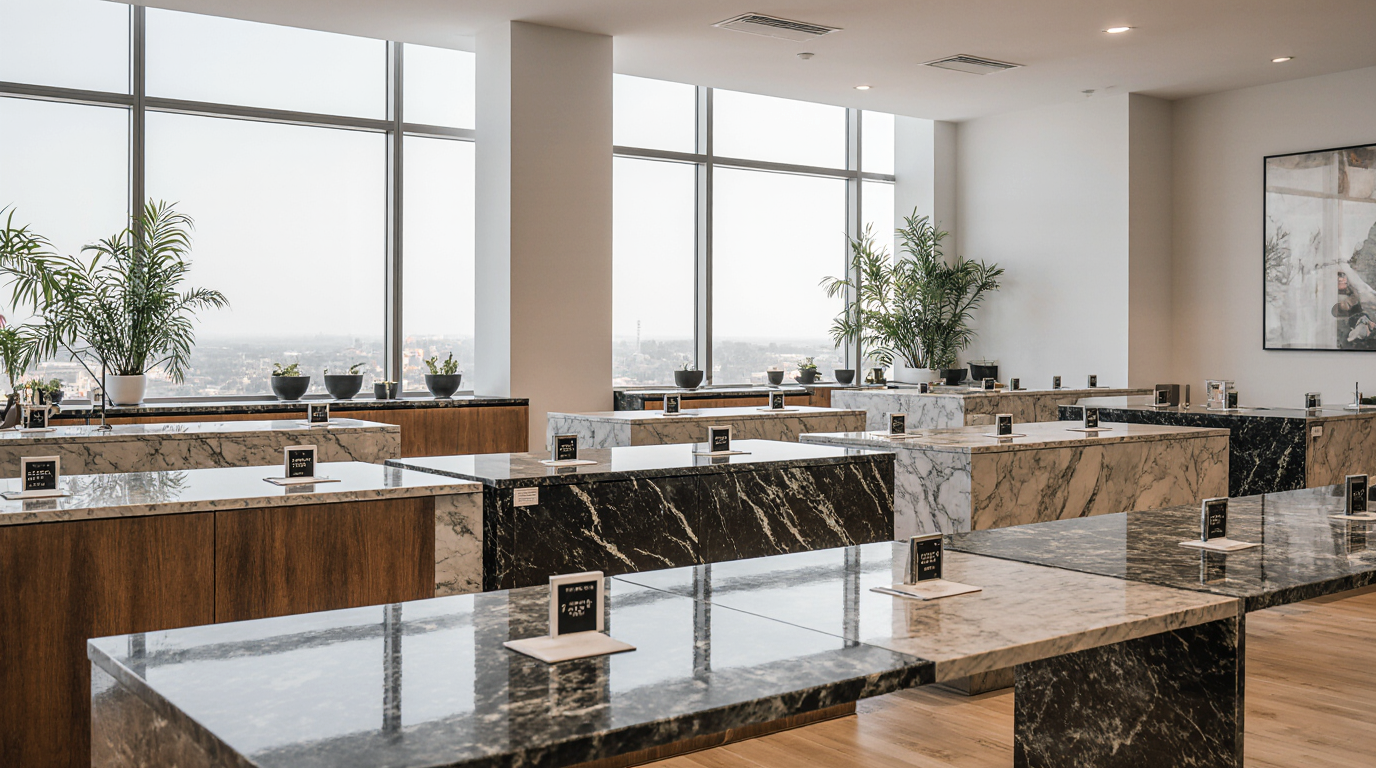
The process begins not in a showroom, but with a realistic assessment of your kitchen's use and location. Once you have a material category in mind, you'll typically visit a slab yard to select the exact piece of stone or quartz. A fabricator then creates a precise template of your cabinets, which is used to cut the slab. The installation itself is usually completed in a single day, but the entire process from selection to installation in Sarasota can take anywhere from three to six weeks, depending on slab availability and the fabricator's schedule.
Selection Criteria for Sarasota Homeowners
Choosing a countertop here requires a different mindset than in a dry, northern climate. Your evaluation should be weighted toward performance under specific local stressors.
- Non-Porosity is Non-Negotiable: Select materials like quartz, solid surface, or ultra-compact surfaces that don't require sealing. This prevents moisture intrusion and staining from humidity or spills, a constant battle in Florida homes.
- Consider Hurricane Code Compliance for Outdoor Kitchens: If you're installing countertops in a lanai or outdoor kitchen, especially west of I-75, the materials and their anchoring must meet standards for wind resistance. This often means using specific adhesives and mechanical fasteners.
- HOA Material and Color Palette Approval: For communities like Lakewood Ranch or The Founders Club, your countertop choice (especially if visible from the outside) may be subject to review by an Architectural Review Board. Get a sample approved before purchasing the slab.
- Assess Heat Resistance for Cooking Styles: If you frequently move hot pans directly from the stove, granite or sintered stone offers superior heat resistance compared to many quartz products, which can be damaged by thermal shock.
Comparing Affordable Countertop Materials for a Coastal Climate
The term "affordable" is deceptive if the material fails prematurely. The best choice balances upfront cost with durability against Sarasota's specific environmental challenges. Here’s how common options stack up when evaluated through a local lens.
| Material | Initial Cost (Installed) | Humidity & Stain Resistance | UV & Fading Resistance |
|---|---|---|---|
| Entry-Level Quartz | $55 - $75 / sq. ft. | Excellent (Non-porous) | Good to Fair (Varies by brand/color) |
| Level 1 Granite | $45 - $65 / sq. ft. | Fair (Requires sealing) | Excellent |
| Solid Surface (e.g., Corian) | $60 - $85 / sq. ft. | Excellent (Non-porous) | Good (Can be refinished) |
When a Low-Cost Countertop Is Not the Right Choice
I advise clients against opting for the cheapest available material if the home is a long-term residence or a high-value rental property. For a waterfront home on Siesta Key, for example, installing a low-grade granite that requires constant sealing to fight salt air and humidity will not only be a maintenance headache but can also detract from the property's resale value. In these cases, investing an additional 15-20% in a high-quality quartz or a dense natural stone is a financially sound decision that protects the larger asset.
Safe Hiring Checklist for Countertop Fabricators and Installers
Selecting the right installer is as important as selecting the right material. A great slab can be ruined by poor fabrication, and a perfect installation can be compromised by a lack of proper business credentials. Use this checklist to vet potential partners in Sarasota.
- Verify they hold a current license with the Florida Department of Business and Professional Regulation (DBPR) and carry both general liability and worker's compensation insurance.
- Ask for references from projects completed in your specific area (e.g., Palmer Ranch, Downtown, Longboat Key), as they will be familiar with local logistics and building types.
- Request a detailed quote that breaks down costs for the material, fabrication, edge detail, cutouts, tear-out of old tops, plumbing reconnection, and sales tax.
- Confirm their templating process. Modern fabricators use precise digital laser templating, which is far more accurate than traditional cardboard or wood strip methods.
- Inquire about their seam placement philosophy. A skilled fabricator will discuss where seams are necessary and use techniques to make them as inconspicuous as possible.
- Ask about their warranty. A reputable company will offer a warranty of at least one year on their installation labor, separate from the material manufacturer's warranty.
Decisions That Determine the Final Outcome and Cost
Two key decisions have an outsized impact on both the final cost and your long-term satisfaction. The first is your choice of edge profile. A simple, flat-polished edge is standard and cost-effective. More complex edges like ogee or bullnose can add $15 to $30 per linear foot to the fabrication cost. The second is sink style. An undermount sink requires a more complex, polished cutout and adds more to the cost than a simple drop-in sink.
I've seen clients try to save a few hundred dollars by opting for a cheaper fabricator, only to end up with poorly matched seams, an uneven overhang, or damage to their new cabinets during installation. The quality of fabrication and installation is not the place to cut corners. It's the one part of the job that ensures the beauty and longevity of the material you so carefully selected.
The Exact Moment When the Majority Gets It Wrong
The critical mistake happens right after selecting a slab. Most homeowners, excited by their choice, immediately sign a contract based on a square footage estimate. The correct next step is to pause and get a firm, final quote based on a physical or digital template of the actual cabinets. Cabinet runs are rarely perfectly straight, and walls are not always square. A quote based on a template is a fixed price; a quote based on an estimate is an educated guess that is almost guaranteed to change.
Practical Answers About Countertop Projects in Sarasota
Navigating a countertop project involves more than just design choices. Here are the answers to common operational questions that arise specifically within Sarasota County.
How Do HOA Rules in Planned Communities Impact My Choices?
In master-planned communities like Lakewood Ranch or The Lake Club, Architectural Review Boards (ARBs) or HOAs have guidelines that can affect your countertop project. While they rarely dictate interior material choices, they often have strict rules about work hours, contractor vehicle parking, and debris disposal. A project in one of these communities may require submitting your contractor's insurance and license to the HOA for approval, a process that can add a week or more to your timeline. Always check your community's covenants before starting work.
Is a Permit Required for a Countertop Replacement in Sarasota County?
Generally, a permit from Sarasota County is not required for a simple countertop replacement if you are not altering the plumbing or electrical layout. However, if your project involves moving a sink, adding a new outlet in the island, or changing the location of a cooktop, permits for plumbing and electrical work will be necessary. This is a critical distinction that can add several weeks and inspection fees to your project timeline. A reputable contractor will know exactly when a permit is triggered.
What's the Realistic Turnaround Time During Peak Season?
Sarasota's "peak season" from October to April significantly impacts project timelines. During these months, the demand from seasonal residents and new construction projects means that the lead time for countertop fabrication and installation can stretch from the typical 3-4 weeks to 6-8 weeks. If you are a seasonal resident aiming to complete a project during your stay, I strongly advise selecting your material and signing with a fabricator before you even arrive in Florida to secure a spot on their schedule. Waiting until you are here often means the project won't be finished before you leave.