Tiny Laundry Room Innovation: Maximizing Space with Elegance and Functionality
Designing a small laundry room presents a unique challenge that combines creativity, efficiency, and aesthetic appeal. Maximizing limited space can turn an ordinary laundry nook into a luxurious and organized zone. Beyond mere functionality, a thoughtfully designed laundry area increases home value and offers a pleasant, orderly workspace. Success in compact laundry design comes from clever storage solutions, high-tech appliances, and design strategies that make the room feel spacious and luxurious.
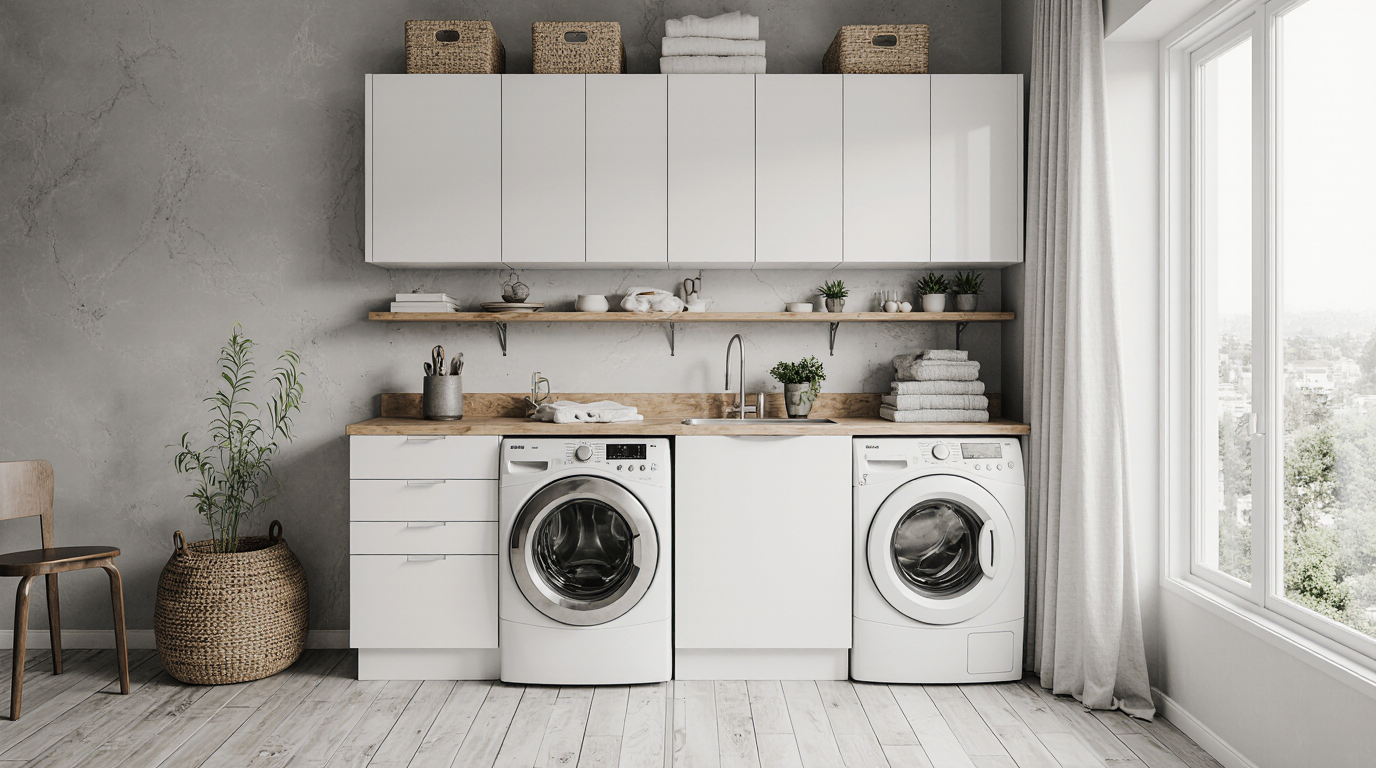
In compact spaces, the placement of appliances is critical. Stackable laundry machines optimize vertical space, leaving more room for functional surfaces and organizational solutions. High-efficiency models are particularly valuable, offering energy savings while maintaining excellent performance. Custom cabinetry integration ensures appliances blend smoothly with the room’s aesthetic, creating a clean, unified appearance. Custom cabinets around stacked washers and dryers optimize storage, hide supplies, and keep the laundry room visually tidy.
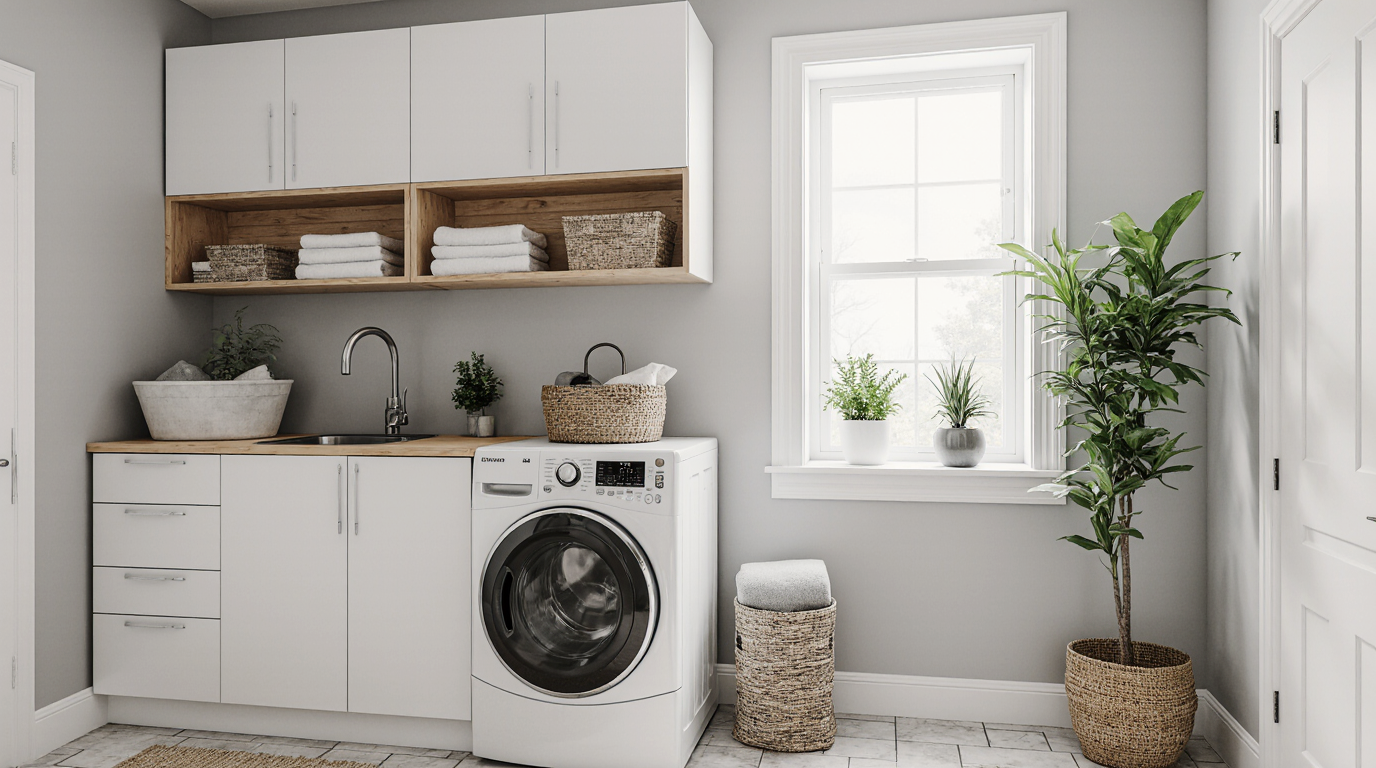
Practical yet attractive storage is essential for compact laundry spaces. Vertical storage through open shelving, hidden drawers, and integrated cabinetry enhances efficiency. Foldable or retractable racks and ironing boards save space while remaining functional. Maximizing wall space enables efficient organization while keeping the area airy. Hidden hamper drawers and discreet storage units keep laundry out of sight, maintaining a polished look.
Lighting plays a surprisingly transformative role in compact laundry areas. Effective lighting improves spatial perception and makes chores more enjoyable. Natural light is ideal whenever possible, but artificial lighting can be optimized with recessed ceiling lights, under-cabinet LED strips, or even decorative pendant lights above a folding counter. Even illumination simplifies sorting, folding, and other tasks, enhancing the user experience. Mirrors strategically placed on walls or cabinet fronts can further amplify the sense of space, reflecting light and making the room feel more open than it truly is.
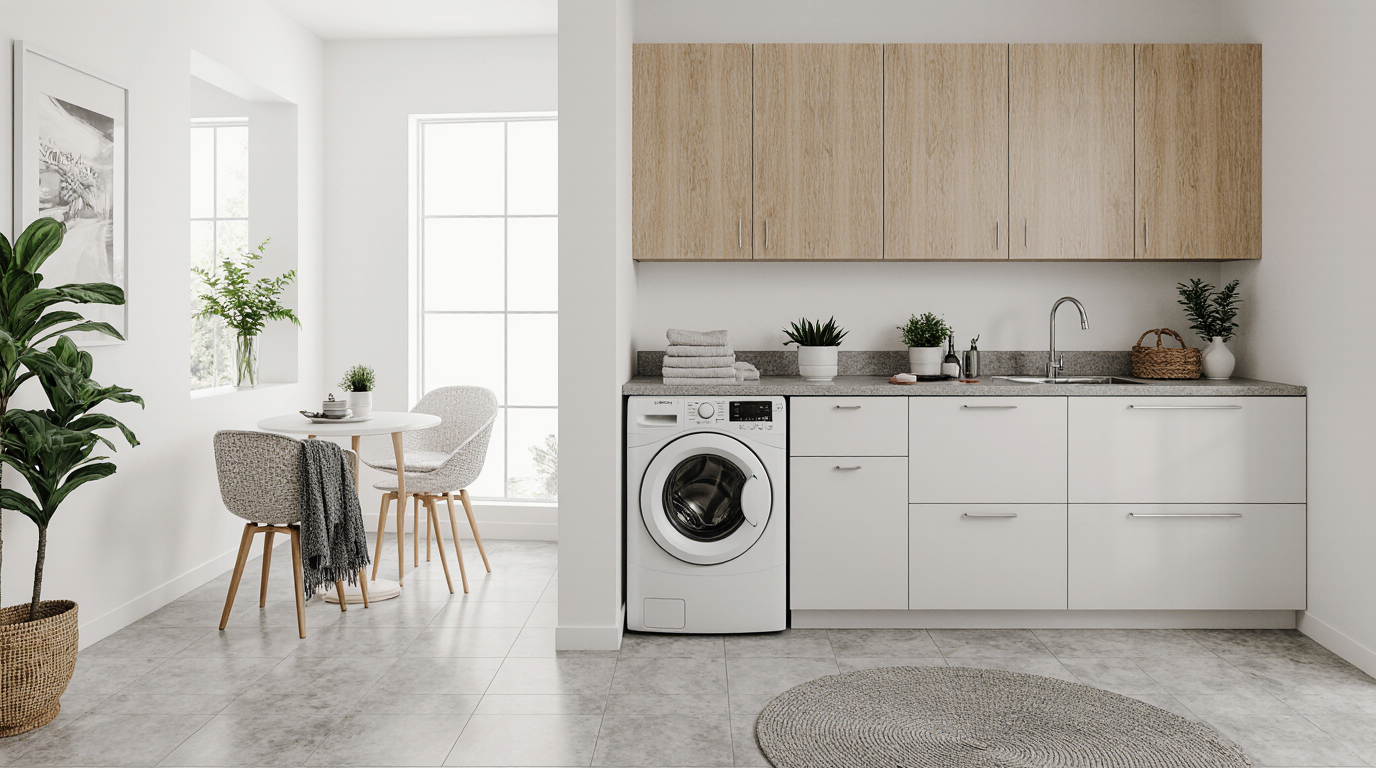
Color selection is another essential factor in designing a small laundry room that feels spacious and stylish. Soft, light hues create a sense of expansiveness and brightness. Strategic pops of color or contrasting edges inject personality while maintaining balance. Many designers recommend a subtle blend of neutral shades and natural textures, such as wooden countertops or woven baskets, which convey warmth and sophistication. Balanced hues and textures foster visual harmony and a serene, functional laundry space.
Smooth workflow and ergonomic planning make small laundry spaces highly functional. Layout planning should follow the logical progression of chores to minimize effort and time. Front-loading machines with overhead counters create versatile work surfaces, and adjacent sinks enhance functionality. Designers often highlight the importance of ergonomic layout in small laundry rooms, ensuring that every element, from shelves to machines, is easily accessible without unnecessary bending, stretching, or lifting. Efficient workflow reduces fatigue and streamlines household chores, making even the smallest laundry room highly functional.
The addition of aesthetic details elevates a small laundry room from purely utilitarian to luxurious. Decorative backsplash tiles behind sinks or counters, stylish cabinet handles, and coordinated storage baskets contribute to a cohesive design that reflects personal style. Even small touches, such as a framed artwork or a small plant, can add personality and visual interest. Many modern designs embrace minimalism, combining sleek cabinetry with hidden storage, while others incorporate a touch of vintage charm with retro appliances or colorful accents. Blending efficiency with style guarantees a functional yet enjoyable laundry environment.
Creative, space-saving features like retractable racks and multi-use islands enhance compact laundry areas. Smart design solutions accommodate various activities while preserving limited room. Adaptable, modular designs ensure every inch serves multiple purposes. Countertops serve dual purposes as folding surfaces and styling platforms.
Eco-conscious features are increasingly integral to compact laundry spaces. Energy-efficient washers and dryers, water-saving fixtures, and recycled materials for cabinetry and countertops help reduce environmental impact while saving money in the long term. Homeowners increasingly prioritize sustainable features, integrating eco-friendly solutions without sacrificing style or convenience. Opting for high-efficiency equipment and eco-friendly materials blends performance with environmental stewardship.
Thoughtful organization ensures small laundry rooms operate smoothly and appear neat. Clear containers, labeled baskets, and designated zones for different laundry tasks help maintain order. Smart placement of items by frequency optimizes workflow. An orderly, intentional layout transforms a compact laundry space into a sustainable, attractive environment.
Attention to elements big and small elevates compact laundry rooms to elegant, functional spaces. By combining strategic storage, smart appliances, thoughtful lighting, and aesthetic touches, even compact laundry spaces can become highly functional, organized, and luxurious. Embracing creativity and careful planning ensures that the laundry room, often overlooked, becomes a seamless extension of the home’s overall design, enhancing both daily routines and long-term value. A perfect mix of practicality, design, and comfort converts tiny laundry spaces into luxurious, well-organized zones.