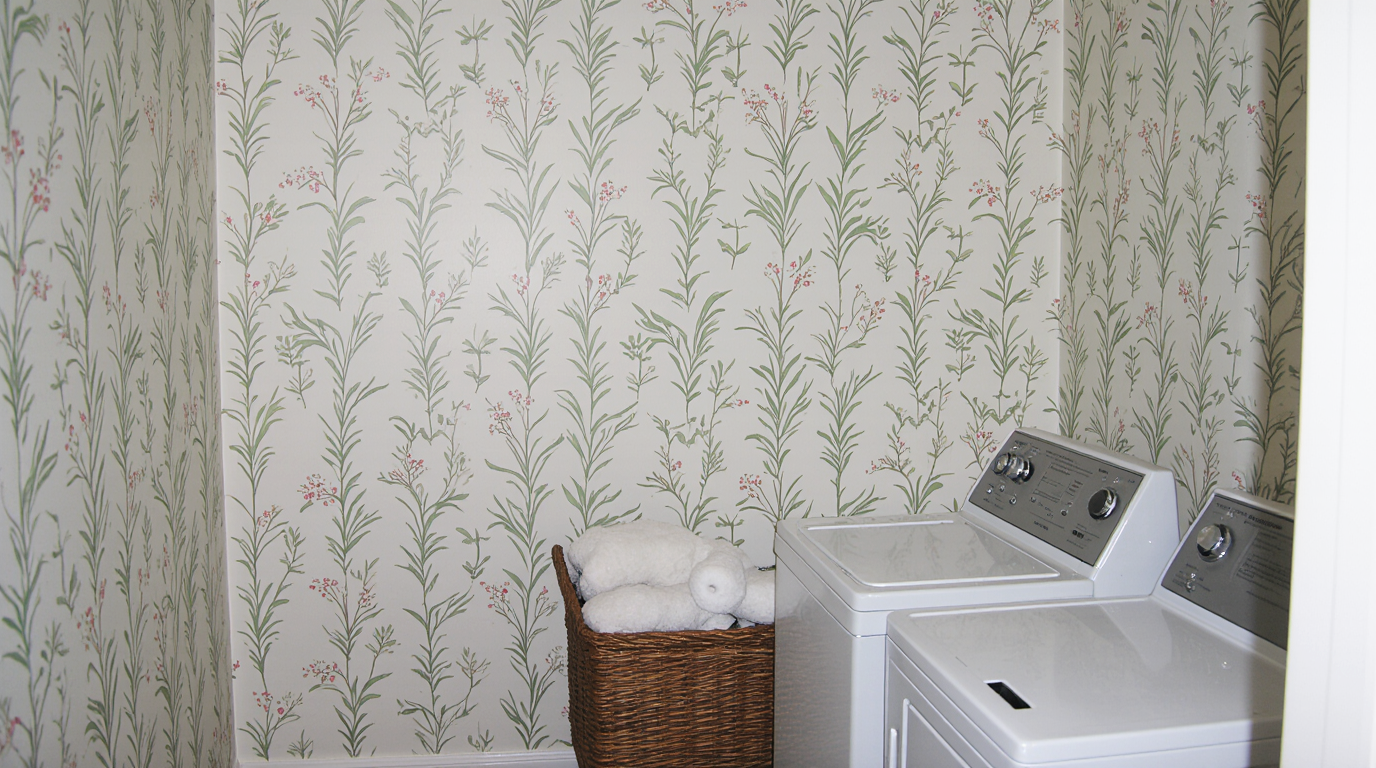
The modern home calls for that every inch of space serve a twofold function: impeccable functionality united with undeniable aesthetic appeal. Rarely is this tension more evident than in the laundry room, traditionally relegated to a purely work-oriented corner overwhelmed by harsh white appliances and unyielding tile. Yet, this space, which sees constant traffic and repetitive tasks, offers a perfect, often neglected, canvas for major design elevation. The strategic deployment of high-quality , properly specified wallpaper is not simply an indulgence but a powerful design move that fundamentally redefines the chore experience. It introduces visual texture and personal narrative into a room characterized by the stark lines of washer and dryer units and rigid cabinetry.
When tackling this design selection, the product selection becomes paramount. Basic wallcovering is clearly inadequate for an environment vulnerable to humidity swings and the rare wet spot. A genuine laundry room design expert will certainly recommend vinyl-coated or durable, scrubbable wallcoverings. These materials offer the visual richness of traditional paper—consider intricate damasks, lively botanical motifs, or intricate geometric patterns—while possessing the necessary moisture resistance and durability to stand up to the stresses of the utility space. Notably, materials labeled as Type II commercial vinyl offer superior longevity and washability, acting as a protective shield against dampness exceeding standard flat paint. This factor elevates the choice from a basic visual change to an informed specification, coordinating aesthetics with long-term material performance.
The psychological impact of textured surfaces in a traditionally dull area cannot be exaggerated. Investigations concerning environmental psychology suggests that visual stimulation, particularly in tones found in nature or complex, non-jarring patterns, can reduce feelings of tedium associated with monotonous activities. A aptly picked statement wallpaper acts as a visual anchor, turning a space of duty into a point of visual pleasure. For tiny, windowless utility closets or specific laundry rooms, designs with lighter backgrounds or strong vertical elements can create an illusion of greater spatial volume and brightness, counteracting any sense of confinement often associated with compact service areas. On the other hand, a moody, deep-toned pattern, perhaps a dark floral or an non-literal, rich geometric, can lend an air of unexpected luxury and intimacy, transforming a tight corridor into a dramatic, jewel-box space. This deliberate use of pattern is a form of experiential design, ensuring that even the brief moments spent sorting clothes contribute positively to the homeowner's general feeling of the space.
When deciding on location, the design tactic often hinges on the concept of the focal wall. In most configurations, the wall immediately adjacent to the primary work surface—the folding counter or sink area—is the ideal location for the most impactful design narrative. This draws the gaze upon stepping in, establishing the room’s style identity before one registers the utilitarian elements. This feature wall approach is often better suited than a full room application, especially in vintage properties where wall surfaces might be not completely smooth, as a single dramatic application is better at concealing minor surface imperfections than an all-over wrap. In addition, for those who favor design agility and prefer regular changes, utilizing a peel-and-stick vinyl on a single wall allows for a low-commitment aesthetic refresh every few years, matching precisely evolving personal tastes apart from a fixed mounting.
The layering of pattern introduces a sophisticated element of textural depth that paint simply cannot replicate. Even a subtle grasscloth-inspired texture or a small-scale geometric repeat adds a palpable layer of visual interest. This is particularly striking when juxtaposed against the glossy and flat textures of modern appliances and stone countertops. Think of a crisp, white shiplap or shaker-style cabinet base. Adorning the walls above with a classic toile featuring subtle indigos and olives provides an immediate counterpoint, softening the hard edges and lending a transitional design sensibility that bridges the gap between basic utility setup and curated interior living. This opposition is the hallmark of high-level residential design: making the practical beautiful through thoughtful contrast.
Moreover, the selection of pattern scale is a critical technical decision. In a small laundry nook, an too huge, busy pattern can overpower the area visually. The opposite is true, a pattern that is too small or low-contrast might vanish entirely, reading as mere visual noise. The key is selecting a pattern whose repeat cycle is proportionate to the wall area it covers. For optimal visual harmony, the designer often specifies patterns with a moderate scale and a color palette that ties into other finishes in the room, perhaps echoing the veining in a quartz countertop or the undertone of the tile flooring. This creates a cohesive and intentional design ecosystem rather than an arbitrary addition of color. This level of detail distinguishes a professionally conceived space from a hastily decorated one. The commitment to visual continuity ensures that the laundry suite feels integrated into the home’s overall design language. The successful integration of decorative wall treatments transforms the laundry room from a necessary service area into a deliberate extension of the home’s sophisticated style portfolio, proving that functional spaces deserve the same level of design rigor as living areas.