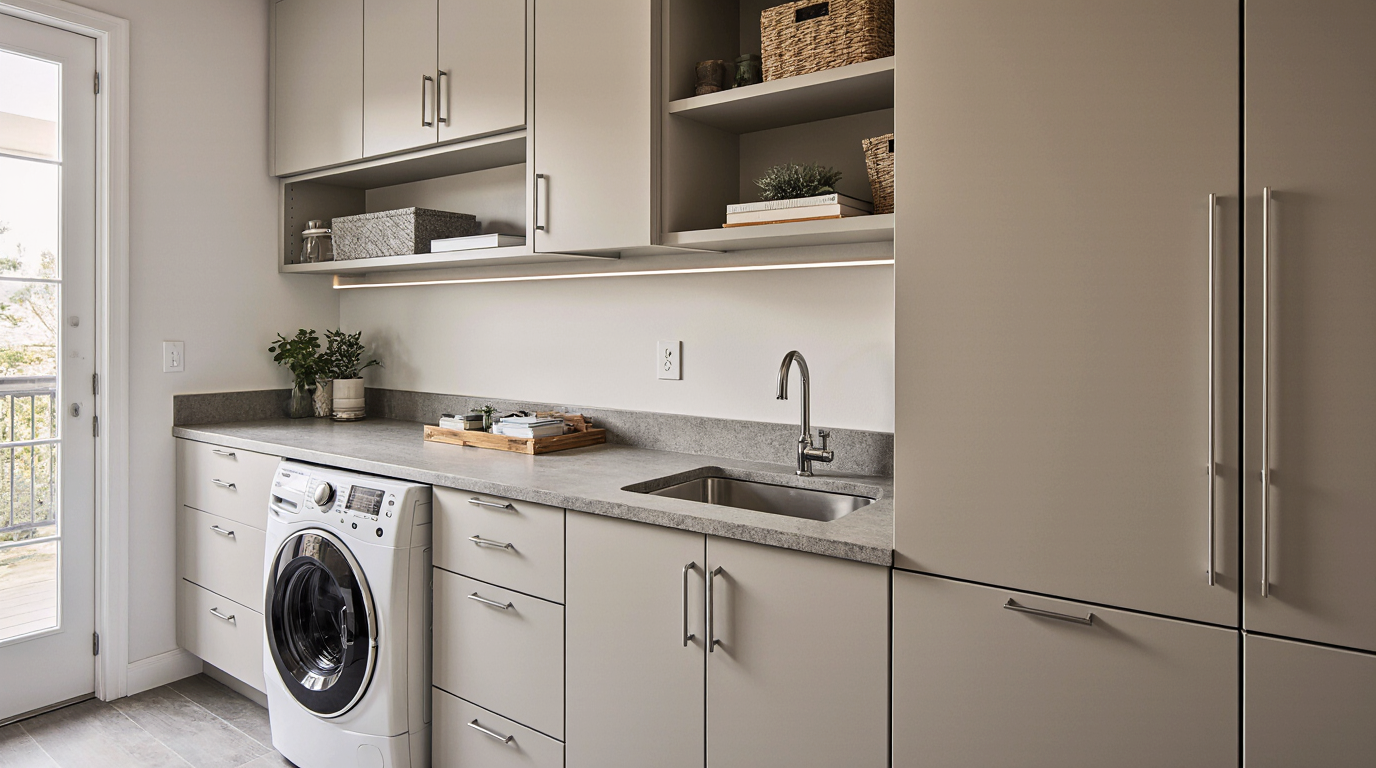
The current home demands more from every square inch, and the utility room, or laundry room, is no exception. Gone are the days when this space was relegated to a forgotten alcove. Today's utility room aesthetic is about achieving style alongside absolute practicality. This area should be a sanctuary of order, a place where the process of clothing maintenance becomes an almost serene experience, supported by smart technology integration and thoughtful design choices that reflect the existing style of the residence. True design excellence in this space comes from seeing it beyond just a place for work, but as an integral component of your house, a hub for household management that deserves the attention usually reserved for main rooms.
One of the most significant shifts in contemporary design centers on surfaces offering both beauty and longevity. Moving past standard functional choices, consider the incorporation of sturdy wood or expansive, convincing stone-look tiles. This act significantly improves the room’s sense of quality and ease. For surfaces, the focus is heavily leaning toward premium fittings and fixtures. Think further than conventional metals; incorporating touches of aged gold, deep charcoal, or warm copper on faucets and handles injects a layer of customized elegance. The choice of work surface is vital. Materials like durable composites or subtly textured stone provide resilience and a pleasing feel provide the ideal space for the careful process of organizing or creasing linens. A generous utility sink, possibly adopting a classic style is perfect for hand-washing delicate items or pre-soaking stained garments without splashback or concern for the surrounding cabinetry.
The organization within the utility space dictates its success. Stylish storage solutions are not merely helpful; they are the foundation of a clutter-free workflow. Floor-to-ceiling units make the most of vertical dimensions, especially important in compact settings. These custom enclosures ought to have specific, marked sections—maybe premium slide-out bins or hidden receptacles to mask laundry until the wash cycle. For items used infrequently, like specialty supplies or extra bedding, high cabinets with gentle illumination enhance both look and availability. Smoothing out wrinkles is made easier by hidden, drawer-mounted boards that disappear neatly when the task is done. When there is room, a nearby folding area—like a heavy-duty wooden top or an extended counter—offers a comfortable spot just for the final step.
Color palettes are currently drawing heavily from Scandinavian and Japanese design philosophies, emphasizing minimalism and natural materials. This results in gentle, calming greens, tranquil blues suggesting cleanliness, or comforting browns that complement unvarnished wood. The key is to avoid sterility. Where you have the opportunity, exposed shelving in substantial, naturally shaped wood can feature selected objects—such as uniformly stacked white cloths or boutique cleaning product containers—to contribute texture and individual flair. Even the way the machines are situated can enhance the design; paired units in modern colors like flat white or dark grey promote visual unity. Technology is now expected, with machines that measure loads automatically and can be controlled remotely, indicating a shift toward easier, more self-sufficient laundry routines.
The notion of blending the utility area's function is really taking off, especially where real estate is tight. Designing a blended washroom and transition zone combines duties related to entering and leaving. Incorporating things like a fitted bench with storage below—great for temporary storage of bags or shoes—and strong hangers for outerwear build a functional system right at the entry point. This combination necessitates hard-wearing, moisture-proof flooring that can cope with soil and wetness carried in from outside. On the other hand, if you work remotely, adding a narrow pull-out writing surface or a specially illuminated nook can turn the room into a short-term office, enabling you to manage tasks without taking away from the main laundry purpose.
The element of personalization is what truly distinguishes a well-designed utility space. This room should feel lived-in and inspiring, not institutional. It’s vital to bring in surprising decorative touches. A thoughtfully chosen small rug can mark off an area and provide appealing texture beneath your feet. Look into using a striking tile design behind the sink or appliances—a complex shape or a deep, saturated color can become the visual anchor. Small elements, including framed antique laundry-themed art or up-to-date prints of rich foliage, inject necessary life into the area. Flora that enjoys damp air, for instance, the Peace Lily or Mother-in-Law's Tongue, do very well here, improving the air while softening the severe angles of the machines and built-ins. A well-designed utility room is a testament to holistic home planning, a place where high performance meets high style, resulting in a space that genuinely enhances daily living.