
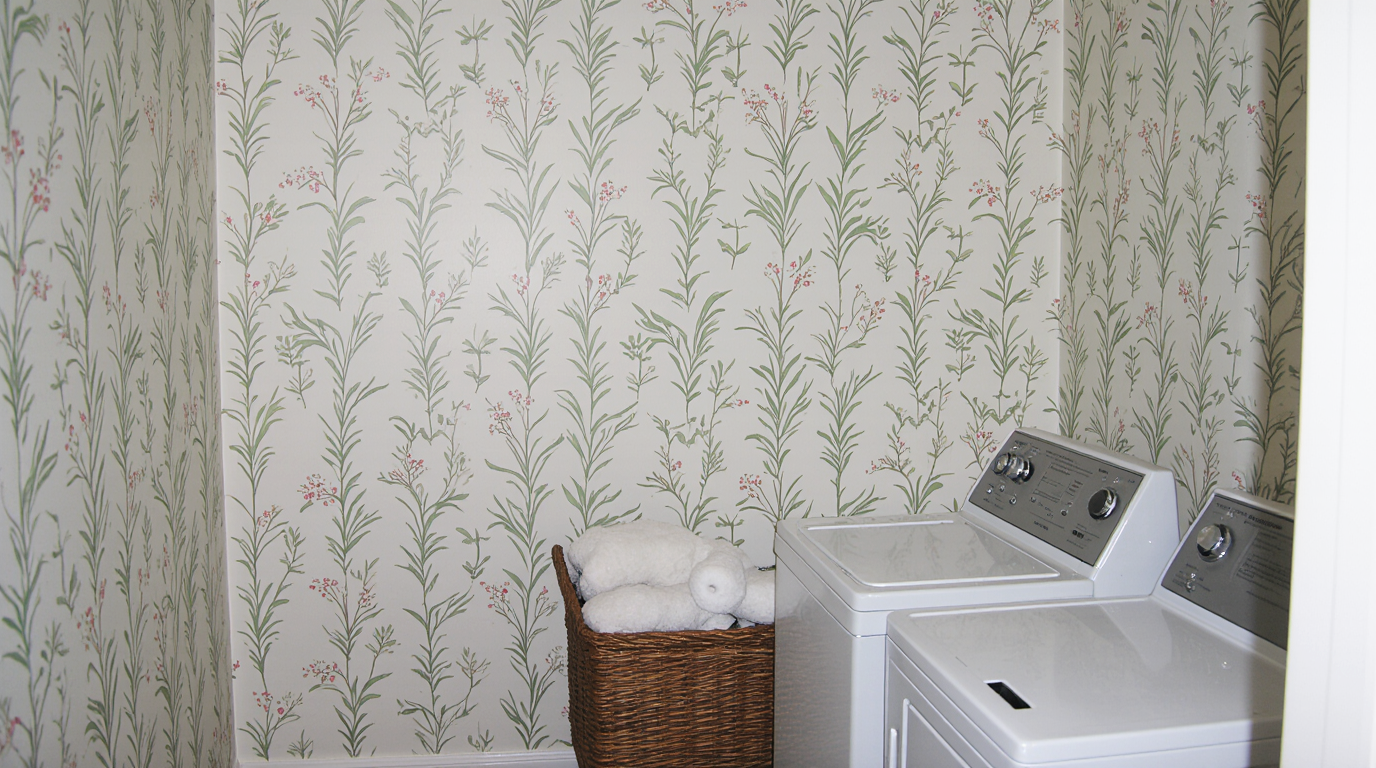
The laundry area, often assigned to a forgotten nook or a constricted service space, is swiftly evolving in current home design. It is evolving from a only functional zone into a real part of the home's look, needing design refinement even in its most small areas. For designers and property owners managing the challenge of the compact laundry area, the one most significant, yet often ignored, factor for adding character and perceived roominess is the wall covering. Picking the right wall covering is a critical decision that moves beyond mere utility; it turns into an activity in optical structure to counteract room constraints. This detailed exploration investigates the expert considerations for selecting tiny laundry room wallpaper that complies to Search Engine Adsense standards by providing distinctive, expert, and useful perspectives, making sure the space feels purposeful, stylish, and certainly your own.
When room is the chief restriction, designers must leverage design size and color concepts to create an trick of depth. A common mistake in small spaces is the fear of design, leading to bland, functional walls. This is a disservice to the potential of the area. The main point is in embracing big, yet open or airy patterns. Consider about plant-based designs with significant blank area, where the background color overpowers, allowing the gaze to travel without being stopped suddenly by dense designs. A wide-stripe wall covering, applied carefully, can greatly change the apparent height or extent of the space. For a skinny room, standing stripes will visually stretch the surfaces, guiding the gaze to the top to the top surface, which in sequence can make the whole area feel higher—a crucial area manipulation technique. On the other hand, for a very four-sided room, a slightly mixed across design can inspire the eye to move across the extended extents. The objective is always to create a perception of continuous optical flow.
Material selection is essential in a washing setting, as it is a area prone to moisture and possible splashes. While old-fashioned paper wallpapers might give in to humidity, the emergence of vinyl-coated or pre-glued, strippable alternatives presents durability married with design versatility. Superior plastic coating is washable, waterproof, and incredibly user-friendly for the home-improvement lover, aligning perfectly with the need for useful elegance. For areas right surrounding the washing machine and dryer machine—the damp zone—consider ceramic or a high-gloss surface, water-resistant finish for the base part, using the more intricate wall covering just above the stone boundary or on walls furthest from the machinery. This tiered approach respects the functional demands while increasing aesthetic effect.
Hue effect plays a significant function in small space design. Light and calm tones, such as faint blues, muted greens, or also refined creamy with slight surface, are perennial selections because they throw back light, making the limits of the area move away. Nonetheless, bold, deep shades can be utilized effectively for an surprising aesthetic impact. This strategy operates by taking on the small size rather of struggling against it, transforming the area into a intentionally snug, rich retreat. This approach demands combining the striking surfaces with extremely practical, light-colored storage, and brilliant task lamps. The juxtaposition of bold shade and practical brightness is a feature of expert limited-room architecture.
Feel in wallpaper adds a further depth of perceptual charm and visual attraction, which is crucial when decor are minimal. Textural wall papers, such as those copying linen, woven matting, or also slight geometric patterns, offer dimension without relying on harsh shade changes. Woven Matting, for e.g., offers an natural, elegant backdrop that beautifully spreads light, imparting a soft sheen to the space that enhances the feeling of freshness and openness. This pick inclines into earthy component aesthetics, a modern craze in indoor architecture, that cherishes surface planes. When combining these textures, remember the concept of visual heaviness: equalize a intensely surface-rich wall with flatter surfaces on adjoining walls or storage to maintain aesthetic harmony and steer clear of saturating the tiny area.
Design designs should as well be selected with the space's particular function in consideration. For a genuine laundry retreat feel, subtle similar-color patterns or traditional shaped prints provide a enduring attractiveness that resists rapid fashion obsolescence. Look at tiny, repeating clover-like or S-curve designs in a soft color scheme; these traditional shapes provide framework without requiring non-stop notice. If the area doubles as a tiny entryway, adding a pattern that suggests at the exterior, like a artistic foliage or vine motif, can bridge the transition area amongst the outside and the primary residing spaces. This illustrates holistic house decor ideation, integrating separate practical zones via cohesive optical style. The resilience of the material must handle the foreseen usage, particularly near doorways or lounge spaces.
The installation of the wall paper itself deserves specialized consideration in a tight space. If the space is absolutely minute, maybe just a single focal surface —the one exactly opposite the entry —should get the treatment. This main point pulls the eye immediately upon entry, setting the design purpose, while the other finishes can be painted a complementary, lighter color that reflects the underlying of the wallpaper. This guideline of proportion in surface application stops motif too much and retains the emphasis on the decorative focal point. Moreover, ensure that any fixture positioning—such as sconces or shelving mounts—is scheduled ahead of installation, as cutting near hardware in a small area can easily result to untidy work, jeopardizing the otherwise expert look.
Under no circumstances disregard the strength of the border and fixtures difference. No matter how striking the wallpaper, the surrounding parts must secure the decorative. Crisp, light white trim bordering the surfaces, openings, and windows creates a essential aesthetic separator, letting the wallpaper pattern stand out while enclosing the room neatly. Similarly, picking fittings for cupboards or service pegs in a different metal look —perhaps non-shiny dark against a airy and breezy pattern, or shiny alloy against a moody one—adds essential structural element and improves the complete design theme. In a tiny laundry room, every part must work overtime, and the proper wall covering, chosen with an professional eye for proportion, material, and location, is the unseen workhorse that changes chores into refuge.



