The contemporary laundry room has risen above a mere utility closet; it is increasingly appreciated as a critical functional zone demanding both practicality and aesthetic appeal. For the meticulous homeowner, determining the perfect wall treatment is a primary concern, and wallpaper emerges as the premier element for imbuing personality and sophistication into this hardworking space. Determining the best fit necessitates a grasp of material science, spatial illusion, and current interior design principles to ensure longevity and visual success.
When approaching the application of decorative wallcoverings in an area susceptible to moisture and high traffic, material durability is the absolute foundational factor. Traditional, permeable wallpaper is an invitation to disaster, as steam from appliances and occasional splashing can cause bubbling, peeling, and mold growth. The expert recommendation gravitates heavily towards vinyl wallcoverings or those with robust, scrubbable finishes. These materials offer superior moisture resistance and can be effortlessly cared for with a damp cloth, a significant advantage when dealing with accidental splashes of soap or general grime. For particularly busy zones, especially those that serve as a secondary entrance, look for commercial-grade vinyl alternatives that boast superior resilience against scuffs and wear. The investment in a more durable substrate translates directly into a longer lifespan for your design choice, upholding the integrity of the room's aesthetic over time.
In addition to durability, the strategic use of pattern and color determines the way the room is perceived and operates. In small utility rooms or windowless rooms, the objective is often to maximize the perception of space and light. Here, light-reflective wallpapers become essential tools. Think subtle metallic finishes—soft golds, silvery sheens—or wallpapers featuring light pastel tones like blush pink, soft sky blue, or gentle creams. These hues actively bounce available light, preventing the small area from feeling overly closed-in. Conversely, in a larger, well-lit laundry room, a designer might choose a decorative flourish, utilizing darker, moodier hues like deep charcoal, rich emerald, or even a sophisticated black. When committing to a dark palette, it is critical to counterbalance it with bright white cabinetry or light flooring to ensure a sharp, fresh base, confirming the impact is deliberate rather than overwhelming.
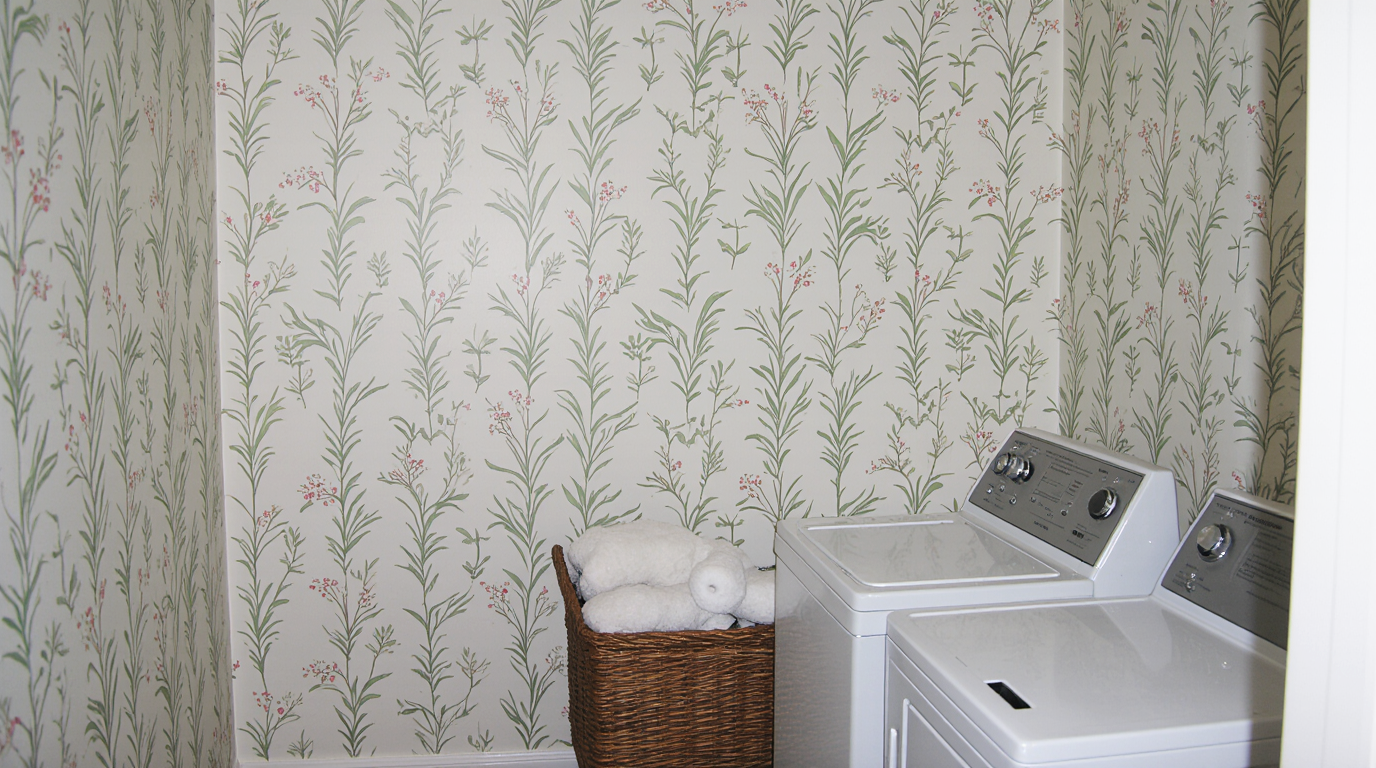
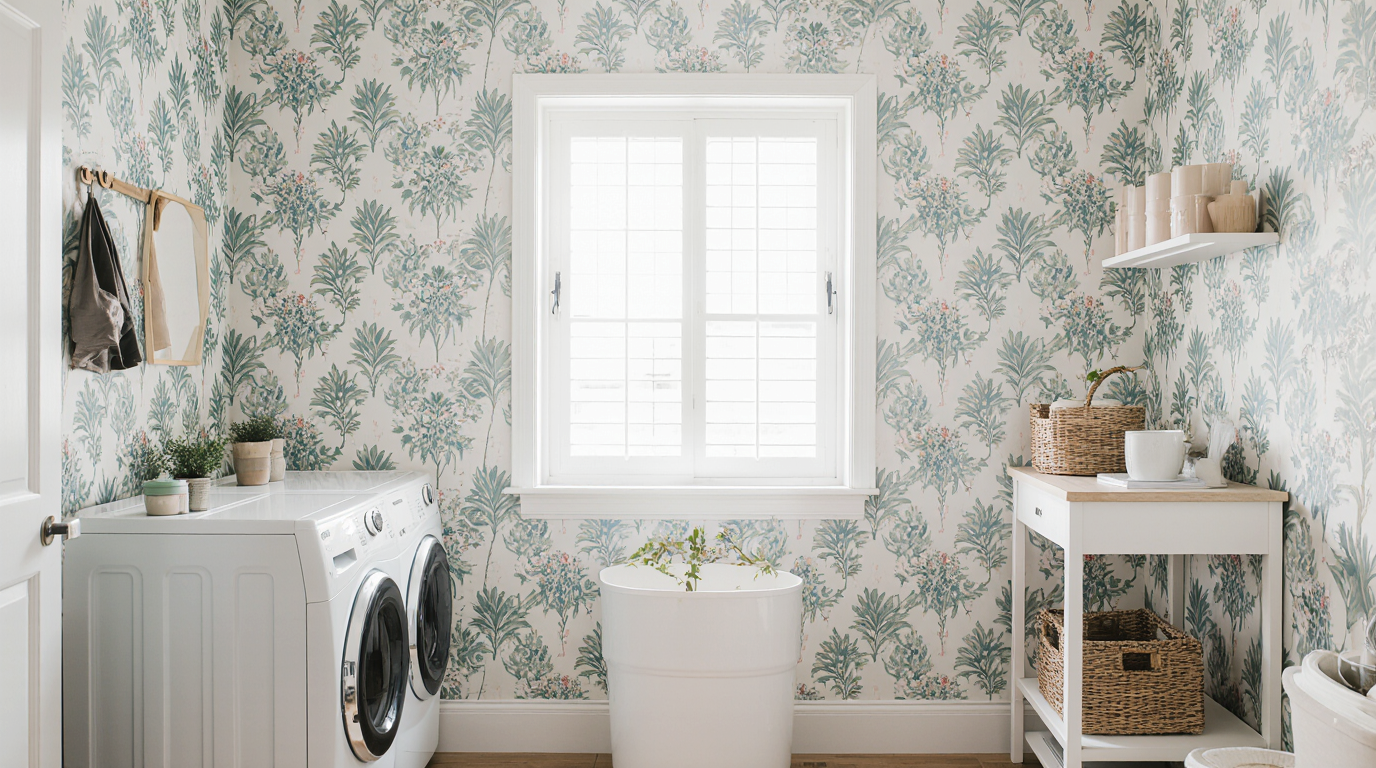
The world of pattern offers endless opportunities to define the room's style, aligning it with the home's overall design vocabulary. For a timeless aesthetic, striped wallpaper is an enduring classic. Stripes, which saw prominence in the Georgian and Regency periods, are incredibly versatile; tonal, closely spaced stripes create a sense of tailored elegance, while bolder, contrasting stripes introduce a playful, almost hand-painted visual energy. This pattern works admirably to create height, making ceilings seem taller, a key technique in managing room scale. For those seeking a gentler, welcoming atmosphere, botanical and floral prints are experiencing a major resurgence, tapping into the broader trend of incorporating nature's elements. Consider large-scale foliage for a grand statement or small-scale, ditsy floral patterns to sustain a classic, quaint look. If the room has a seaside or neutral style, a wallpaper featuring stylized palm fronds or oceanic motifs can provide a moment of visual calm.
What's leading the industry now points toward exciting, nature-inspired maximalism. Designers are increasingly incorporating elements reminiscent of the outdoors, featuring oversized botanicals, exotic animal motifs, and even prints that mimic insects and butterflies, making a strong case for organic themes as a counterpoint to our modern, screen-focused existence. Furthermore, look for textured wallpapers, such as those mimicking grasscloth or featuring 3D-like effects or Parisian plaster finishes, which add tactile interest and depth without relying solely on color or print. For a hint of subtle luxury, metallic accent wallpapers—particularly those featuring geometric layouts or abstract brushstrokes—can move the room beyond utility to true elegance.
A very useful and aesthetically pleasing choice gaining significant traction is the use of peel and stick wallpaper. This option is ideal for temporary residents or for homeowners who enjoy frequent design updates. While traditional paste-applied wallpaper is frequently suggested as best for high-humidity environments due to its stronger bond and often more wipeable surface, modern, high-quality peel and stick vinyl options are quickly becoming just as good. If opting for peel and stick, ensure the product is specifically rated for utility areas. A thoughtful method involves using wallpaper only on an accent wall—perhaps the wall behind the sink or washer—while painting the remaining walls in a complementary solid color. This strategy controls pattern saturation while still making a significant visual impact.
The final determination of the quality of your laundry room wallpaper selection hinges on cohesion. The pattern should either work well with the hues of adjacent features—like cabinetry or hardware—or act as the singular focal point against a backdrop of clean lines and neutral finishes. For instance, setting an impactful design with streamlined, shaker-style cabinets in a solid hue forms an even aesthetic where the wall covering is the undeniable centerpiece. By making material strength the first consideration and applying thoughtful consideration to scale and style, the laundry room is changed from a functional necessity to a source of visual pleasure, one beautifully papered wall at a time.