The laundry room, once relegated to a dim, utilitarian corner of the home, has undergone a complete reimagining in modern homes. It is now rightfully recognized as a vital workspace, a place where the daily rhythm of household management intersects with the desire for aesthetic pleasure. The primary feature facilitating this shift is the counter surface. It is more than just a slab of material; it is the main activity area, the initial zone for organizational tasks, the key area for managing freshly dried linens, and, critically, a major canvas for design expression. To create a countertop that is both exceptionally useful and visually appealing, careful consideration must be given to both its base material and its adornment.
The foundation of any successful counter design is the material itself. In the demanding environment of a laundry space, materials must demonstrate unwavering durability against spills, the weight of laundry hampers, and potential encounters with harsh cleaning agents. Quartz has emerged as a premier choice for the modern laundry room. This man-made composite provides the luxurious look of natural stone without the complex upkeep requirements. Being non-absorbent is a crucial benefit, ensuring it remains unstained by accidental chemical exposure, and it requires absolutely no periodic sealing, a major time-saver in a busy room. The consistent performance and longevity of quartz make it a smart investment, frequently praised by professionals for its blend of high style and low maintenance.
For those seeking a look that provides immediate visual warmth, butcher block provides an natural, comfortable atmosphere. Wood countertops, particularly hardwoods like maple or walnut, bring an appealing softness contrasted against the typical hard surfaces and cold machines. When properly treated with food-grade sealants—which must be reapplied periodically—they stand up well to the demands of folding. The great advantage of a wood surface is its ability to be restored; minor scratches or water rings can often be sanded out, restoring the surface. This material choice perfectly complements a traditional, cottage, or natural contemporary design, providing an attractive foil to sleek metal hardware or bright, clean cupboards. The introduction of this natural texture is an intentional element, guarding against a purely utilitarian appearance.
For alternatives, practical and robust solid surface options, such as those that are acrylic-based, offer excellent performance, which offer a fluid, continuous design, as the seams are extremely discreet, creating a visually perfect, singular plane. For budget-conscious projects that still demand resilience, high-quality laminate has vastly improved, offering an astonishing variety of finishes, including convincing stone or wood imitations, at a fraction of the cost. The primary difference to note is its lower tolerance for direct heat and potential for surface damage versus quartz or granite.
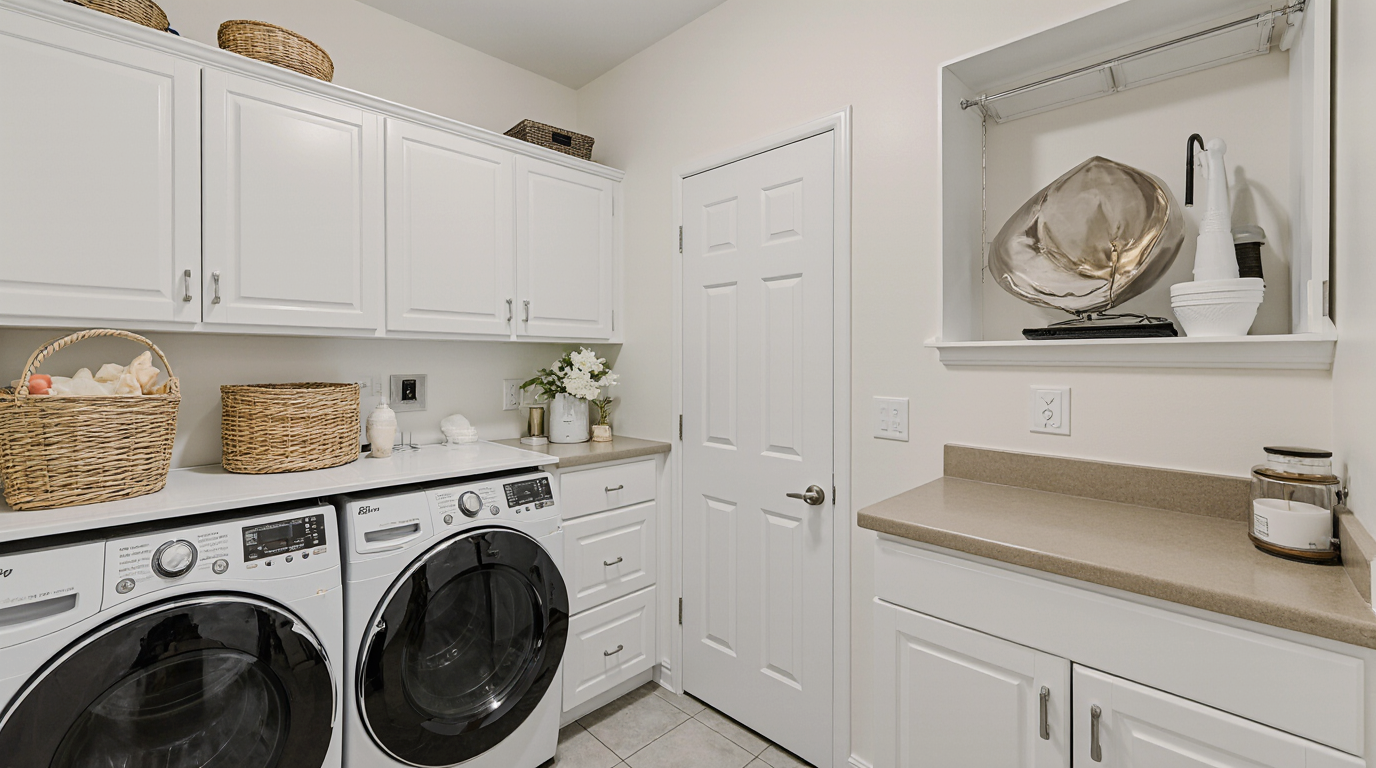
After choosing the core surface, the next step is applying the decorative elements. The goal is to introduce visual interest and organization without sacrificing precious workspace. A crucial design concept involves vertical optimization. If the countertop spans the top of front-loading machines, that surface needs to stay open to allow for the smooth completion of laundry tasks. Therefore, decorative elements should either be anchored securely or be entirely movable.
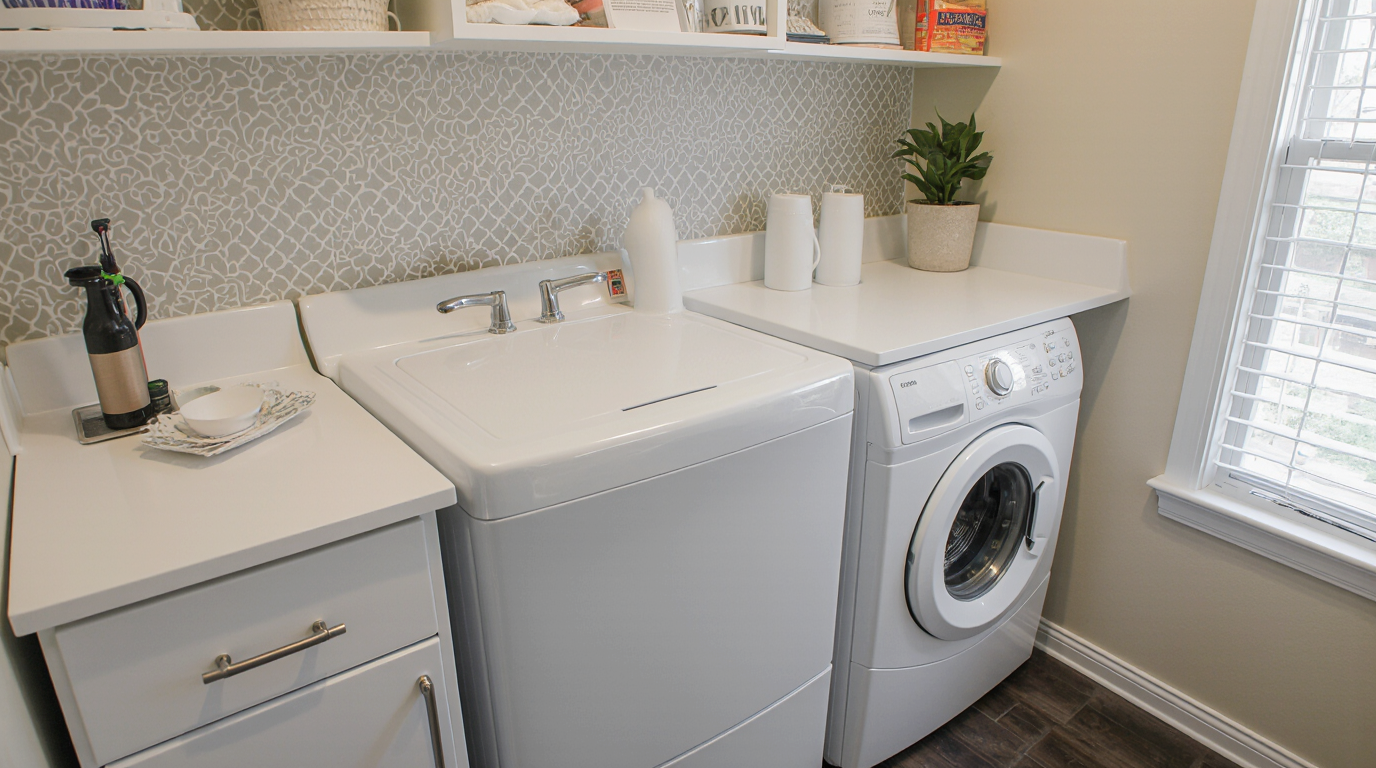
Use well-chosen organizational pieces as your key styling tool. Instead of leaving plastic detergent bottles in view, decant frequently used liquids into attractive, matching containers. Clear glass canisters filled with items like dryer balls, clothespins, or even colorful laundry pods become miniature sculptural elements. For a touch of sophisticated style, opt for beautifully textured ceramic or sleek metal boxes for small items like stain removers. These pieces should coordinate with the room's overall palette—perhaps mixing cool grays and whites for a minimalist look or incorporating deep blues and terracotta for a warmer, more layered design. The concept here is intentional display; every visible item must contribute positively to the room’s aesthetic.
Trays and catch-alls are indispensable tools for countertop control. A visually appealing, shallow platter, perhaps a ceramic or textured plastic piece, acts as an instant home for necessities like fabric sprays, stray coins (inevitable in laundry!), and dryer sheets. This technique provides the necessary grouping that prevents small items from looking like clutter. The convenience is clear: when the counter needs to be fully utilized, the tray allows you to swiftly clear all accessories, leaving a pristine surface. This balance between active use and styled rest is the hallmark of expert design.
The area above the counter, often overlooked, plays a huge role in the perceived decor. The backsplash, if you have one, provides visual interest. A richly veined porcelain tile or a unique geometric pattern acts as a built-in piece of wall art that frames the horizontal surface below. If your setup allows for open shelving just above the counter, this provides a further chance for thoughtful styling. Fill these shelves with items that blend function and beauty—such as an antique weighing machine, soft nature-themed artwork suggesting freshness, or piles of colorful, unused washcloths for layered texture. This layering adds dimension and personality, transforming the area from a simple workstation to a thoughtfully designed service station.
For specialized tasks, consider the flexibility of mobile organizational units. A narrow, wheeled trolley positioned next to the counter can store extra supplies or function as a provisional stand for the iron. When it’s time to iron, it rolls out, providing an auxiliary surface, and then tucks away, leaving the main countertop clear. This dynamic approach honors the reality of small-space living while ensuring that high-level aesthetic standards are maintained. The countertop is the stage; its decor sets the mood for an otherwise mundane chore, turning laundry day into an exercise in organized, beautiful efficiency. True laundry room mastery is reflected in how thoughtfully this primary surface is conceived, materialised, and adorned.