The modern laundry room far surpasses its purely utilitarian origins, maturing into a supremely efficient yet aesthetically considered component of the home's overall design narrative. Central to this major upgrade is the thoughtful implementation of purpose-built cabinetry, which serves as the key component in managing clutter, optimizing workflow, and introducing pronounced design impact. Moving beyond basic wire racks, today's laundry cabinet design enthusiastically embraces customization, ergonomics, and material innovation to establish an area where efficiency feels natural and style abounds.
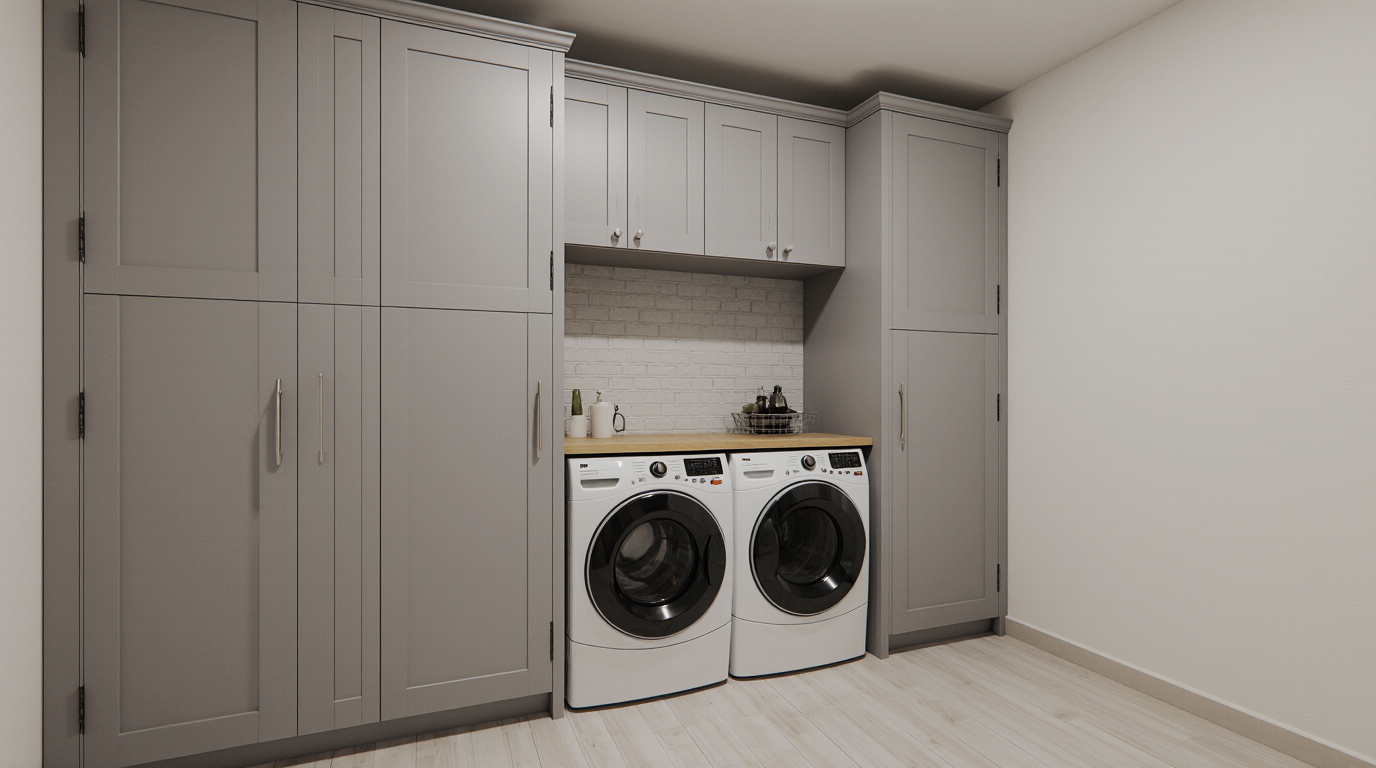
One of the most noteworthy directions in twenty-first-century laundry design involves maximizing vertical real estate through ceiling-height cabinetry. This intelligent approach fundamentally transforms the room from a simple chore area into a veritable storage fortress. By extending storage units right up to the ceiling plane, designers efficiently reserve every available cubic inch, reserving the lower zones for daily necessities like detergent and dryer sheets, while utilizing the higher reaches for seasonal items, bulk supplies, or specialized cleaning agents. When executed with flush-mounted doors and hidden pulls, this look achieves a streamlined, unified façade, presenting a unified wall surface that drastically reduces visual noise. For a truly minimalist finish, opting for push-to-open mechanisms over traditional pulls reinforces this seamless façade, granting a minimalist appeal that is a key trend in contemporary interiors.
The conversation around laundry room cabinets today must prominently include the concept of multifunctionality. Cabinets are no longer mere containers; they are integrated workstations. Consider the practicality of pull-out ironing board drawers, cleverly tucked away within standard base cabinet dimensions. This removes the requirement of a cumbersome, freestanding ironing board, freeing up precious floor space. Similarly, innovative cabinetry incorporates integrated sorting systems. Imagine a deep drawer bank fitted with whisper-quiet, soft-close runners that houses labeled, pull-out bins for whites, darks, and delicates—a massive upgrade from the standard rolling hamper. These utility-focused drawers ensure that sorting happens instantly and efficiently, streamlining the entire laundry cycle from the moment an item enters the room.
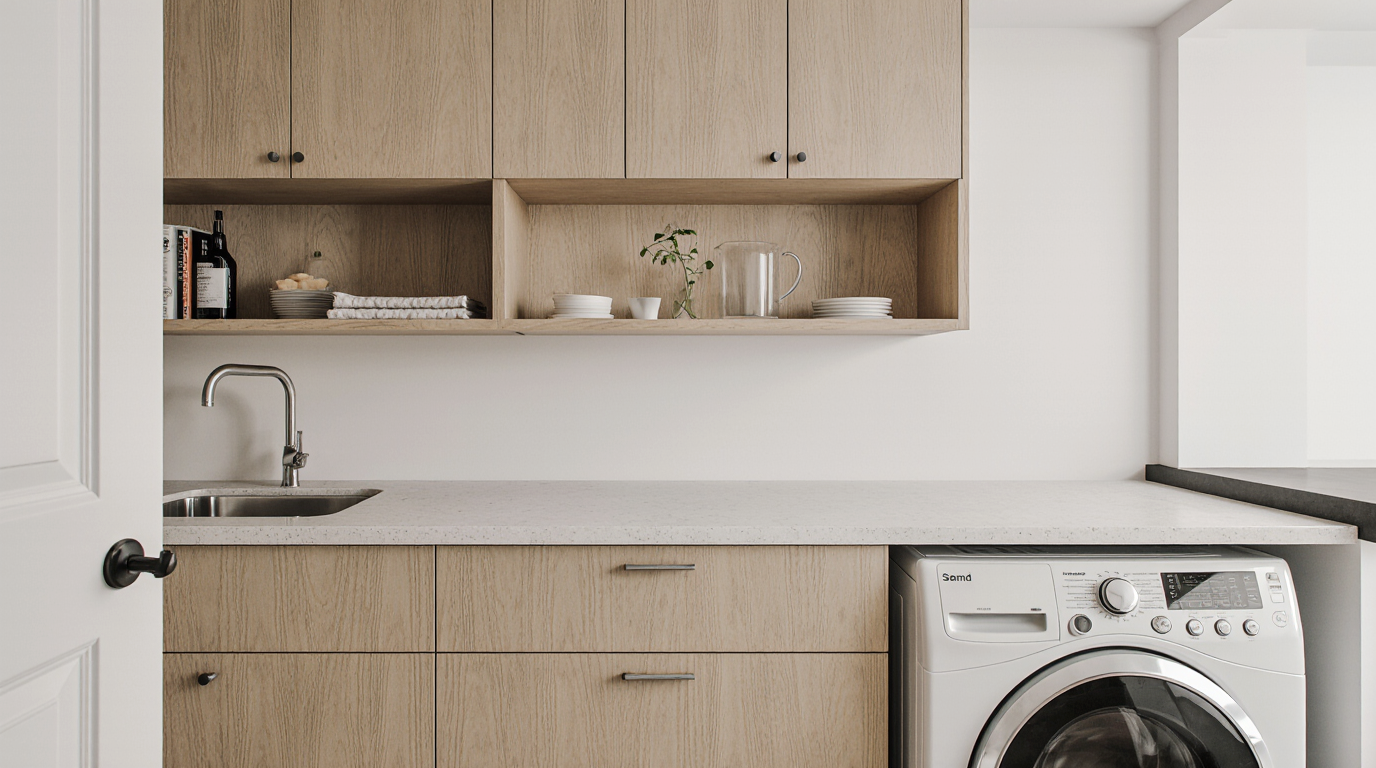
Material selection dictates both longevity and aesthetic appeal in this damp, high-use environment. Moisture-resistant substrates are paramount for high-performance cabinetry. While traditional wood is beautiful, modern designers often specify thermofoil or high-quality MDF with durable polyurethane finishes that are impervious to moisture damage caused by humidity and accidental spills of bleach or fabric softener. For homeowners leaning toward a classic, homey atmosphere, reclaimed wood accents or base cabinets finished in a natural oak veneer provide textural depth, often paired with quartz countertops for superior stain resistance on the folding surface—a move away from older laminate choices.
Color plays an increasingly bold role. While bright white and soft gray remain timeless foundations, the current trend embraces saturated jewel tones and sophisticated neutrals. Deep navy blue, sage green, and even muted charcoal for the base cabinets ground the design, especially when contrasted with airy open shelves or open shelving. This approach, often termed two-tone cabinetry, adds visual complexity and allows the room to feel more like a thoughtfully designed area of the home’s main living areas, rather than a hidden service zone. The introduction of glass-front doors on select upper cabinets can prevent a uniform appearance of solid panels, providing a tasteful opportunity to display neatly stacked linens or decorative baskets, showcasing an adherence to curated organization.
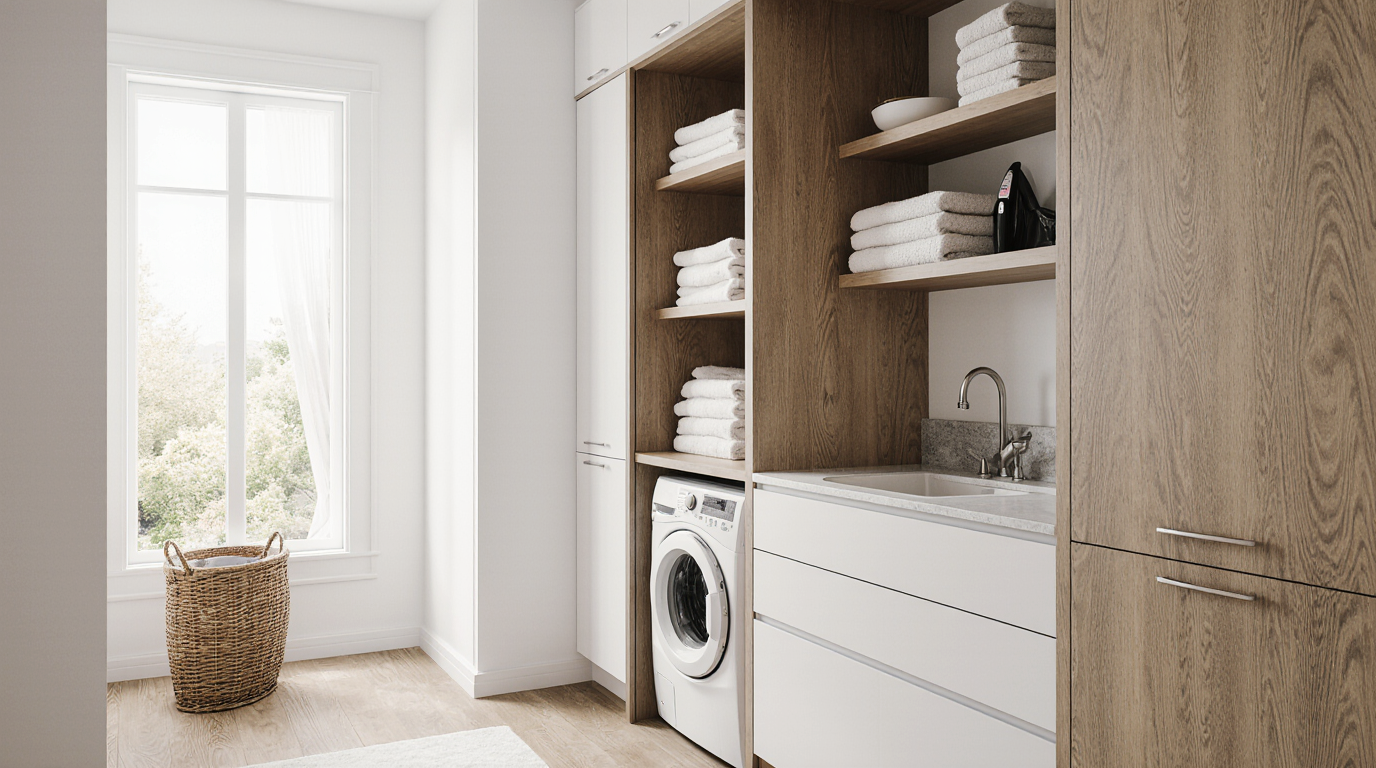
The marriage of closed storage with thoughtfully designed open shelving is another hallmark of superior laundry room architecture. Base cabinets should be reserved for heavier items and concealed storage, such as pull-out containers for trash or recycling. Above the countertop, a balanced application of open shelving allows for decorative touches of items like neatly rolled towels or decorative storage baskets made of woven materials. This mix adheres to the Pareto Principle of organization: closed cabinets handle the bulk of the mundane items, while open shelves manage the aesthetically pleasing accessories.
For smaller or more constrained spaces, the concept of the European laundry—where the machines and storage are housed entirely within a deep closet and concealed by pocket or barn doors—necessitates highly efficient, often modular cabinet systems. In these scenarios, under-counter drawer systems designed specifically for laundry tools are crucial. Think about slim, tall storage housing extendable drying racks that fold flat against the interior door or wall when not in use. Every millimeter must serve a purpose, leading to designs that often feel like a compact, high-tech space than a typical utility space.
The ultimate layer of sophistication involves the cabinet hardware and lighting that complements the chosen finish. For a modern look, long, linear pulls in matte black or brushed brass offer a sleek, industrial contrast against painted surfaces. Conversely, if a Modern Farmhouse or Transitional style is desired, subtler knobs or subtle cup pulls can bring an artisanal feel without competing with textured elements like shiplap paneling on the walls. The hardware selection is the jewelry of the cabinetry, capable of shifting the entire mood of the room from starkly utilitarian to warmly inviting. Ultimately, achieving peak laundry room efficiency via cabinetry is about meticulous planning: ensuring every shelf, drawer, and door aids the smooth workflow and a more beautiful environment, making the laundry room a showcase to a point of genuine design pride. This careful consideration of ergonomic integration and material science ensures the cabinetry system supports the workflow first, the aesthetics second, with the two ultimately becoming inseparable and mutually reinforcing.