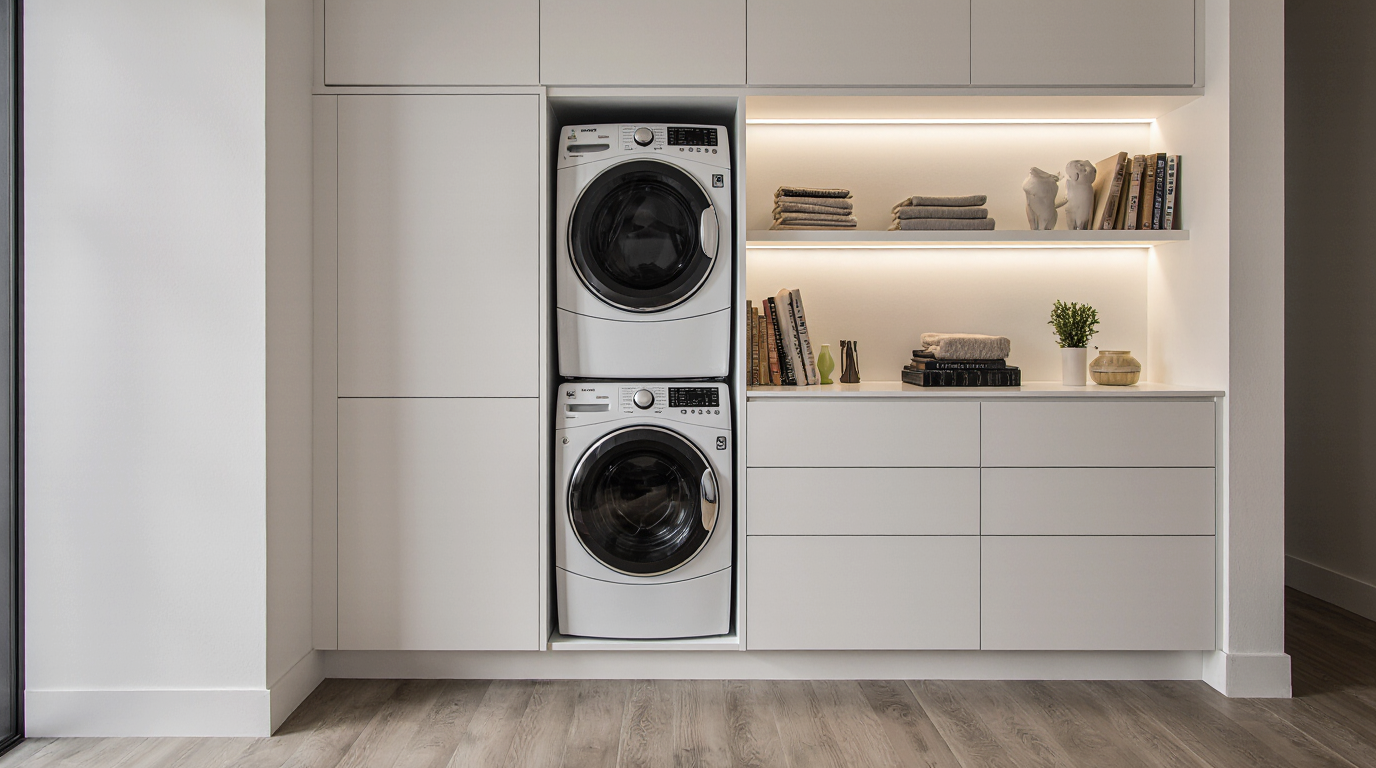
The modern laundry room is no longer a hidden, utilitarian closet; it is evolving into a sophisticated extension of the home’s overall design scheme, demanding both streamlined usability and enhanced aesthetics. Achieving this balance requires a deep dive into workflow optimization and material selection, demanding careful consideration of how the space will be utilized on a daily basis. The primary function—washing, drying, sorting, and folding—must dictate the layout before any decorative elements are considered, ensuring the structure supports the process rather than hindering it. For spaces large enough to dedicate solely to this purpose, a L-shaped counter configuration can maximize work surface area, which is absolutely crucial for the folding process, which is often the most time-consuming non-machine task. Where square footage is a premium, compact tower installations become an absolute necessity, immediately freeing up floor space that can then be dedicated to vertical storage or a compact utility sink.
The surface upon which laundry is processed is a essential consideration in the room's long-term success and appearance. For extended lifespan and resistance to accidental spills of potent cleaning agents, engineered stone, particularly quartz, stands out as a top-tier choice. Its non-porous nature means it resists stains, moisture absorption, and bacterial growth far better than materials like marble, which demand constant upkeep and specialized care. While natural stone offers inherent beauty and a unique veining pattern, quartz provides that luxurious look with significantly lower upkeep, aligning perfectly with the need for a hassle-free chore space. Conversely, butcher block countertops offer a warmth and organic texture that complements modern aesthetics leaning towards Japanese and Scandinavian minimalism. When using wood, however, a durable coating is mandatory to guard against water damage and swelling, and one must accept that it will require routine conditioning to maintain its structural integrity and beauty. For economical makeovers, high-quality laminate remains a viable option, offering vast aesthetic variety, though its thermal limitations must be acknowledged if ironing is frequently performed directly on the surface.
Smart Storage Solutions define the success of all cleaning zones, regardless of overall size. The focus must be absolute on maximizing ceiling height utilization. Bespoke cupboards that extend fully to the ceiling ensures that off-season belongings are completely out of sight, promoting an streamlined look. Within these cabinets, clever internal systems are invaluable assets. Think about implementing pull-out ironing boards integrated directly into drawers—a true space-saver compared to free-standing or wall-mounted alternatives. Similarly, utilizing deep drawers equipped with dividers for sorting laundry by color, soil level, or textile type before it even reaches the machines simplifies pre-wash preparation. Don't overlook the humble back of the door; implementing behind-door racks—perhaps originally intended for closets—is an ingenious way to stash quick-access supplies like stain sticks, measuring cups, lint rollers, or specialty detergent pods.
The incorporation of smart systems is another defining characteristic of high-performance laundry design today. High-tech washers and dryers offer features like remote diagnostics, automatic detergent dispensing, and fabric-sensing wash cycles that maximize resource efficiency—key aspects of green home practices. Placing these modern units on risers incorporating hidden compartments is a double win: it raises the machines to a more ergonomic height, reducing the need to bend excessively, and adds hidden capacity below. For areas requiring garment care beyond simple machine drying, a dedicated, tall, narrow cabinet housing a retractable garment rack keeps delicate items safely away from foot traffic and maintains the room's uninterrupted aesthetic.
The total feel profoundly impacts the user experience. While functionality is paramount, the room should not feel sterile. Embracing creative color schemes—such as serene blues, calming greens, or earthy tones mentioned in current design discourse—paired with high-quality hardware elevates the space significantly. Selecting striking hardware in finishes like brushed brass or matte black turns these necessary components into intentional focal points. Furthermore, considering the hybrid room concept, where the laundry seamlessly connects to a mudroom, adds immense versatility. In this integrated zone, hard-wearing, moisture-resistant material is non-negotiable, and a seating area with hidden laundry chute facilitates easy transition from outdoor activities to chore management. Thoughtful design acknowledges the potential for dual use, perhaps incorporating a slender, fold-down desk or craft station tucked away behind cabinet doors, transforming the utility space into a temporary auxiliary zone. Illumination is also key; multi-level illumination—bright, focused light at the work surface, combined with general room lighting—ensures clarity and reduces visual fatigue, making time spent in the space more pleasant and productive. Ultimately, a successful laundry room combines resilient, simple-to-wipe materials with smart, adaptable upward organization to create a zone of calm efficiency.