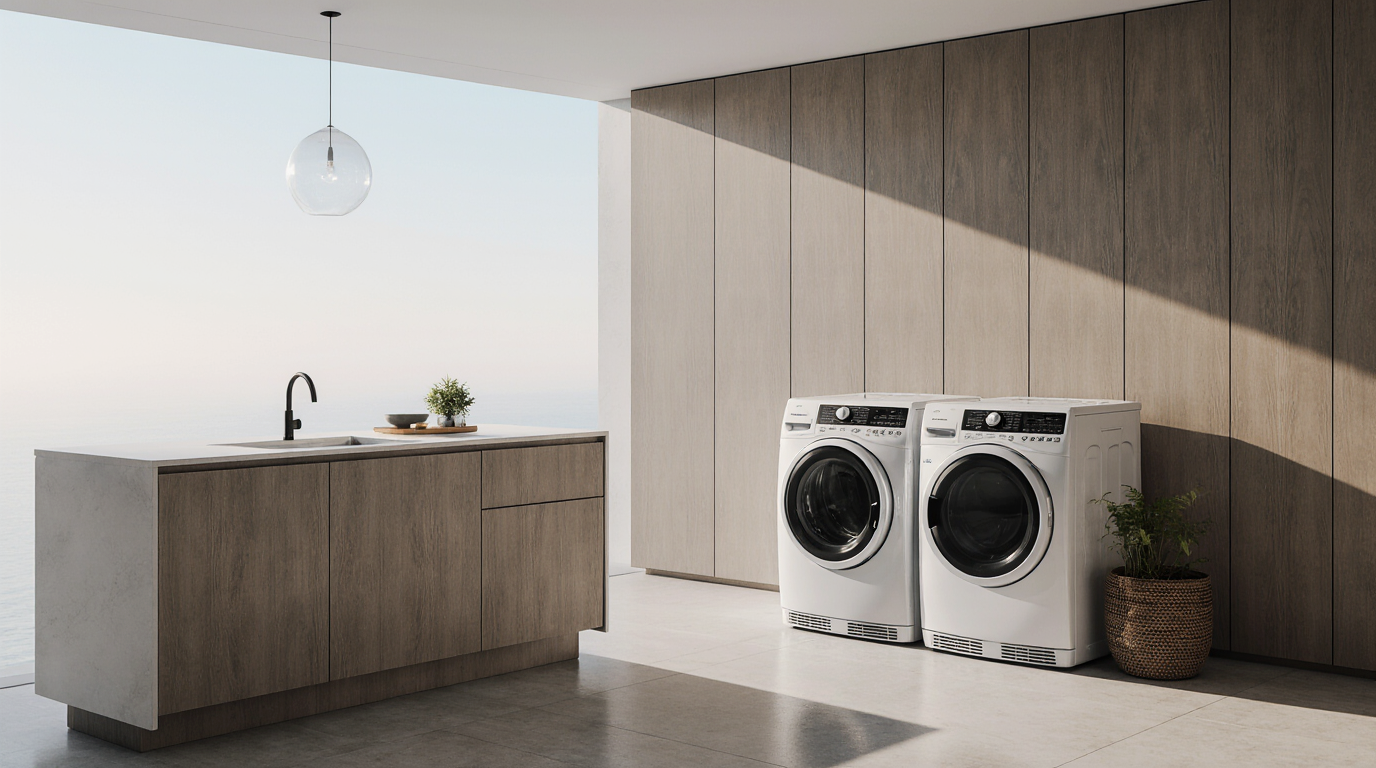
The evolution of the laundry room from a purely utilitarian, tucked-away space into a highly functional, aesthetically integrated element of the modern home is one of the most significant shifts in current interior design practices. This zone, once banished to the cellar or a cramped closet, is increasingly a priority room, demanding the same level of design sensibility and ergonomic consideration as a gourmet cooking space or primary bathroom. Building an Evolved Wash Area requires a masterful balance between cutting-edge workflow efficiency and a clean, sophisticated visual language. This goes beyond simply fitting a washer and dryer; it necessitates meticulous space layout, material selection, and the integration of smart storage solutions that meet the requirements of modern living.
The foundation of any optimized modern wash area is the efficient arrangement. For optimal ergonomics, the arrangement of appliances is best structured by task: sorting, washing, drying, folding, and storing. In smaller footprints, a stacked configuration for the washer and dryer proves to be a crucial tactic, freeing up valuable horizontal surface area. Conversely, for larger dedicated rooms, a side-by-side placement often facilitates easier counter space flanking the machines, which is key to an efficient workflow. Consider the plumbing access early in the design phase; proximity to existing water lines and drains can significantly impact renovation costs and placement flexibility. Beyond this, adequate ventilation is absolutely vital for air quality but a design component—robust air handling is critical for managing moisture, which can degrade materials and create an unpleasant microclimate.
Materiality is the key to achieving the contemporary aesthetic. Gone are the days of harsh fluorescent lighting and basic white laminate. Today’s designs lean into durable, refined surfaces. Countertops, often essential for treating stains or folding, need to be impervious to dampness and harsh chemicals. Quartz and solid surface materials provide continuous uniformity, excellent stain resistance, and a clean, monolithic appearance that is the ideal match for contemporary style. For cabinetry, opt for flat-panel doors with no visible handles or integrated pulls—the hallmark of contemporary style. Finishes such as high-gloss lacquer, matte European laminate, or natural stained wood veneers add texture without visual clutter. The flooring choice is equally critical; large-format porcelain tiles are a prime choice, offering exceptional water resistance, durability under heavy appliance vibration, and a sleek, uniform aesthetic when grout lines are minimized.
Illumination strategy is vital for changing the perception of the area from a chore space into a pleasant environment. Effective lighting must serve dual purposes: task lighting and ambient lighting. Under-cabinet LED strips shining right onto the countertop are non-negotiable for detailed work like stain pre-treatment or folding crisp edges. These are best paired with integrated downlights with a high Color Rendering Index (CRI) to allow precise color judgment, vital when dealing with whites and delicate fabrics. The contemporary preference is for clean lines, so don't use fussy or over-sized lights; minimalist linear pendants or flush-mount fixtures are the ideal choice.
The concept of Integrated Storage marks the distinction of a superior space from an uninspired working area. Open shelving, while popular, can quickly look messy, ruining the modern look. Consequently, prioritize closed cabinetry and built-in organizational systems. Deep drawers fitted with specialized dividers are excellent for housing detergents, softeners, and stain removers, keeping them out of sight yet readily accessible. Think about a hidden, retractable sorting unit, often cleverly concealed within a base cabinet. For items needed less frequently, such as seasonal bedding or specialized cleaning tools, vertical storage extending to the ceiling uses every possible dimension—make sure these top units have gentle closing hardware for a premium feel. A hanging rod installed beneath upper cabinets or near the dryer delivers an essential feature for air-drying delicates or hanging garments straight from the dryer to prevent wrinkles, enhancing overall garment care.
Workflow enhancement through technology is a crucial component of the modern utility space. Integrating a dedicated utility sink with a deep basin and a high-arc, pull-down faucet makes initial washing easier and hand-washing of items too delicate for the machine. In addition, exploring smart appliance integration improves user interaction. Machines connected to home Wi-Fi enable distant operation and pausing and notification alerts for cycle completion, enabling multitasking efficiency. This attention to technological synergy shows dedication to an advanced aesthetic.
The aesthetic details, frequently neglected, cement the high-end contemporary finish. Hardware, if used, should be sleek—long, slender bar pulls or minimalist knobs in finishes like brushed nickel, matte black, or polished chrome. A subtle backsplash using a textured tile, perhaps a linear mosaic or a smooth, vertically stacked subway tile, introduces a point of focus without competing with the room's clean lines. If space permits, incorporating a small, built-in folding station or a fold-down ironing board provides significant convenience while maintaining a streamlined profile. Even the choice of laundry basket matters; opting for integrated, attractive bins over mismatched plastic baskets contributes significantly to the room's overall sense of curated functionality. The ultimate goal is to build a room that makes domestic upkeep simpler and closer to a simple, integrated aspect of maintaining a well-ordered home, a sanctuary of domestic efficiency. This level of detail guarantees the space is far from temporary, but a well-engineered environment that considers the occupant's energy and design preference.