Laundry Room Design Layout: Reimagine Your Home Functionality with Refined Style
Crafting a functional yet stylish laundry room space goes far beyond simply arranging a washer and dryer. It’s about redefining an often-overlooked space into a harmonious blend of utility, coziness, and aesthetic charm. A strategically designed laundry room can enhance everyday functionality, maximize storage potential, and even add measurable value of your home. Whether you have a compact utility closet, every element matters — from appliance placement and cabinetry to the overall flow of the space.
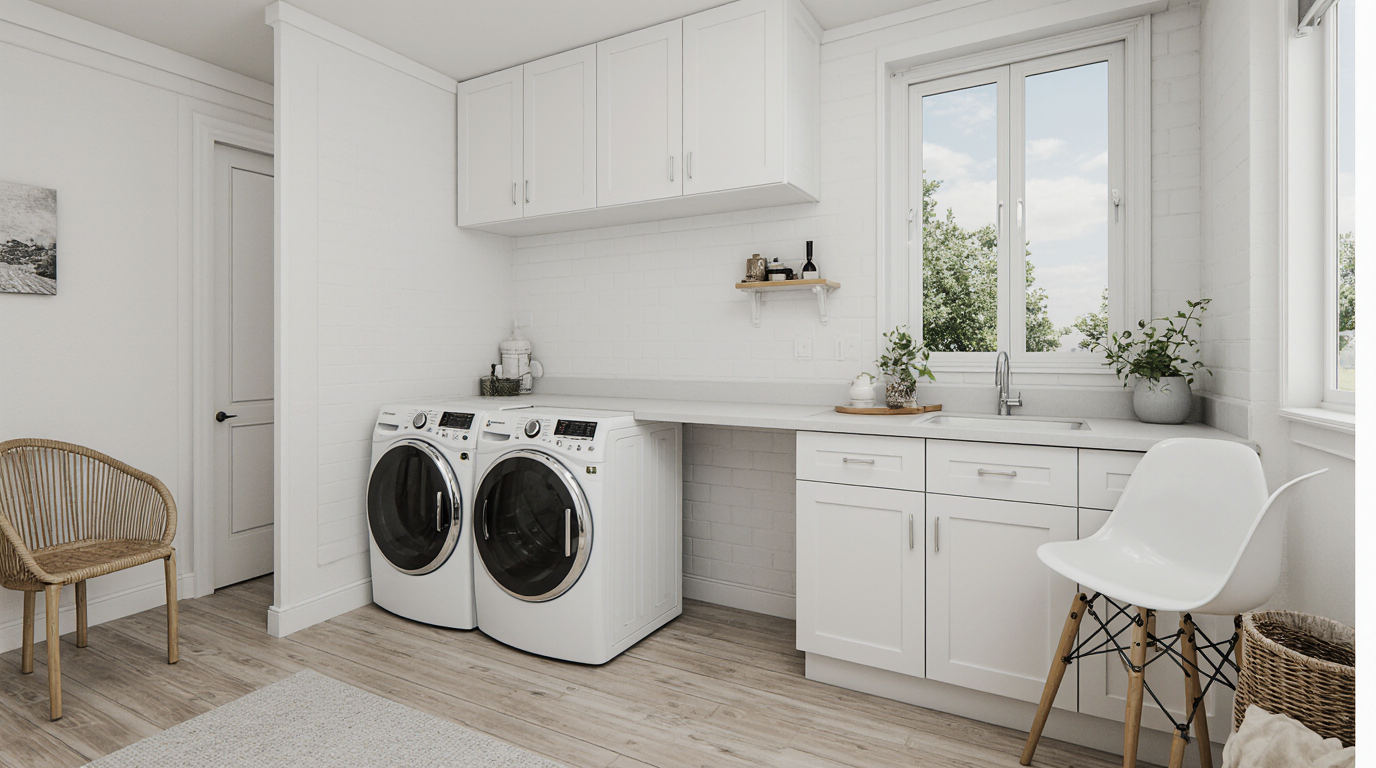
A well-planned laundry room design begins with an understanding of how the space will be used daily. The workflow should be intuitive: moving clothes from sorting to washing, drying, folding, and storing with minimal effort. Many designers recommend the “functional laundry flow”, similar to the kitchen principle, where the washer, dryer, and sink form a streamlined path that eliminates unnecessary movement. This practical strategy ensures that efficiency shapes the design while maintaining visual balance. For those seeking maximum efficiency, compact appliances, tailored cabinetry, and integrated laundry bins can make even the smallest laundry space feel expansive and efficient.
Creating a harmonious laundry room layout also requires careful attention to illumination. Daylight enhances the perception of purity and openness, making laundry tasks feel lighter. When windows aren’t an option, layered lighting becomes essential. Combining ambient fixtures with task lighting can illuminate every corner. Adding LED strips beneath shelves or inside cabinets provides a luxurious touch while improving organization. Designers often emphasize that light impacts emotion: a well-lit laundry room encourages productivity, turning a daily necessity into a refreshing experience.
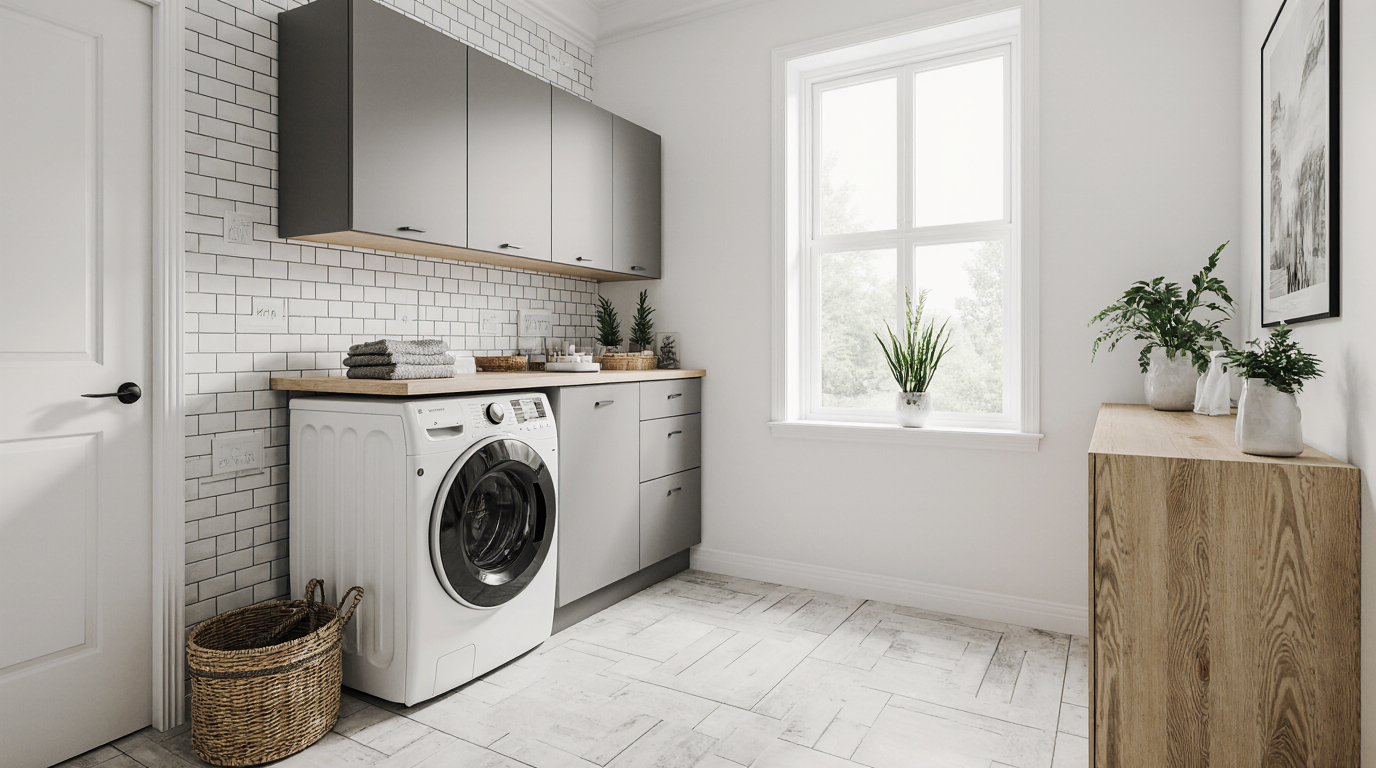
Another fundamental aspect of laundry room design is efficient organization. Without it, the space can quickly become chaotic and overwhelming. Custom cabinetry designed for detergents, cleaning tools, and household items maintains a polished look and structure. Tall cabinets are ideal for storing mops, brooms, and ironing boards, while deep drawers or pull-out baskets hide linens and fabrics neatly. For compact layouts, combining open shelving with pegboards or built-in cubbies adds versatility without compromising the aesthetic. The best designs maximize every corner, turning walls and under-counters into stylish storage zones.
When selecting surfaces, longevity and humidity protection are essential in any laundry layout. Countertops made of quartz resist humidity and wear, while luxury vinyl planks ensure longevity. The color palette also defines the mood — neutral hues like white, beige, and gray create airiness, while earthy tones evoke freshness. Adding matte black fixtures introduces contrast, reinforcing a elegant aesthetic that elevates the entire design.
Ventilation remains a essential factor in effective laundry room design. Good ventilation prevents unpleasant odors and protects the space. Installing an air outlet, ensuring clear dryer vents, and including vented skylights all contribute to a fresher laundry area. Many modern designs now integrate suspended drying systems that enhance eco-efficiency while promoting sustainability. These smart features not only extend garment life but also elevate the efficiency of the laundry room, making it a place of calm and order.