
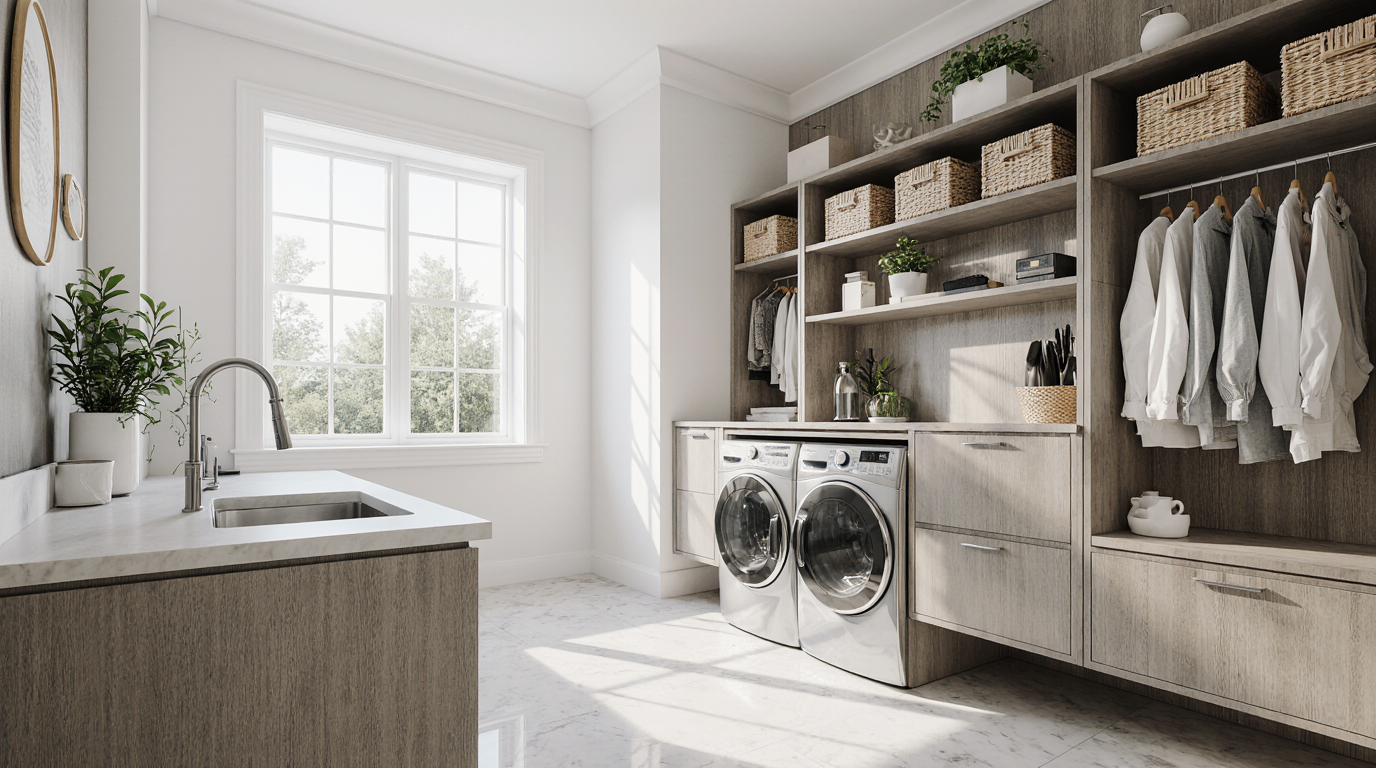
Redesigning a laundry closet to be simultaneously practical and visually appealing requires a blend of clever planning and imaginative solutions. Homeowners frequently underestimate the possibilities in a tiny laundry nook, seeing it solely as a functional space. By applying careful planning and nuanced design touches, even a small laundry closet can emerge as a stylish, functional retreat. Bathroom design experts often emphasize that even limited spaces can make a strong visual statement when layered with textures, practical storage solutions, and personalized touches. Selecting optimal cabinets, illumination, and storage accessories ensures the closet is both practical and visually appealing.
An essential starting point for a standout laundry closet is a careful analysis of the room’s size and structure. Precisely measure every aspect—height, width, depth—to plan the perfect fit for appliances, shelving, and storage components. Using floor-to-ceiling storage solutions is a modern approach to expanding functionality in compact laundry closets. Vertical cabinetry and shelving systems create tidy, stylish storage for cleaning products and linens. Bespoke storage solutions maximize spatial efficiency, making use of every corner. Luxury design experts suggest integrating soft-close cabinets and pull-out hampers for a sophisticated yet practical closet.
Lighting plays a crucial role in transforming a laundry closet into a welcoming and efficient area. Artificial lighting layers compensate for scarce natural light, making the area feel spacious and airy. A mix of ceiling, under-cabinet, and focused lighting enhances visibility in critical zones. Selecting soft, warm light tones creates a cozy atmosphere instead of a stark utilitarian one. Strategic light placement can showcase accents like wallpapers, tiles, or color features, turning the closet into a visually curated space. Even minimal decorative lighting, like a chic pendant or wall sconce, adds a layer of elegance to compact laundry spaces.
Color palettes and materials contribute significantly to the overall ambiance of a laundry closet. Soft, neutral colors visually enlarge the room and foster a sense of lightness and cleanliness. Complementary finishes, like marble countertops, quartz surfaces, or matte cabinetry, introduce a sense of luxury while ensuring durability for daily tasks. Combining different textures enhances visual intrigue and sophistication in the design. Ensuring material and color continuity between the laundry and bathroom fosters a cohesive aesthetic. Integrating high-quality materials not only boosts the aesthetic appeal but also adds long-term value and resilience, a hallmark of expert bathroom and utility space design.
Intelligent storage planning is crucial for functionality and tidiness in compact laundry areas. Open units for convenience and closed compartments for a sleek look provide functional harmony. Pull-out hampers, sliding baskets, and stacking units optimize vertical and horizontal space, making even the smallest closets highly functional. Bathroom design professionals often recommend modular storage systems that can adapt as needs change, ensuring the area remains organized and visually appealing over time. Additional features, such as hanging rods for air-drying delicate garments or fold-out ironing boards, enhance usability without occupying permanent floor space. Smart storage is about anticipating needs, combining utility with style, and ensuring every item has a designated place.
Accents and decor elevate a laundry closet from purely utilitarian to stylish and appealing. Art prints, patterned wallpaper, or custom decals add personality without overwhelming the room. Adding plants or vines brings a fresh, organic touch to the closet. Well-chosen baskets, jars, and containers merge practicality with elegance. Luxury bathroom designers often highlight the importance of balancing functionality with visual appeal, suggesting that even a small laundry closet can reflect the homeowner’s personality and taste. By layering textures, colors, and thoughtful accents, a compact space can feel curated and inviting rather than purely practical.
Choosing the right machines significantly impacts a closet’s usability and workflow. Small yet versatile appliances provide space-saving solutions without compromising functionality. Stackable units are particularly useful in vertical spaces, allowing the addition of shelving or cabinetry above the appliances. Integrating appliances into the design, rather than treating them as separate elements, maintains a cohesive and streamlined appearance. Experts in bathroom and utility space design recommend concealing appliances behind cabinetry or coordinating finishes to blend seamlessly with the surrounding decor.
Subtle design choices can profoundly elevate both style and usability in a laundry area. Handles, knobs, and pulls in coordinating finishes, such as brushed nickel or matte black, contribute to a unified aesthetic. Incorporating foldable or hidden ironing boards, retractable drying racks, and small stools can enhance usability without encroaching on space. Pleasant aromas contribute to a welcoming, well-considered design. Bathroom design authorities stress that attention to detail is what separates a standard laundry closet from a truly inspiring and efficient design. By combining functionality, aesthetics, and thoughtful accessories, homeowners can create a laundry closet that elevates the overall experience of their home.
Transforming a laundry closet into a stylish and efficient space requires careful planning, creativity, and attention to detail. Every aspect, from storage solutions to lighting, color palettes, and decorative accents, contributes to a cohesive and functional design. Using bespoke cabinets, space-efficient machines, and multi-level lighting ensures a visually pleasing and functional closet. Proper design transforms tiny closets into highly efficient, stylish spaces that harmonize with the home. Professional-inspired strategies allow even compact laundry areas to become inviting, practical, and design-forward retreats.



