The laundry room, frequently dismissed as mere utility space, is rapidly evolving into a highly designed and integral extension of the modern home. At the core of this transformation lies the appliance enclosure setup, which acts as the essential backbone for both organization and aesthetic appeal. Moving beyond basic open storage, today's designs prioritize user comfort, long-lasting materials, and flow with existing interior design, demanding a strategic approach to cabinetry. A truly exceptional laundry space must manage the disarray of cleaning materials while offering a serene and efficient environment for the daily maintenance routine.
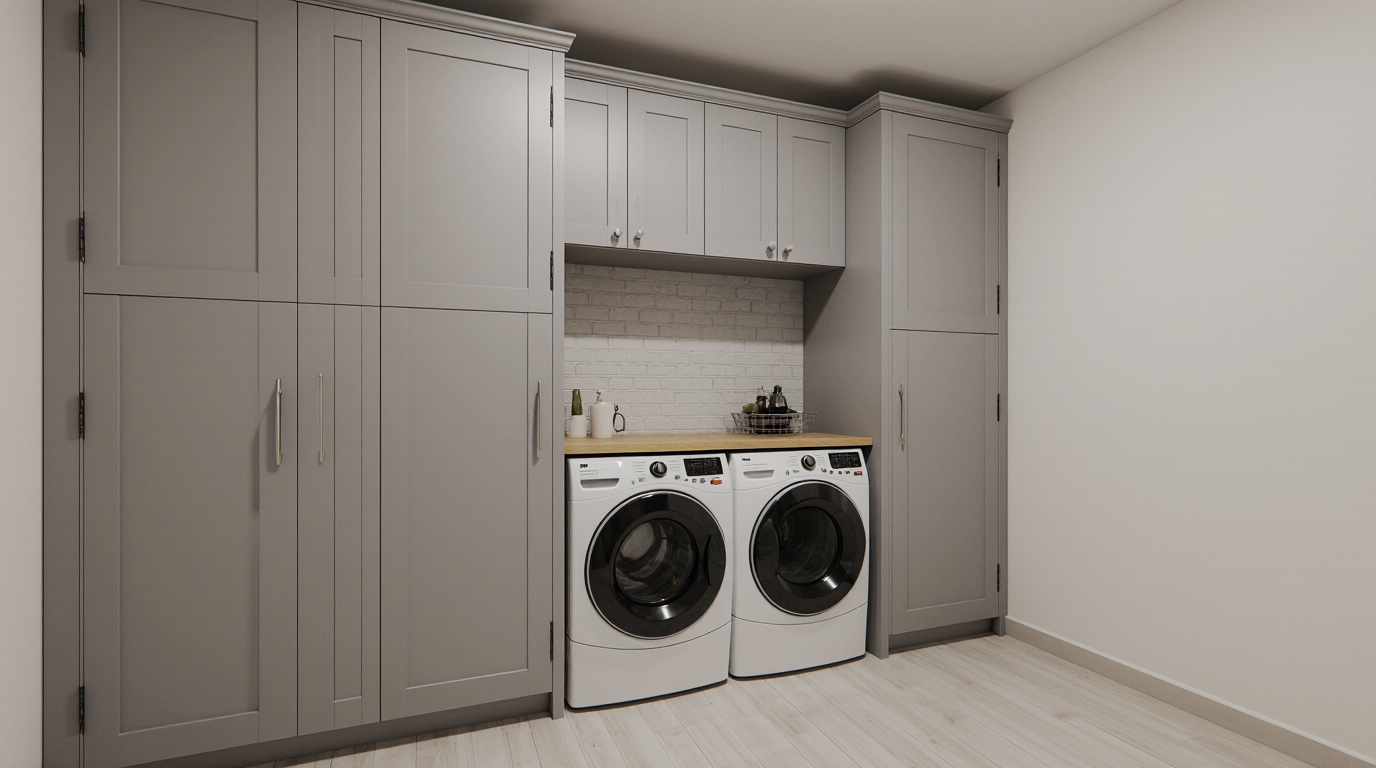
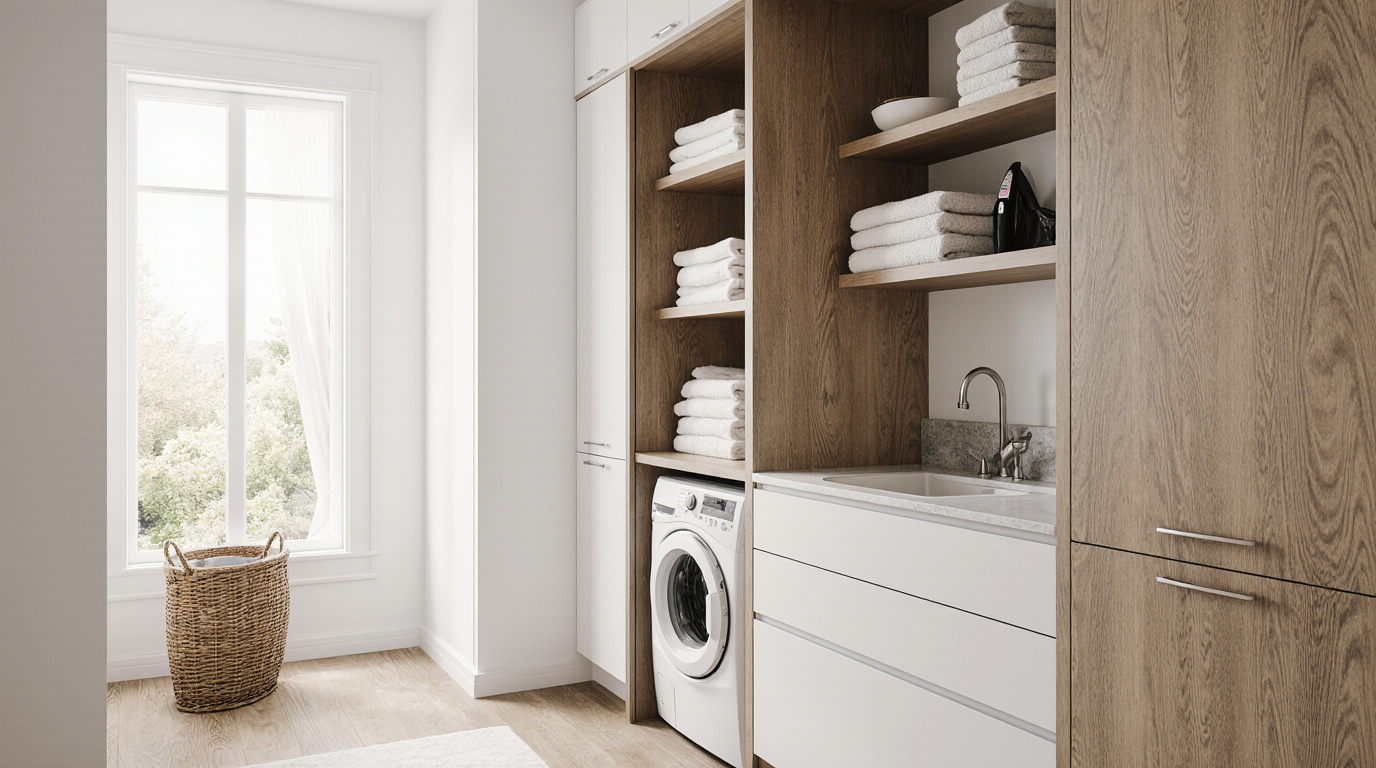
The foundation of a superior laundry design rests upon vertical space maximization. For every layout, the ascent toward the ceiling with cabinetry is non-negotiable for achieving optimal storage density. Floor-to-ceiling units, often realized through tall utility cabinets, serve as the primary repository for oversized items, seldom-needed linens, or heavy-duty maintenance gear. When designing these towers, the placement of functional elements is key: frequently used items such as fabric softeners and spot removers must be kept in convenient bottom drawers or mid-height compartments, utilizing soft-close drawer technology for a silent and luxurious feel. Conversely, the highest reaches are perfect for items only needed a couple of times a year, reducing daily visual clutter.
A critical trend that separates a basic room from a luxury conversion is the commitment to integrated functionality. Cabinetry is now engineered to do more than just hold things. Consider the necessity of a sorting station; custom cabinets are frequently designed with built-in, multi-compartment pull-out hamper systems. These are often outfitted with removable fabric bags that allow the user to move organized garments to the appropriate washer without extra transferring, enhancing daily efficiency. Similarly, the chore of ironing can be completely integrated by incorporating pull-down ironing boards that retract invisibly into a drawer or a slim vertical pull-out, maintaining clean sightlines when not in use.
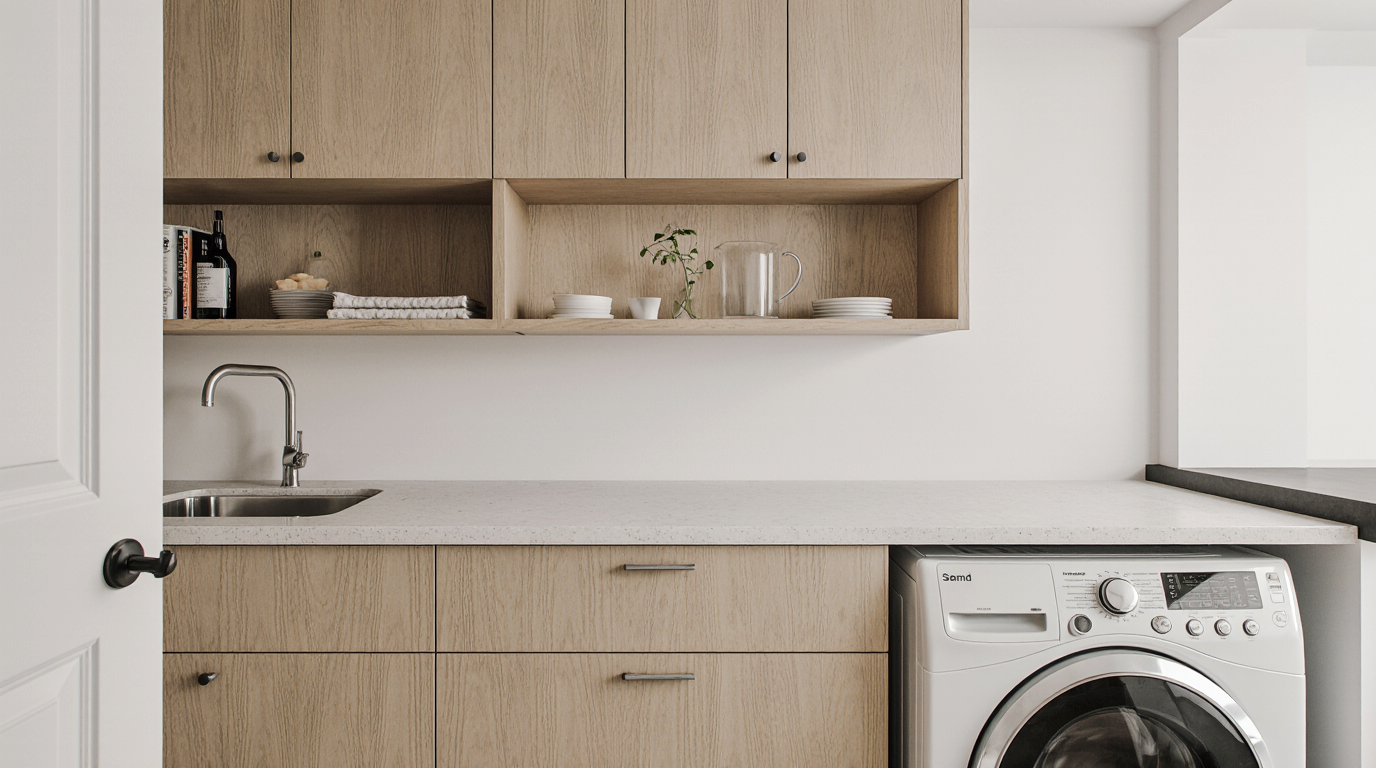
The surface area is the second vital component after storage volume. A proper folding station demands a substantial, durable countertop. Materials like quartz or specialized laminate are preferred for their resistance to dampness, caustic substances, and constant friction. Even in compact layouts, designers often utilize the space above the washer and dryer by installing a continuous counter spanning across them, effectively turning the appliance tops into usable workspace. For delicate air-drying, the old-fashioned clothes rack is being replaced by integrated hanging solutions concealed within upper cabinets. These can be pull-out drying racks or simple, elegant hanging rods tucked behind a door, providing necessary air-drying space without sacrificing floor area to a freestanding unit.
A major design pivot is the move toward material and finish sophistication. The laundry room is no longer just utilitarian; it mirrors the main living areas or master suite. This is evidenced by the popularity of two-tone cabinetry, perhaps pairing deep, grounding colors like matte navy or sage green on the base units with crisp white or pale wood uppers to keep the room feeling airy. Slab-front doors offer a modern, minimalist aesthetic, easy to wipe down, while Shaker profiles lend a transitional warmth. To introduce visual lightness in rooms with less natural illumination, designers often incorporate glass-front cabinets—but instead of general storage, these are reserved for displaying aesthetically pleasing items, such as matching glass jars filled with visually appealing supplies like wool dryer balls or artisanal soaps, effectively turning storage into décor.
Illumination plays a key supporting role, especially given that many laundry rooms lack exterior windows. Strategic placement of undercabinet LED lighting not only brightens the work surface for accurate stain pre-treatment but also highlights backsplashes or textured finishes, adding layers of visual depth and making the space feel professionally appointed. Furthermore, the selection of hardware—brushed gold pulls or matte black knobs—is an opportunity to echo design choices from adjacent rooms, fostering design cohesion throughout the home.
For rooms where space is severely constrained, innovation becomes paramount. Here, floating cabinets create an illusion of more floor space, contributing to an open feel even when storage is high. In lieu of traditional swing doors, which require clearance, lift-up cabinet doors or even high-quality, ceiling-to-floor curtain systems can conceal an entire appliance wall, offering an immediate visual reset when the laundry cycle is complete. The integration of a utility sink should also be considered a feature, perhaps topped with a custom cover matching the main countertop when not in use, temporarily doubling the folding space. The overall goal for the laundry cabinet design is to transition the perception of the room from a necessary burden to a meticulously organized, specialized workspace that supports the home’s overall functionality through clever millwork and thoughtful feature incorporation.