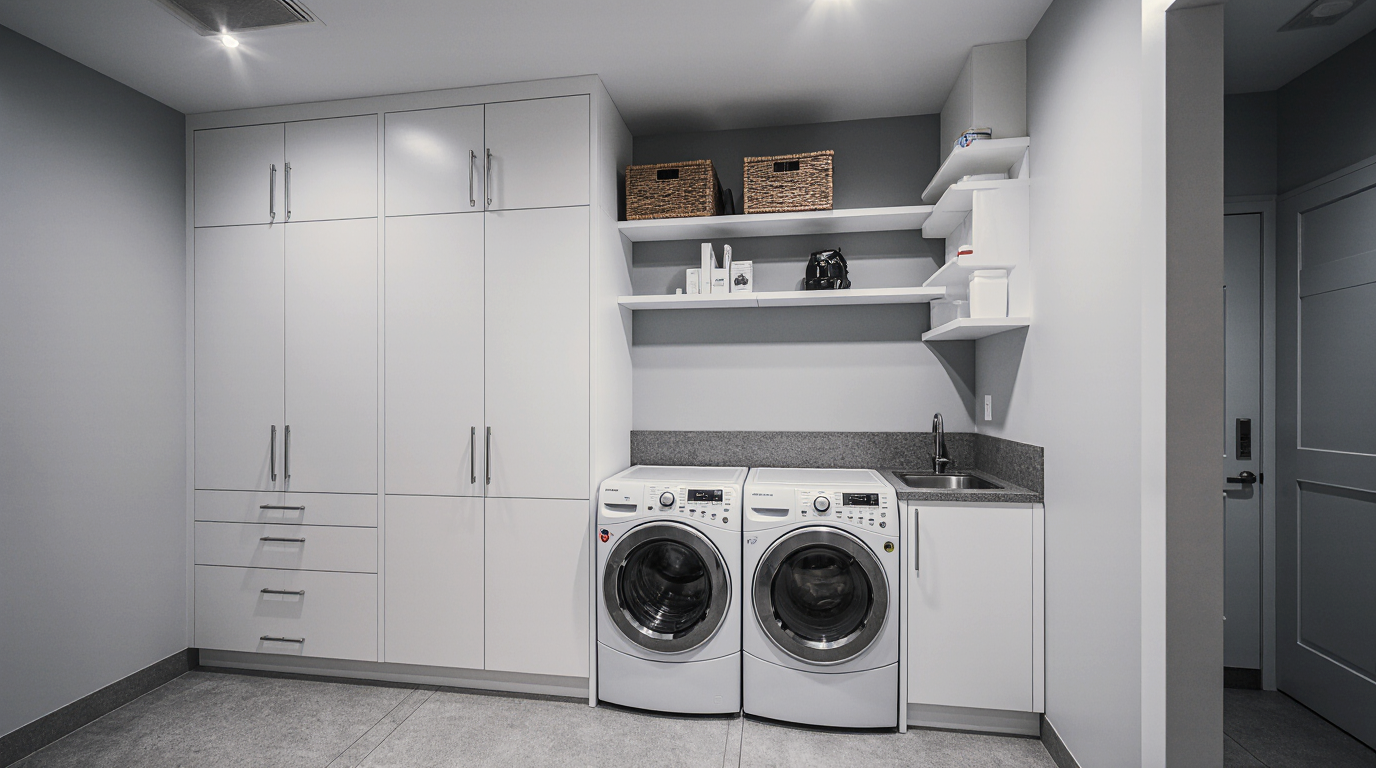
Transforming a portion of the garage into a dedicated washing area offers a unique architectural puzzle that professional space planners thrive on. The primary hurdles are invariably environmental—temperature fluctuations, dust, and humidity—which must be tackled before visual decisions are considered. The most crucial step in the ultimate garage laundry design is creating a stable envelope. This might involve installing proper insulation, potentially using closed-cell spray foam for superior thermal performance, and ensuring robust, dedicated ventilation systems. A standard bathroom exhaust fan is often insufficient; consider an inline duct fan system designed to cope with the moisture load generated by the dryer, venting directly to the exterior to stop dampness forming on the walls and stored items. This attention to climate control systems is what distinguishes a quick installation from a long-term asset.
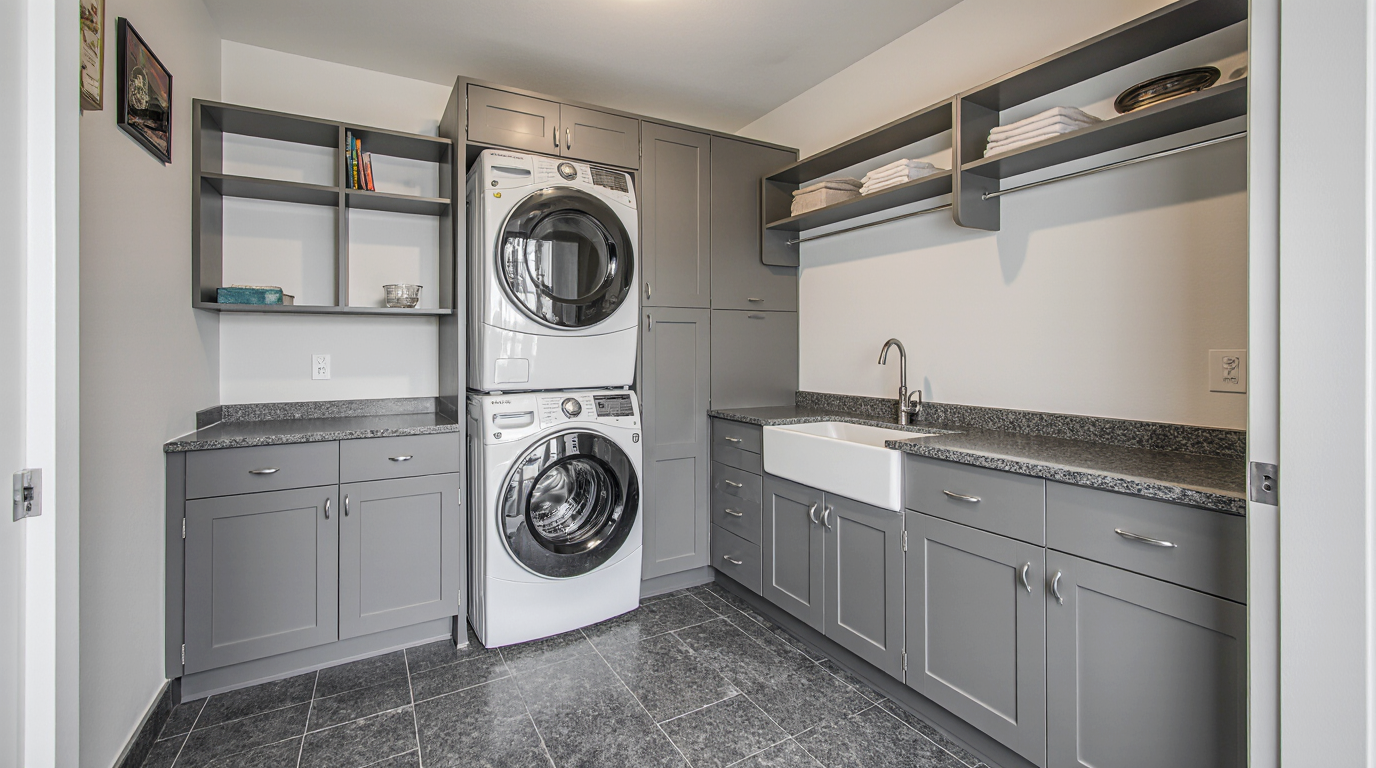
After the climate is controlled, the focus shifts to appliance selection and configuration. In a garage environment, where square footage is at a premium due to automotive needs or workbench areas, vertical integration becomes paramount. The decision between a side-by-side configuration and a vertical laundry tower is heavily influenced by the available width available. If your space is narrower than it is deep, prioritizing a vertical tower liberates precious horizontal counter space for day-to-day use. This counter space is non-negotiable for smooth processing; it acts as main staging area for sorting, folding, and the preparation of garments. For maximum utility, a continuous work surface, ideally constructed from a material resistant to water spotting and common household chemicals—perhaps a durable solid surface or a thick, moisture-resistant wood top—should span the width of the appliances and any adjacent cabinetry.
Organization planning is the backbone of a well-designed utility space, especially one that must counteract the mess inherent in a typical workshop environment. The guiding principle here is to capitalize on vertical real estate. While open shelving allows for quick identification and easy access to frequently used items like detergent or dryer sheets, it must be used selectively to maintain a clean look. For true visual decluttering, install tall, full-height units with concealing fronts—perhaps a durable, thermofoil finish that handles slight climatic changes more effectively than traditional paint. Within this storage matrix, dedicated areas need to be established. A dedicated nook for cleaning tools such as a mop, broom, or shop vac, perhaps utilizing a pegboard system painted a clean, unifying color, prevents garage equipment from encroaching on the washing area. Integrating pull-out hampers or linen baskets directly into the lower cabinetry run, typically positioned below the work surface, is a sophisticated technique to hide soiled clothes until laundry day, significantly enhancing the room's perceived cleanliness.
The functionality of a garage laundry room is vastly improved by adding a deep basin, often called a slop sink. This feature relocates the dirtiest chores—pre-treating heavily soiled items, rinsing paint brushes, or dealing with unforeseen messes—away from the primary living areas. The sink basin needs to be substantial, opting for high-impact acrylic or cast iron for durability. The plumbing for this area should be meticulously planned during the initial utility mapping phase to consolidate runs and reduce construction difficulty. Consider a faucet with a pre-rinse sprayer attachment for maximum versatility.
Aesthetic integration is where the garage space moves beyond a simple service location to a intentional space. Since the garage often has a raw concrete slab, addressing this surface is crucial for both comfort and style. If a full tear-out and replacement are too expensive or time-consuming, explore high-performance floor coatings. **Stenciling or using a durable two-part epoxy kit can turn the boring floor into a surface that mimics tile or has a sophisticated, high-gloss finish. This coating should also offer enhanced protection against stains and corrosive materials. Lighting must be superior to standard garage fare. Replace dim yellow lights for bright, color-accurate LED panels. Strip lighting installed directly under upper cabinets illuminates the work surface perfectly, while flush-mount, high-lumen ceiling fixtures flood the space with light, which is essential for visibility and proper laundry tasks.
Think about the doorway to the home. If the laundry room acts as a transition zone, often combining with a changing area, incorporate a low wall or perhaps a track and sturdy, cleanable drape. This establishes a demarcation line, **lending a sense of enclosure and psychological separation between the work zone and the living area, even where the garage is a single, large volume. Each design choice, from the height of the ironing board mount to the paint used on the vertical surfaces—typically pale shades to brighten the naturally dim space—should be a deliberate choice to turn this functional corner into a genuinely efficient, durable, and enjoyable part of the household system. This holistic approach guarantees the value of the modification is achieved not just in functionality, but through its effortless fit into family life.