Skip to content

Types of Quartz Countertops in Polk, FL

Quartz surfaces are now celebrated as essential elements in contemporary kitchen aesthetics owing to their superior

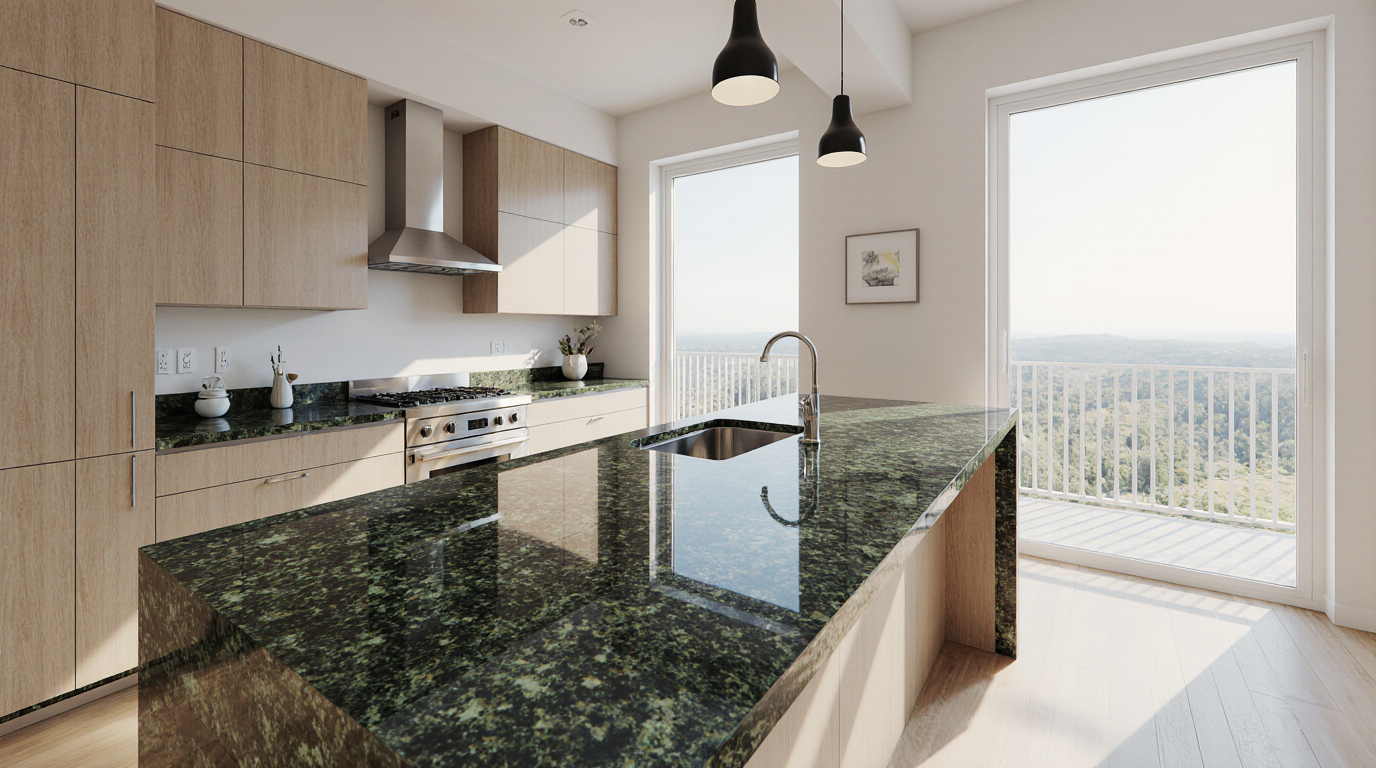
Quartz surfaces are now celebrated as essential elements in contemporary kitchen aesthetics owing to their superior strength, sophisticated design, and adaptable style. Made by blending more than 90% natural quartz with high-quality resins and color pigments, these slabs combine long-lasting performance with high-end design appeal, withstanding damage from scratches, stains, and heat more effectively than traditional stone options. Quartz surfaces, in contrast to granite or marble, possess a non-porous structure, guaranteeing both sanitary surfaces and simple cleaning, essential for busy households or professional cooking spaces.

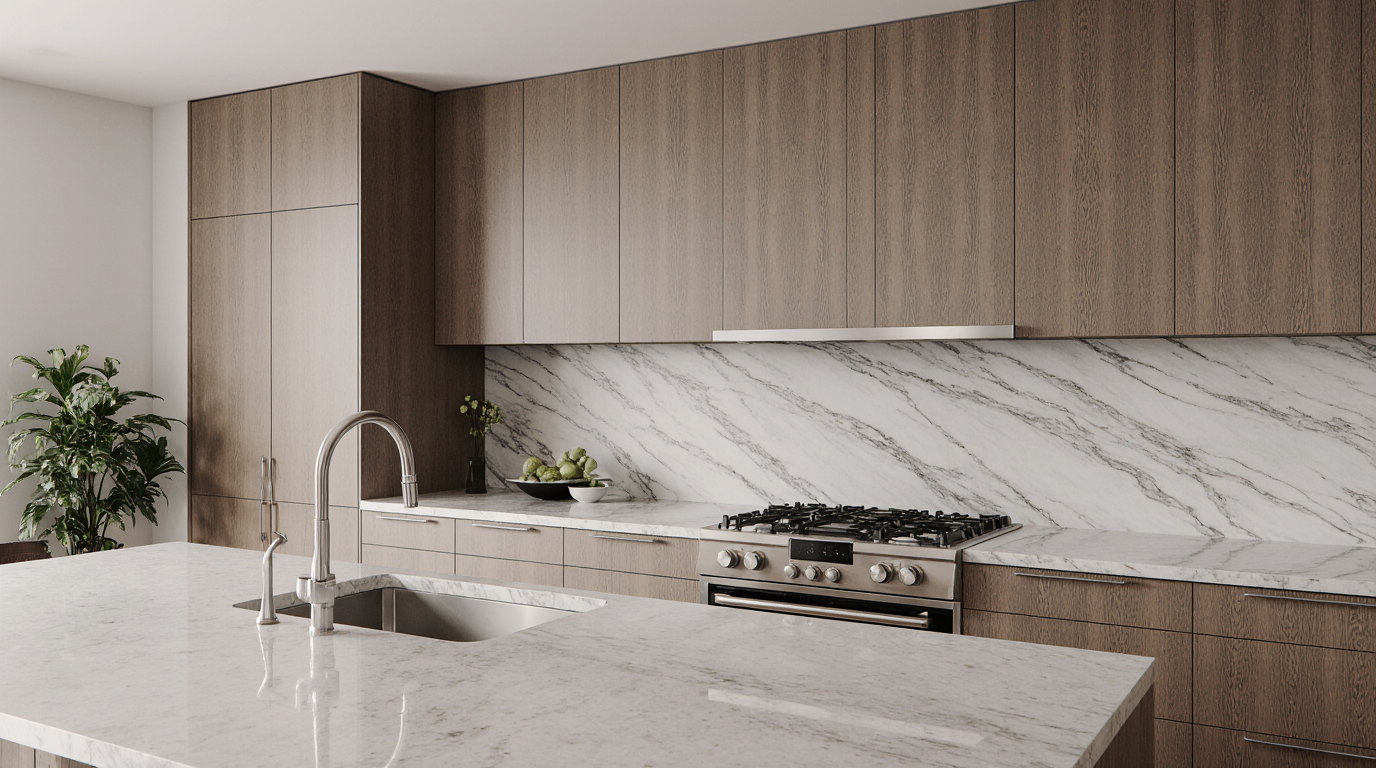
Among the most popular types of quartz countertops, solid color slabs provide a sleek and uniform appearance perfectly suited for minimalistic or modern kitchen designs. These slabs allow homeowners to pair their countertops seamlessly with cabinetry and backsplashes, producing a visually balanced and sophisticated space. The veined variety is crafted to emulate marble’s elegant patterns while offering superior durability, These natural-looking veins provide a sense of sophistication and long-lasting style, while maintaining exceptional performance.

For those seeking customization and unique style, quartz countertops are available in textured and patterned finishes that replicate natural stone or exotic designs. Quartz is ideal for terraces, poolside kitchens, and damp zones due to its UV and moisture resistance. Investing in quartz countertops ensures a durable, stylish, and functional centerpiece for any kitchen or bathroom, blending performance with the elegance of high-end materials and making them a preferred choice for modern interior projects.

Affordable Quartz Countertops Polk FL

Securing cost-effective quartz countertops is easier than many expect. Although quartz represents a durable, stylish engineered stone, not all quartz is priced the same. The key to finding budget-friendly options lies in the design and manufacturer. Simpler patterns, such as solid colors or those with fine speckles, are generally less expensive than intricate marble-look designs with complex veining. Considering minor brands or builder-level slabs often results in lower prices. Smaller slabs left over from big projects can offer luxury looks at a fraction of the cost.

Discount Quartz Countertops Near Me Polk FL

When searching for "discount quartz countertops near me," you are likely looking for a great deal on materials and installation locally. Start your search at local showrooms or stone workshops for the best options. Fabricators frequently discount certain slabs or outdated collections. Another excellent source for discounts is a fabricator's "remnant yard". Remnants are the smaller, leftover sections from full slabs used in previous projects. While not large enough for a massive kitchen, they are perfect—and deeply discounted—for bathroom vanities, small kitchen islands, laundry rooms, or bar tops. Always get at least three itemized quotes from local suppliers to compare not just the material cost, but the total price including fabrication, cutouts, and installation.

Quartz Counter Top Price Polk FL

Quartz countertop costs depend on multiple factors, creating a wide price range. The price is typically quoted per square foot, installed, and this rate can range widely. The most significant factor is the brand and design tier; complex patterns with dynamic veining that mimic rare marble will cost far more than simple, solid colors. Well-known manufacturers often command higher prices. Beyond the slab itself, fabrication costs are a large part of the budget. This includes the number of cutouts needed (for sinks, cooktops), the style of the edge profile (a simple eased edge is cheaper than a multi-layered ogee edge), and the overall complexity of the layout. Thickness choice and installer fees affect the overall price significantly.

Quartz Overlay Countertops Polk FL

Quartz overlay countertops are a specific remodeling product designed to be installed directly on top of existing surfaces, such as old laminate or tile. With about 1 cm thickness, quartz overlays are significantly thinner than full slabs. Installation is quicker and cleaner since old counters remain in place. Overlay countertops offer a practical way to modernize a space quickly. However, there are trade-offs to consider. Counter height may increase, impacting stove or sink fit. Furthermore, any underlying issues with the original counter (such as being unlevel) will transfer to the new surface. Although budget-friendly, overlays often lack the enduring quality of full quartz slabs.

Dark Quartz Countertops Polk FL

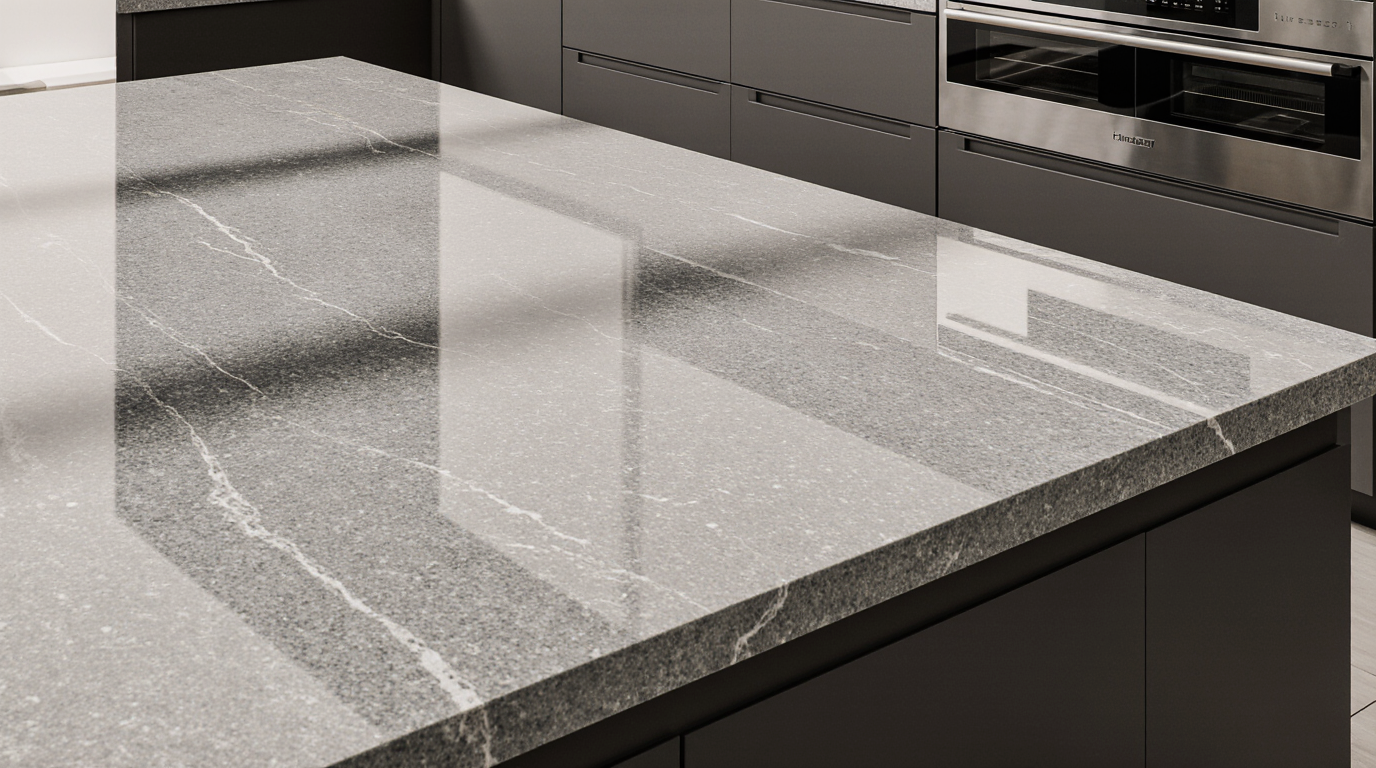
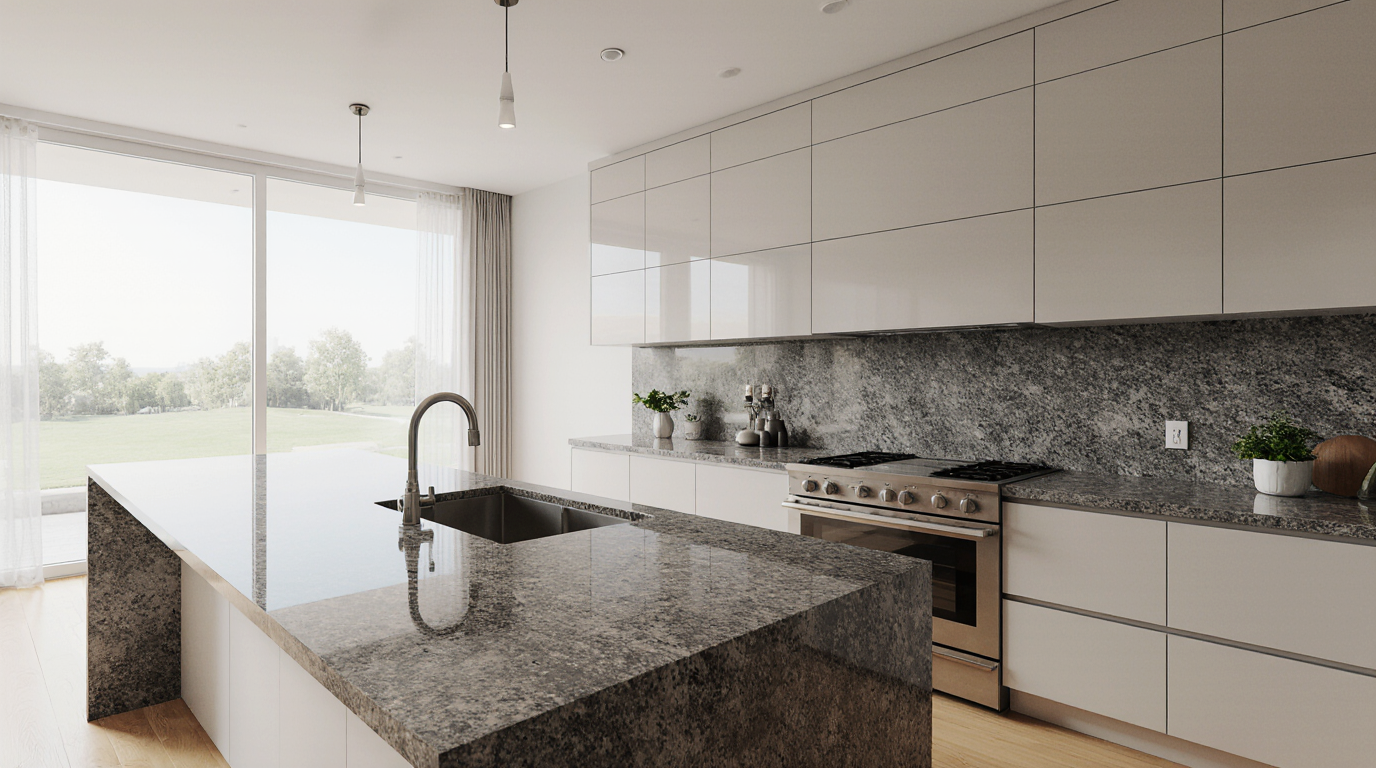
Quartz in dark colors, including charcoal, espresso, and black, brings a dramatic sophistication to kitchens. They are incredibly versatile, capable of creating a dramatic, high-contrast look when paired with white or light-colored cabinetry. Dark-on-dark designs result in a smooth, high-end, contemporary look. Many dark quartz options feature subtle veining, metallic flecks, or even textures that mimic natural slate or soapstone. Dark surfaces require more frequent cleaning because imperfections are more visible. Choosing honed or matte finishes reduces glare and conceals fingerprints.

Quartz Stone Countertops Polk FL

Quartz surfaces are a high-end choice for contemporary kitchens and bathrooms, blending the beauty of natural stone with advanced engineering. Unlike fully natural stone options such as granite or marble, quartz countertops are an man-made stone alternative. They are composed of approximately a high proportion of natural quartz, 90-95% combined with resins and color additives. This production method gives quartz its greatest advantages: it is impermeable. This means the countertop remains maintenance-free and is very stain-resistant to everyday spills such as wine, coffee, and oils. This long-lasting quality along with scratch-proof properties and extensive color/pattern options makes it an ideal combination of practicality and elegance for years to come.

Prefab Quartz Countertops Near Me Polk FL

Searching for "local prefab quartz counters" is a efficient way to find a cost-effective solution for a standard-sized kitchen or bathroom. Prefab quartz surfaces are quartz slabs pre-cut to standard dimensions (like 9-foot lengths by 26-inch depths) and have edges polished and shaped according to standard profiles. Because they are manufactured at scale, the linear foot pricing is more economical than bespoke options. You can find these at regional quartz distributors, DIY stores, and hardware chains. While the choices in size and hue can be narrower than custom options, prefab quartz is an ideal solution for simple kitchen plans, rentals, and cost-effective remodeling.

Brown Quartz Countertops Polk FL

Quartz surfaces in brown offer a wonderful warmth and earthy elegance that can ground any kitchen design. This color category is incredibly diverse, from subtle sand and taupe shades to rich, deep chocolate or espresso tones. The color fits both modern and traditional designs; light beige tones promote a warm, timeless look, while espresso shades with veining bring elegance and modernity. This shade complements light-colored cabinets for a cozy, coordinated design. It also enhances the natural warmth of wooden finishes. For those who want a warmer alternative to gray or black, brown provides a stylish, warm neutral.

White Quartz Kitchen Countertops Polk FL

Engineered white quartz surfaces are a highly sought-after, classic selection for residential remodeling projects. Their ability to make a space feel larger, brighter, and cleaner is unmatched. The versatility of white quartz is its greatest strength. You can choose solid white for a clean, minimalist look. For a subtle details, some slabs include flecks or light shimmer. The trendiest options mimic natural marble, featuring subtle to bold gray patterns reminiscent of Carrara or Calacatta. These options provide the luxurious look of natural marble but with all the benefits of engineered quartz, namely its impermeable surface and scratch/stain resistance.

Rose Quartz Countertops Polk FL

Quartz counters in rose hues are a unique and luxurious option that can be available in two variations. The primary type is engineered quartz with pink or rose pigments. This is a bold, specialty choice that adds a touch of bespoke color and softness to a space, ideal for custom kitchen islands, chic baths, or functional laundry spaces. The second, far more rare and opulent, is a countertop made from slabs of actual, semi-precious rose quartz gemstone, often illuminated to highlight crystal patterns and translucence. For most residential applications, a rose-pigmented engineered quartz provides the desired color and aesthetic with the proven durability of a standard quartz surface.

Custom Quartz Countertop Polk FL

Selecting a bespoke quartz countertop is a preferred and highly accurate method for improving your kitchen or washroom. The process begins with you picking a complete slab (or several slabs) of quartz in your chosen style from a quartz provider. Then, a certified installer will visit your home to create a "exact model," which is an meticulous mapping of your counter supports, capturing all angles and contours. Back at their studio, the technician uses this model to shape the quartz with specialized saws. This is when they also create cutouts for your wash area and cooktop and apply your chosen edge profile (like bullnose). Finally, the crafted sections are delivered and professionally installed, providing an impeccable, refined finish.

Most Popular Quartz Countertops Polk FL

The highly sought-after quartz countertops on the market today are overwhelmingly those that replicate the look of classic marble. Property owners favor the bright and luxurious aesthetic of stones like Carrara, but are cautious about marble's high-maintenance nature (prone to staining and etching). Marble-look quartz provides the best compromise. Designs featuring a soft white or light gray base with dynamic, realistic veining—ranging from soft and delicate to intense and vivid—are best choices. Beyond marble imitations, other trending options include classic white quartz for a contemporary style, and soft light-gray countertops that serve as a flexible backdrop. The preference has progressed away from the heavily textured styles toward refined, understated aesthetics.

Prefab Quartz Countertops Polk FL

Factory-cut quartz countertops are a specific category of product designed for economic efficiency and efficiency. Unlike tailored pieces, which are made from raw stone blocks, prefab countertops are pre-cut at the factory into standard kitchen dimensions. They are typically sold in long, rectangular pieces (e.g., 108 inches long and 26 inches deep) and include polished sides. This factory production cuts down on the installation effort, making them a cost-efficient choice. They are an excellent option for simple, straight-run kitchen layouts, rental properties, or vanity tops where tailored cuts are not needed. While the range of hues and edge styles is more restricted, prefab quartz maintains durability and simple upkeep.

Beige Quartz Countertops Polk FL

Beige quartz countertops are an excellent choice for enhancing a cozy, classic kitchen. As a soft neutral, beige serves as a warmer substitute for white and a more traditional alternative to cool gray. The range of shades is rich, spanning from pale beige hues to warm caramel and taupe colors. Many quartz patterns incorporate delicate speckles, adding a soft, rustic feel. Other styles feature elegant cream veining, enhancing sophistication. Beige pairs exceptionally well with traditional wood cabinets and also works seamlessly with light-colored cabinets.

Sparkle Quartz Countertops Polk FL

Galaxy quartz surfaces, often called "cosmic" quartz, are a popular choice for those wanting to add a touch of glamour and personality to their space. This look is created with tiny embedded reflective particles. These materials are typically tiny reflective fragments. When sunlight or artificial light strikes it, these inclusions reflect brilliance. This design is most commonly seen in black (black sparkle), white (white sparkle), and gray, but is also offered in vivid hues. It's a perfect choice for standout designs, giving a lively, luxurious aesthetic.

Popular Quartz Countertops Polk FL

The widespread appeal of quartz countertops comes from their ideal combination of style flexibility and superior functionality. Being man-made, quartz is non-porous, preventing stains and eliminating the need for yearly sealing typical of granite or marble. This low-maintenance appeal is a primary driver of its popularity. When it comes to aesthetics, quartz styles that emulate natural stone, especially white marble patterns, dominate the market. Designs with white and off-white backgrounds featuring subtle or bold veining dominate the market. Neutral-toned quartz countertops in pure white or light gray complement minimalist, contemporary, and Scandinavian kitchens. Consumers are choosing these options for a timeless, bright, and durable surface.

Natural Quartz Countertops Polk FL

The term "natural quartz countertops" often causes confusion, and it's important to clarify the terminology. The countertops widely known as "quartz" are an engineered or man-made product. They are made from natural quartz (about 90-95%), which is one of the hardest minerals on Earth, but it is crushed and bound together with polymer resins and pigments. In reality, the material most people mean by “natural quartz” is quartzite. Quartzite is a 100% natural metamorphic rock, quarried from the earth just like granite. The creation of quartzite involves subjecting sandstone to high heat and pressure. While both are very durable, engineered quartz is non-porous, whereas natural quartzite is porous and must be sealed periodically to prevent staining, just like granite.

Pure White Quartz Countertops Polk FL

Choosing pure white quartz ensures a bright, uncluttered, and minimalist surface. It features a completely uniform, radiant white color with no veining or inclusions. The clean, simple look is ideal for modern, contemporary, and Scandinavian kitchen designs. A pure white surface acts as a bright, reflective canvas that can make a small kitchen feel larger and more open. Pairing with dark cabinetry offers striking contrast, while all-white kitchens feel gallery-like and seamless. Despite its resistance to staining, pure white quartz requires consistent maintenance as dirt and crumbs are easily noticeable.

Black and White Quartz Countertops Polk FL

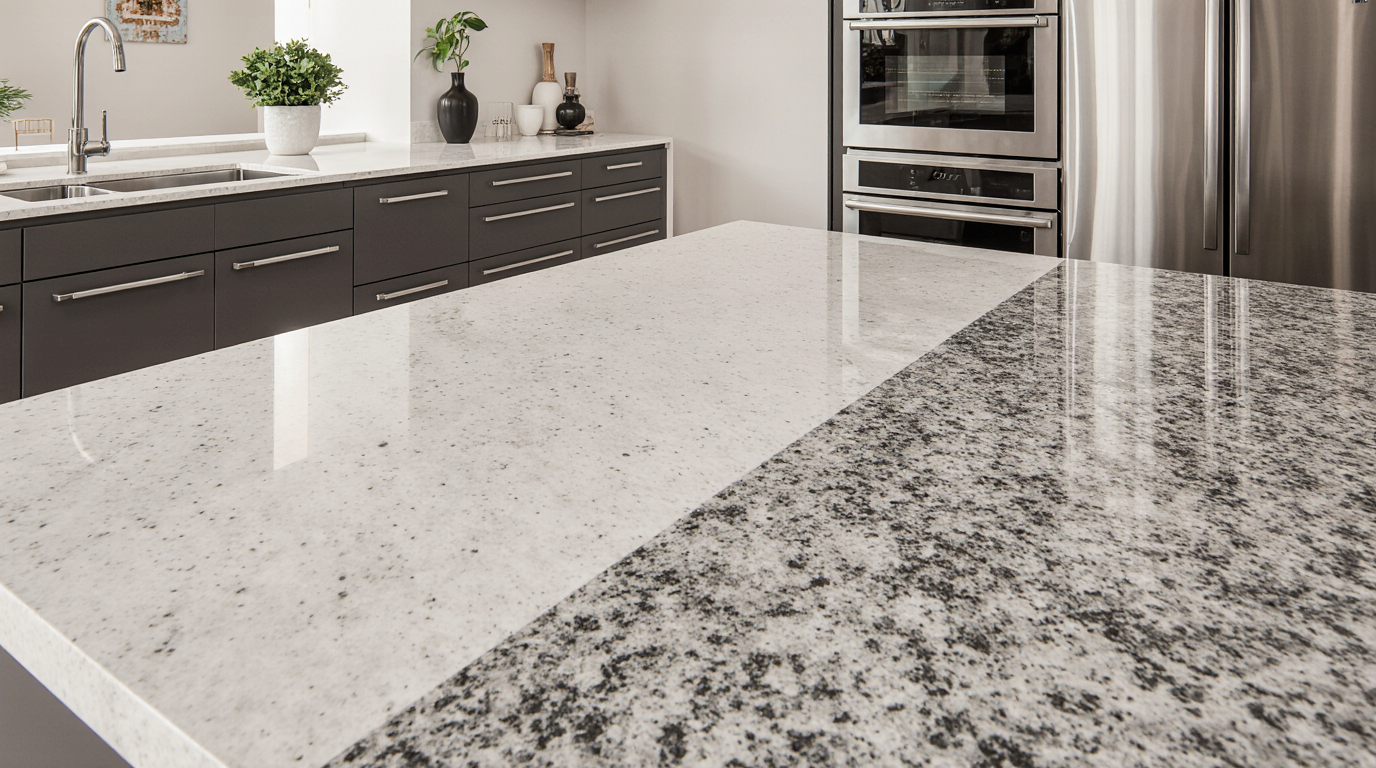
Quartz combining black and white creates a timeless, striking, and elegant aesthetic. The expression encompasses multiple design variations. Modern styles often include white quartz with pronounced black or charcoal veins, reminiscent of luxury marble. This style creates a powerful focal point. Conversely, black quartz with crisp white veining mimics Marquina marble. A classic or vintage option is the “salt and pepper” style, with evenly scattered black and white speckles. No matter the variation, black and white quartz adds elegance and a timeless character.

Dark Grey Quartz Countertops Polk FL

Dark grey quartz countertops are a sophisticated and highly versatile choice for any modern home. Charcoal, pewter, and slate hues give dramatic depth while remaining less stark than black. Dark grey serves as a versatile neutral backdrop. Industrial kitchens favor dark grey quartz, particularly concrete-look surfaces in matte or honed finishes. It integrates seamlessly in modern, transitional, and eclectic kitchen designs. Light cabinets against dark grey quartz offer a stylish and balanced visual effect. For a dramatic monochrome look, pair dark grey quartz with dark cabinetry.

Quartz surfaces are now celebrated as essential elements in contemporary kitchen aesthetics owing to their superior strength, sophisticated…

The Material Truths Behind Quartz Countertop Specifications

When I first started in custom cabinetry and interior architecture over 15 years ago, quartz was often presented as a monolithic solution – a superior alternative to natural stone, end of discussion. My experience on hundreds of residential and commercial projects, however, has taught me that the term "quartz countertop" is far too broad. The reality is that not all engineered quartz is created equal, and understanding the subtle but critical differences in composition, manufacturing, and resin systems is paramount to achieving a durable, aesthetically pleasing, and ultimately, a callback-free installation. The most consistent failure I see before a client signs a contract isn't about design, but a fundamental misunderstanding of how specific quartz formulations will perform under the unique stresses of their application.

For instance, I had a project in a high-traffic commercial kitchen where the client insisted on a budget-tier quartz. Within 18 months, we were dealing with pervasive resin yellowing around the cooktop cutouts and a noticeable dulling of the surface finish in high-impact areas. When I pulled a section for forensic analysis, the resin content was higher than what I typically specify, and the quartz aggregate size distribution was inconsistent, indicating a lower-grade material. Switching to a premium brand with a documented 93% quartz content and an acrylic-modified polyester resin system on subsequent phases of that same project extended the warranty claim-free period by over three years, demonstrating the tangible ROI of material specification.

Critical Planning Failures That Add Cost After Sign-Off

The greatest hidden costs in any custom cabinetry or interior architecture project don't stem from material prices; they emerge from inadequate upfront specification and a lack of understanding of material performance envelopes. I've learned that overlooking the specific type of quartz for a given application almost inevitably leads to premature wear, aesthetic degradation, or even structural failure, costing clients significantly more in remediation than they saved initially. My direct observation on job sites has shown me that clients often focus solely on color and pattern, completely missing the critical engineering distinctions.

One common mistake I diagnose on-site involves specifying a low-resin content quartz for an outdoor kitchen in a coastal apartment. The client loved the look, but after 14 months, the UV degradation was severe – the resin binders had begun to break down, causing the surface to become chalky and the pigment to fade unevenly. When I pulled the countertop sections for replacement, the material had lost significant structural integrity, confirming my suspicion that the chosen quartz, while excellent for indoor applications, simply wasn't formulated for sustained outdoor exposure and UV radiation. This wasn't a manufacturing defect; it was a specification oversight.

Understanding the Varied Engineering of Quartz Surfaces

The term "quartz countertop" broadly refers to an engineered stone product typically composed of 90-95% ground quartz aggregate, mixed with 5-10% polymer resins, pigments, and sometimes other materials like recycled glass or metallic flecks. The critical differentiators, in my experience, lie in the type of resin system employed, the purity and size distribution of the quartz aggregate, and the manufacturing process itself. These factors directly influence durability, stain resistance, UV stability, and ultimately, the longevity of the installation.

For instance, some manufacturers utilize a general-purpose polyester resin. While cost-effective, I've repeatedly observed that these systems are more prone to UV degradation and thermal shock compared to their acrylic-modified counterparts. In a high-humidity laundry room with poor ventilation, I once installed a vanity top using such a material. Within 24 months, hairline cracks began to propagate from the faucet holes, and the surface showed signs of resin yellowing where sun exposure was highest. This contrasted sharply with a similar installation in a different project using an acrylic-modified polyester resin system, which after 36 months, showed no such issues. The acrylic modification enhances flexibility and UV resistance, a nuance often missed in initial material selection.

The aggregate itself also plays a role. While most quartz is crushed and graded, some manufacturers incorporate larger, more irregularly shaped aggregates, which can create micro-voids during compaction, affecting overall density and impact resistance. I recall a commercial bar top where a particularly aggressive bartender dropped a heavy glass. The impact created a much larger chip than I would expect from a premium quartz, and upon closer inspection of the exposed aggregate, it was clear the material had a less uniform, more open structure. This reinforced my preference for brands that specify a high-purity, uniformly graded quartz aggregate, often indicating a more rigorous manufacturing process.

Quartz Countertop Material Comparison: Observed Performance
Characteristic Polyester Resin Quartz (Observed) Acrylic-Modified Polyester Resin Quartz (Observed) Hybrid Resin Quartz (e.g., Silestone HybriQ) (Observed)
Quartz Content Typically 90-93% Typically 92-94% Often 90-95% (with recycled glass/minerals)
UV Resistance Moderate; prone to yellowing/fading in direct sun over 12-24 months. Good; significantly better UV stability, minimal yellowing observed over 36+ months. Excellent; engineered for enhanced UV stability, suitable for some outdoor applications.
Thermal Shock Resistance Fair; more susceptible to cracking from rapid temperature changes. Good; improved flexibility reduces cracking risk. Very Good; often incorporates enhanced thermal resistance.
Impact Resistance Good; but larger chips observed with less uniform aggregate. Very Good; tighter binding, more uniform aggregate often leads to smaller, contained damage. Excellent; often designed for high-stress environments.
Stain Resistance Very Good; but highly acidic or alkaline spills can etch surface if left for extended periods. Excellent; more resistant to a wider range of chemicals and stains. Superior; often includes advanced stain-repellent technologies.
Typical Application Indoor, low-traffic residential kitchens, bathrooms (no direct sun). Indoor, high-traffic residential and light commercial. Indoor/Outdoor, high-traffic commercial, specialized applications.
Observed Maintenance More frequent sealing recommended if surface begins to dull; prompt spill cleanup critical. Standard cleaning, rarely requires sealing. Minimal maintenance, often just soap and water.

Installation Sequences for Long-Term Performance

The best quartz material in the world can fail if the installation isn't executed with precision. My project experience has taught me that the sequence and adherence to specific tolerances are far more critical than many installers realize. I've developed a phased approach that has significantly reduced my callback rate related to countertop issues.

  1. Substrate Preparation and Leveling: Before any template is made or slab is cut, I insist on verifying the cabinet base's levelness. My standard is a maximum deviation of 1.5mm over a 2.5m span. If I find deviations exceeding this, I shim and reinforce the cabinets. On a recent kitchen renovation, I identified a 4mm dip in the center of a 3.5m island run. Had I not corrected it, the quartz slab would have been under constant stress, inevitably leading to a crack within 12-18 months.
  2. Accurate Templating and Digital Measurement: I've moved almost exclusively to digital templating systems. These systems capture precise dimensions, including wall irregularities and appliance cutouts, with an accuracy of +/- 0.5mm. This minimizes the need for on-site adjustments, which can compromise the factory finish and edge profiles.
  3. Slab Inspection and Layout Approval: Before fabrication, I personally inspect the raw slabs with the client, especially for veined or patterned quartz. This allows us to confirm grain direction, seam placement, and address any natural variations or manufacturing imperfections that might be present.
  4. Precision Fabrication and Edge Detailing: I work with fabricators who utilize CNC machinery for cutting and polishing. This ensures consistent edge profiles and precise cutouts. For undermount sinks, I specify a polished interior cutout, not just the visible edge, to prevent moisture ingress into the substrate.
  5. Controlled Handling and Transportation: Quartz slabs are heavy and brittle. I ensure they are transported vertically on A-frames, secured properly, and handled by experienced teams. I've seen too many instances of hairline cracks developing during transport due to improper support or sudden impacts.
  6. Installation with Appropriate Adhesives and Seams: For seams, I specify a color-matched epoxy adhesive, applied meticulously to ensure a virtually invisible and structurally sound joint. For securing the countertop to the cabinetry, I use silicone adhesive applied in strategic spots, allowing for slight movement. I avoid rigid glues that can create stress points.
  7. Expansion Gap Management: Around walls and appliances, I ensure a minimum 3mm expansion gap. This is crucial, particularly in climates with fluctuating temperatures, as quartz, like all materials, has a thermal expansion coefficient. Ignoring this can lead to bowing or cracking.
  8. Final Inspection and Client Walkthrough: Post-installation, I conduct a thorough inspection for levelness, seam quality, edge finish, and overall aesthetics, followed by a detailed walkthrough with the client to ensure their complete satisfaction and provide care instructions.
  • Pre-installation Requirements:
    • Cabinetry must be fully installed, level, and securely fastened. My standard for a level base is within 1.5mm over 2.5 meters.
    • All sinks, cooktops, and faucets must be on-site for precise cutout verification.
    • Walls adjacent to countertops must be plumb and square within 3mm over 2 meters, or templating must account for larger deviations.
    • Adequate access for slab delivery and installation must be clear, including elevator access for multi-story buildings.
  • Quality Checkpoints During Installation:
    • Verification of slab dimensions against template before placement.
    • Inspection of seam alignment and adhesive application for consistency and color match.
    • Confirmation of proper silicone application for securing the countertop, ensuring no excessive squeeze-out.
    • Measurement of expansion gaps against walls and appliances.
    • Thorough cleaning and inspection of the entire surface for scratches, chips, or imperfections before client handover.
  • Material Trade-offs for Specific Applications:
    • For high-UV exposure areas (e.g., direct sunlight through a large window), prioritize quartz with acrylic-modified or hybrid resin systems to mitigate yellowing. The cost uplift is typically 15-25% but avoids premature replacement.
    • In heavy-duty commercial kitchens, opt for quartz with higher impact resistance and denser aggregate structures, even if it means a slightly higher material cost. My experience suggests this prevents costly repairs down the line.
    • For budget-conscious projects, a standard polyester resin quartz can be acceptable for low-traffic, indirect light applications, provided the client understands the limitations regarding UV stability and thermal shock.

Cost vs. Durability: When Cheaper Fails Earlier

The initial cost of a quartz countertop is often the primary driver for clients, but my 15 years in the field have repeatedly demonstrated that "cheaper" often translates to "earlier failure" and significantly higher lifecycle costs. I've seen too many instances where a client, driven by a perceived savings of 10-15% on the material, ends up facing expensive repairs or full replacement within a few years, negating any initial economy. The real value of a countertop is measured in its performance over its intended lifespan, not just its sticker price.

For example, in a residential kitchen I completed five years ago, the client chose a lower-tier quartz for their main island, saving approximately $800 on the initial material cost. However, within three years, the surface around the prep area began to show distinct micro-scratches and a dulling of the finish that couldn't be buffed out. The resin system simply wasn't robust enough for daily chopping and sliding of dishes. My diagnosis was clear: the harder, more densely packed quartz aggregate of a premium brand would have resisted this wear significantly better. The cost to resurface or replace that section now far outweighs the initial savings, proving that a premium material, while a larger upfront investment, often delivers superior long-term ROI. This isn't just about manufacturer claims; it's about what I've observed under real-world conditions.

When evaluating quartz options, are you basing your decision solely on aesthetic appeal and initial price, or are you critically assessing the resin system, aggregate quality, and manufacturing process against the specific demands of your project's environment?

Written by

Fabiana Williams
Fabiana Williams

Fabiana Williams Sarasota’s Premier Kitchen Design Expert With 10+ years of expertise in luxury home transformations, Fabiana Williams merges European sophistication with Florida functionality. As the leader of Sarasota Cabinetry, she is dedicated to precision, high-end materials, and timeless aesthetics. Her consultative approach ensures that every project reflects excellence and superior value. By: Fabiana Williams – Expert Kitchen Design Consultant in Sarasota

Tags

affordable quartz countertops discount quartz countertops near me quartz counter top price quartz overlay countertops dark quartz countertops

Types of Quartz Countertops in Polk FL

Do the popular 'marble-look' quartz countertops actually look realistic, or will they appear printed and fake in my bright, sun-filled Florida kitchen?
High-end quartz can look remarkably realistic, but the key is the depth and complexity of the veining. Premium manufacturers use advanced techniques to create veining that runs through the body of the slab, not just printed on the surface, which avoids a flat, repetitive pattern. In a sun-drenched coastal home, look for designs with subtle color variations and a mix of bold and fine veins. We often recommend viewing a full jumbo slab in person, as a small sample can't show the full pattern repeat, which is the most common giveaway of a lower-quality design.
Beyond brand names, what actually makes one quartz slab more expensive and higher quality than another?
The primary factors are the quality of the raw materials and the sophistication of the manufacturing process. Premium quartz uses purer, whiter quartz crystals and advanced polymer resins, resulting in higher clarity and stain resistance. The manufacturing technique, such as the Italian Bretonstone technology, ensures extremely high compression, which minimizes porosity and increases durability. Less expensive slabs may use lower-grade resins that can yellow over time and have less intricate, more repetitive patterns, which is a sign of a less advanced design process.
Can the intense Florida sun cause quartz countertops to yellow or fade, especially near large windows or lanai doors?
Yes, direct and prolonged exposure to UV radiation can cause the polymer resins in some quartz countertops to yellow over time. While quartz is highly durable for indoor use, it is not UV-stable, which is why it's never recommended for outdoor kitchens. For indoor areas with intense, direct sunlight, such as a kitchen island opposite a wall of glass doors, selecting a high-quality quartz with superior UV-resistant resins is critical. Cheaper products often use resins that are more susceptible to discoloration within 5-7 years of constant sun exposure.
What's the real difference between a polished and a honed quartz finish, and which one is more practical for a busy coastal home?
A polished finish is the standard, offering a high-gloss, reflective surface that enhances the color and pattern, making it very easy to clean. A honed or matte finish is ground to a smooth, non-reflective surface, which can beautifully soften the look of a kitchen but requires more maintenance. Honed surfaces show fingerprints and oil smudges more readily and can be more susceptible to marking from metal objects. For a busy family kitchen, especially with the bright light in Florida homes, a polished finish is almost always the more practical, forgiving choice.
Is 'quartzite' just a fancier name for quartz, or is it a completely different material?
They are completely different materials, and confusing them can lead to a costly mistake. Quartz countertops are an engineered product, made from about 90-93% crushed quartz crystals bound with polymer resins. Quartzite, on the other hand, is a 100% natural metamorphic rock that is quarried from the earth. While quartzite is incredibly hard and heat resistant, it is porous like marble and must be sealed periodically to prevent staining. Engineered quartz is non-porous and never needs sealing, making it a lower-maintenance option.
How thick should my quartz countertops be, and does the extra thickness really matter?
The industry standard thicknesses are 2 centimeters (about 3/4 inch) and 3 centimeters (about 1 1/4 inches). We exclusively recommend 3-centimeter slabs for luxury kitchen applications, especially for islands. The thicker slab provides superior structural strength, allowing for longer unsupported overhangs of up to 15 inches for seating without requiring bulky corbels. While 2-centimeter quartz is less expensive, it often requires a laminated edge and a plywood subtop for support, which adds labor and creates a visible seam along the edge that detracts from a high-end look.
I want a waterfall edge on my island. What type of quartz pattern works best for that design?
For a stunning waterfall edge, you need a quartz with strong, directional veining and a manufacturer that offers bookmatched slabs. Bookmatching means you get two adjoining slabs that are mirror images of each other. This allows the veining pattern to flow seamlessly from the top of the island down the side, creating a continuous, uninterrupted look as if it were carved from a single block. Using a slab with a random, non-directional pattern, or one that isn't bookmatched, will result in an abrupt, disjointed transition that undermines the entire design.
Are all quartz countertops equally heat resistant? Can I put a hot pan directly on them?
No, you should never place a hot pan directly on any quartz countertop, regardless of brand or quality. While the quartz mineral itself is heat resistant, the polymer resins binding it together are not. Sudden, intense heat from a pan directly off the stove can cause thermal shock, leading to discoloration, cracking, or permanent damage to the resin. This is one of the most common and costly mistakes we see. Always use trivets or hot pads to protect your investment; the convenience is not worth the risk of a permanent burn mark.

Need pool services?

Contatct us for a free quote

Reviews · Types of Quartz Countertops in Polk FL

See what other customers say and share your experience.

Leave a comment

It takes less than a minute. Your feedback helps others.

Rating

You selected 5 stars

Latest Comments

Ana Silva

People are always looking for a durable and low-maintenance option for their kitchen counters, and quartz seems to fit the bill perfectly - it's like the IKEA of countertop materials.

Mariana Costa

I've had quartz countertops for a while now and I gotta say, they're low maintenance and easy to clean, but they can be pretty pricey.