Price of Granite Countertops: Ultimate Guide for Your Kitchen or Bathroom
Grasping the cost dynamics of granite countertops is crucial for homeowners planning a kitchen or bathroom enhancement with a resilient and aesthetically striking material. Granite remains one of the most sought-after materials for countertops due to its unmatched combination of luxury, strength, and timeless appeal. Granite pricing fluctuates greatly based on variables like grade, hue, source, slab thickness, and the intricacy of craftsmanship. Granite countertops not only enrich the visual landscape of a space but also contribute to long-term property value, validating the investment.
Granite’s formation from volcanic processes creates a natural stone with unmatched patterns and structural uniqueness. Each slab exhibits distinctive veining and color variations, making every countertop one-of-a-kind. Granite sourced from foreign locations like Brazil, Italy, or India can be pricier due to scarcity and shipping expenses. Domestic granite provides a cost-effective alternative, maintaining high durability and appealing aesthetics.
Thickness significantly impacts granite pricing. Premium 3-centimeter thick slabs provide a more opulent look compared to standard 2-centimeter options. Thicker granite requires more material and labor, naturally increasing costs. Detailed edge finishes such as ogee or bullnose add labor-intensive costs compared to basic straight edges.
The installation process is a major contributor to granite countertop expenses. Expert fabricators measure, cut, polish, and secure slabs to ensure durability and seamless alignment. Personalized cutouts for sinks or stoves require expert work, raising installation fees. Opting for skilled installers mitigates risks and prolongs countertop lifespan, justifying the cost.
Ongoing care influences the long-term value and appearance of granite. While durable against damage, granite requires sealing to preserve resistance to moisture and bacteria. Investing in periodic sealing ensures decades of pristine appearance at minimal expense. Dense-grain granite diminishes maintenance requirements, providing long-term cost efficiency.
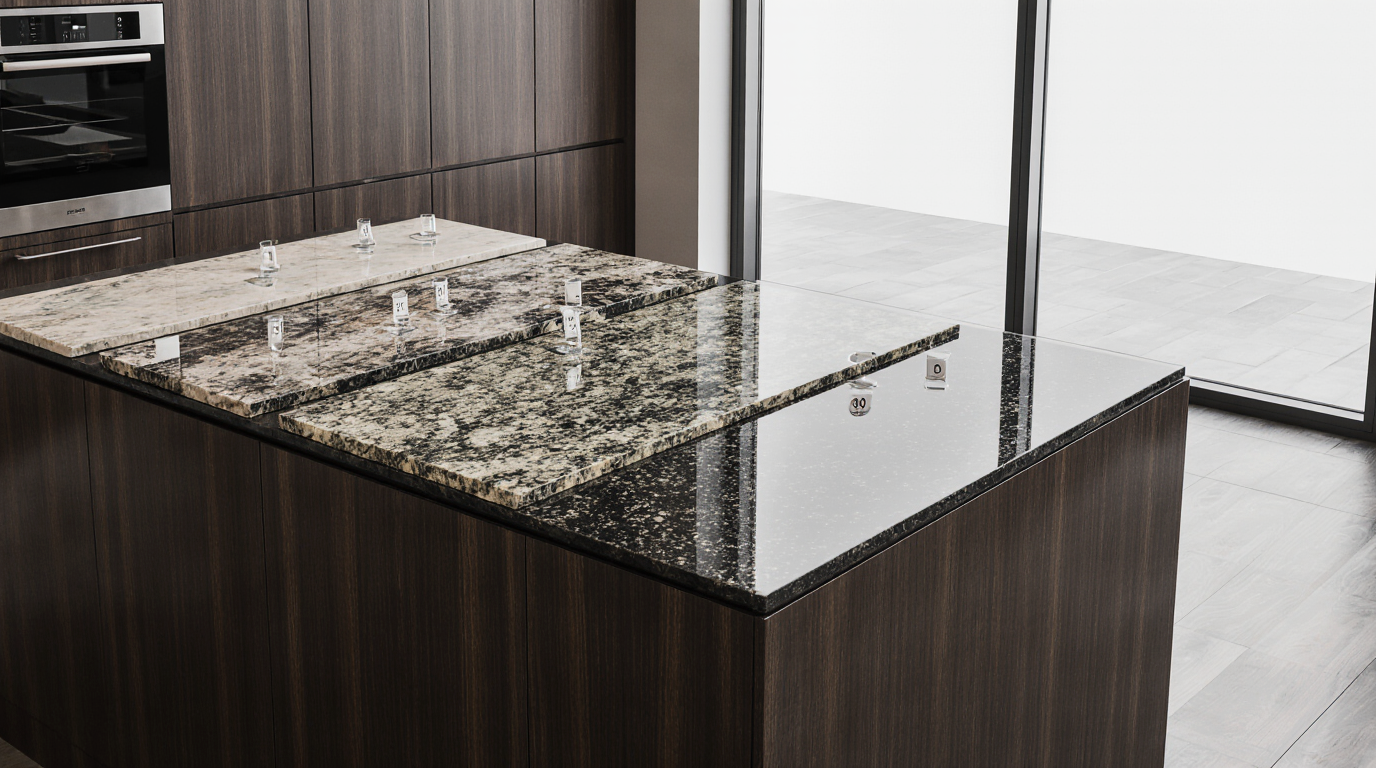
The hue and pattern of granite slabs play a key role in determining cost. Classic monochromatic tones are often budget-friendly and adaptable to varied designs. Exotic or multi-tonal granite with bold veining, like Blue Bahia or Red Dragon, commands higher prices. Matching slabs for extensive projects increases cost if multiple pieces are needed for uniformity.
The surface area of countertops is a primary factor in total granite expenditure. Larger or irregular layouts require additional granite and labor, increasing the investment. Intricate countertops demand meticulous installation, boosting overall pricing. Quotes typically factor in slab dimensions, edges, and installation complexity for transparency.
Evaluating granite versus other surfaces underscores its premium pricing and long-term benefits. While initial costs for alternatives can be lower, granite longevity and resilience provide cost-effectiveness. Natural patterns and luxurious appearance make granite a premium selection among countertop materials.
Granite costs reflect the combined effect of stone grade, craftsmanship, installation, and upkeep. Price scales with stone quality, rarity, and level of professional workmanship. Choosing quality slabs, skilled installers, and proactive maintenance guarantees durability and appeal.
The price of granite countertops is shaped by origin, thickness, color, edge style, installation, and upkeep. Analyzing these variables ensures a countertop that meets both budget and quality expectations. Well-planned granite selection delivers unmatched luxury, strength, and long-term return.