Exploring Custom Bathroom Cabinet Costs: Key Determinants of Price and Excellence
When it comes to custom bathroom cabinets, homeowners often find themselves navigating a wide range of price points, materials, and design possibilities, recognizing that the investment goes beyond mere aesthetics—it directly impacts functionality, durability, and the overall value of the bathroom renovation. Recognizing what drives cabinet costs entails valuing expert construction, tailored layouts, and fine attention to personalized specifications. Contrary to off-the-shelf solutions, custom cabinetry adapts precisely to your space, storage needs, and aesthetic desires while showcasing unmatched craftsmanship.
Among the foremost determinants of cabinet pricing is the choice of high-quality materials, premium woods like cherry, walnut, maple, or solid hardwood significantly raise investment levels thanks to their resilience, enduring beauty, and upscale appeal. Conversely, engineered materials such as MDF or plywood offer versatility and aesthetic options while maintaining budget-conscious pricing. The choice of materials dictates both pricing and longevity, particularly in damp spaces where moisture-resistant compositions preserve both form and function.
Customization level significantly influences the overall investment required for bespoke cabinetry, fully bespoke solutions crafted to exact measurements can feature tailored storage, integrated lighting, and unique functional additions like pullouts or hampers. Custom features contribute to seamless functionality and elevate the overall luxury appearance of the bathroom. Semi-custom cabinets, on the other hand, offer moderate flexibility in sizing and finishes at lower cost but lack the meticulous attention to detail of fully bespoke designs. Full customization empowers homeowners to align every detail with their vision, ensuring the bathroom reflects their personal style and functional preferences.
Finishing options represent a pivotal factor in determining bespoke cabinetry costs, meticulous hand-applied stains or paints demand higher investment because of the skilled labor and materials involved. Lacquer coatings achieve sophisticated, smooth surfaces yet rely on precise craftsmanship for a pristine finish. Applying custom tints, distressed effects, or protective sealants for humid environments may add to total costs. Premium finishing techniques contribute to enduring aesthetics and a sophisticated, spa-like environment.
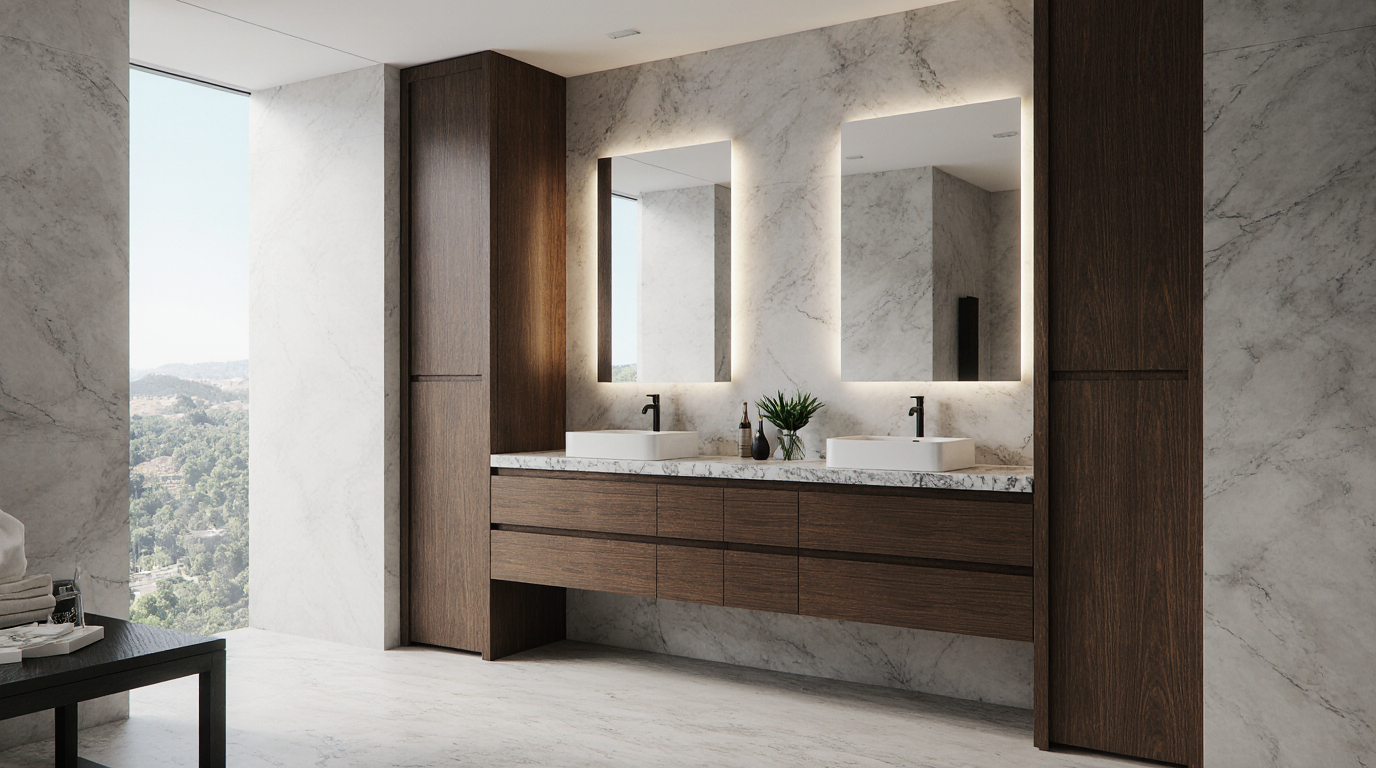
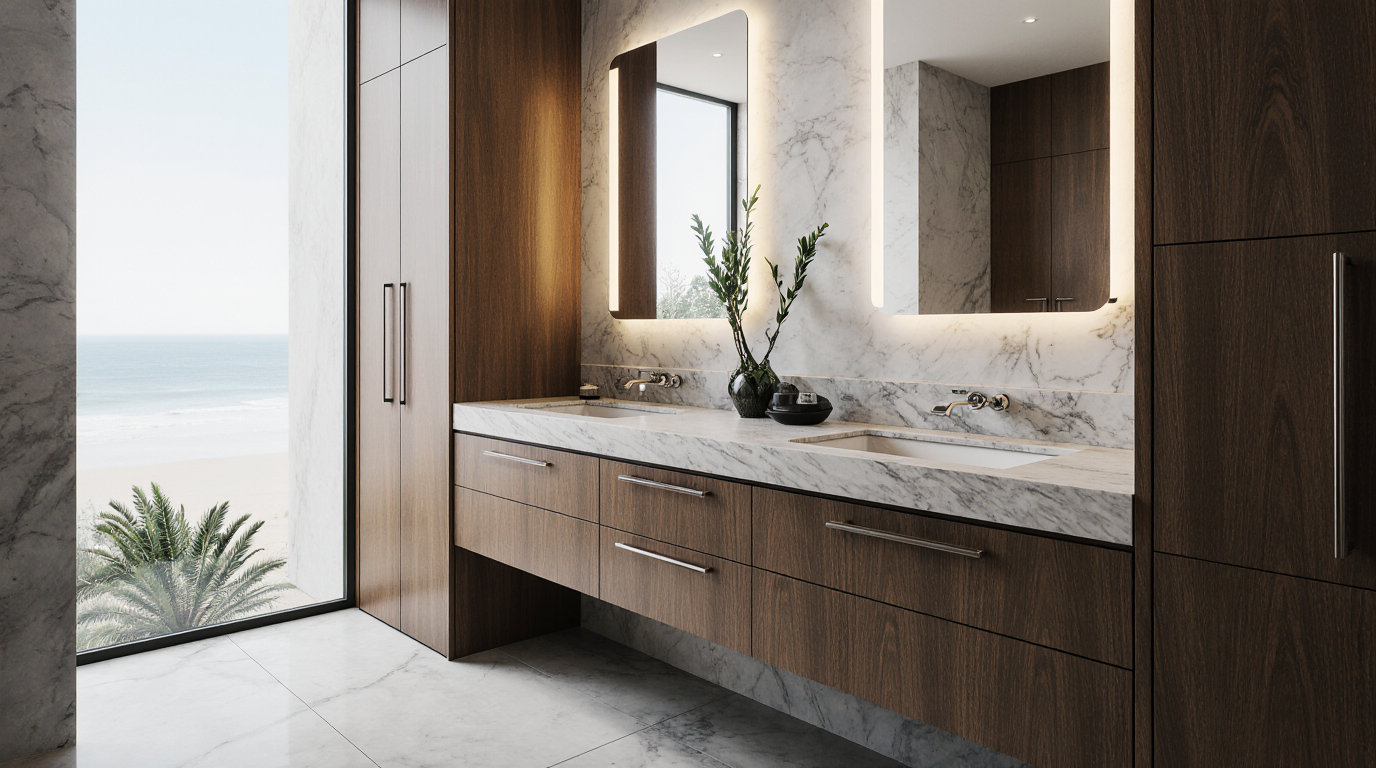
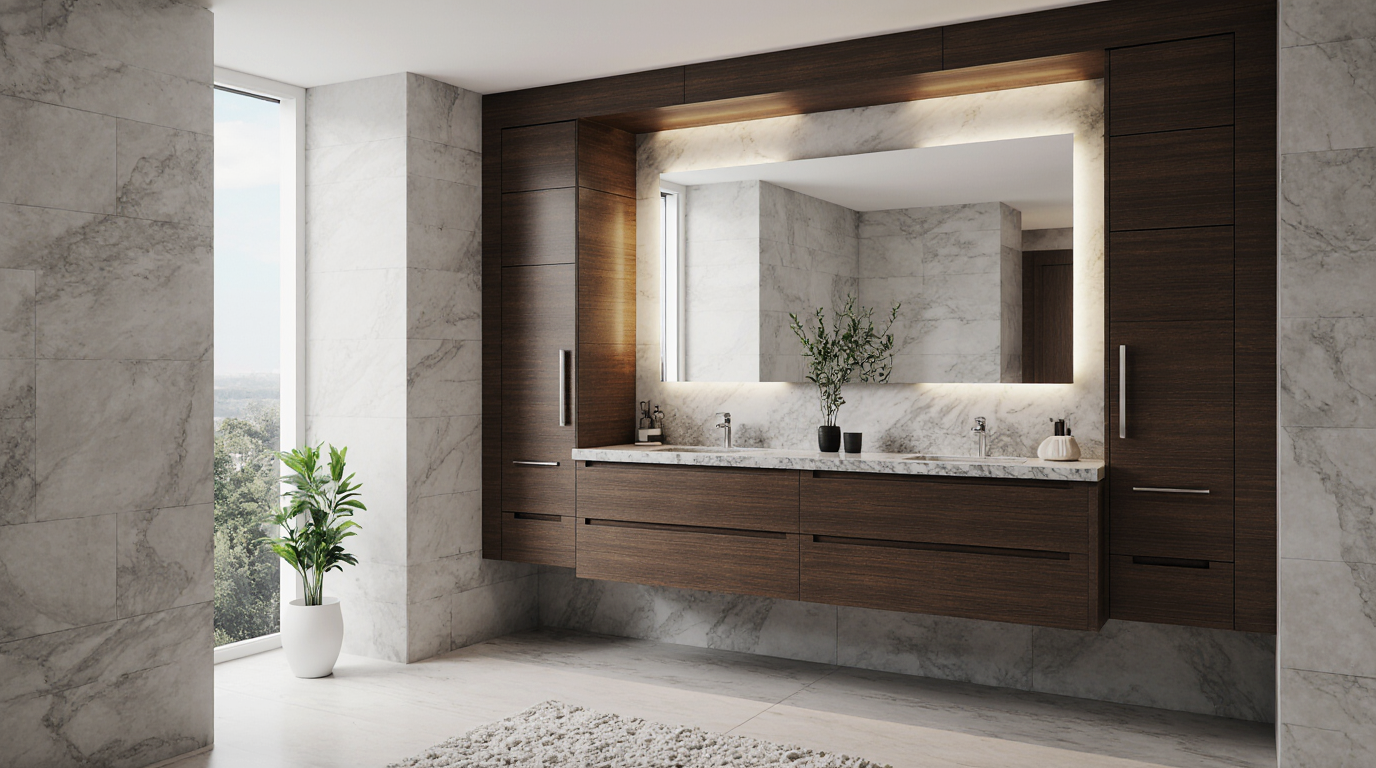
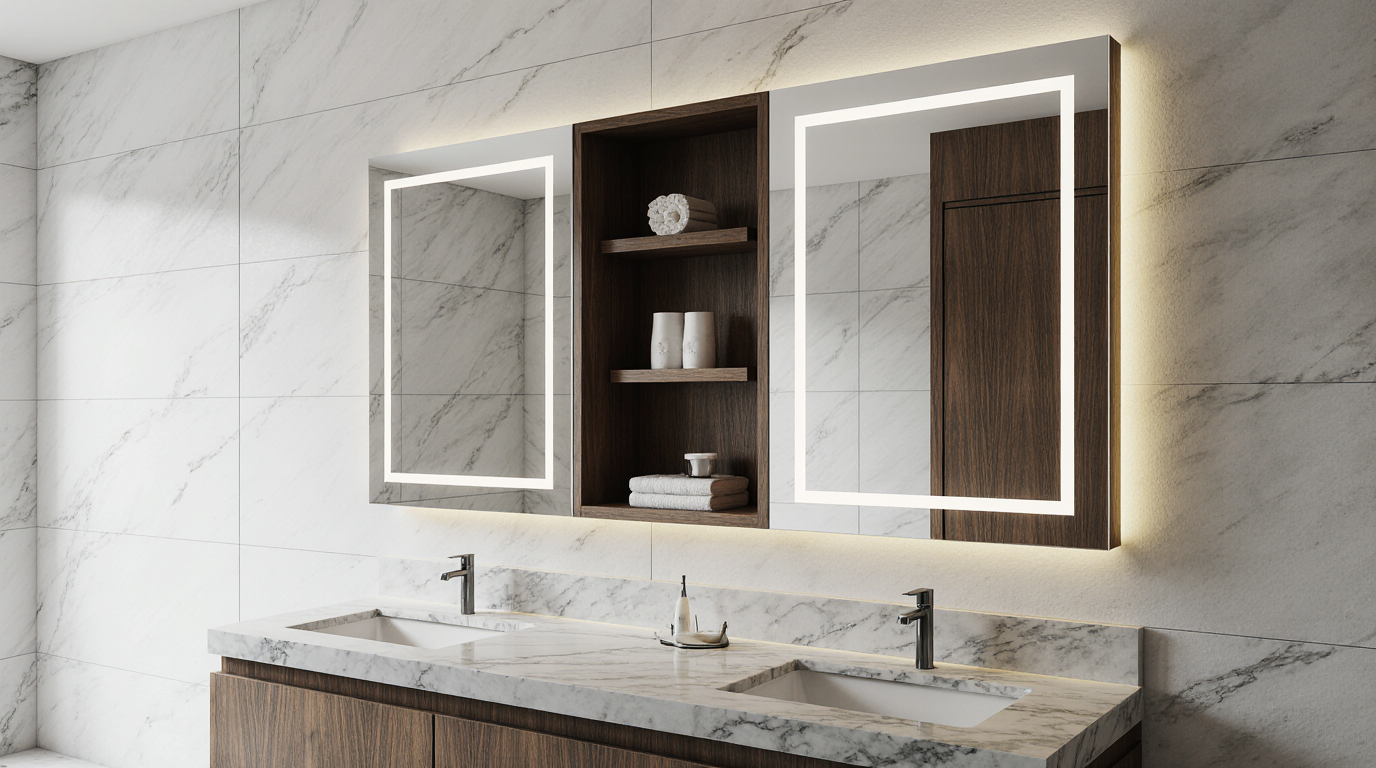
Complex design elements significantly affect the investment required for bespoke cabinets, with elaborate features like curved edges, inset doors, and decorative moldings requiring greater craftsmanship and time. Even modern, flat-front styles demand careful execution to ensure flawless alignment and finish. Advanced custom elements such as floating vanities, integrated mirrors, and wall-to-wall cabinetry can further raise costs due to specialized installation and structural support needs. For many homeowners, these enhancements justify the investment, converting functional spaces into luxurious, spa-inspired retreats.
The expertise of artisans significantly impacts pricing for bespoke cabinets, because expert labor guarantees flawless execution and enduring cabinet performance. The process involves meticulous planning, expert material handling, and flawless installation. Metropolitan regions often experience higher labor rates, while smaller locales may reduce costs. Quality workmanship delivers timeless elegance, structural integrity, and optimal cabinet performance.
The scale of the bathroom and the amount of cabinetry required influence final investment, compact bathrooms typically demand a single vanity, whereas master suites often include extensive cabinetry and organizational features. Each additional piece increases both material and labor expenses. In extensive renovations, detailed collaboration ensures cabinetry accommodates plumbing, lighting, and ventilation systems efficiently. Working with skilled designers reduces costly adjustments and maintains seamless aesthetics.
Location and scope of the project further influence pricing, cities with elevated costs of living usually reflect higher project pricing. Adjustments to utilities during renovation contribute additional costs. Green materials and finishes may require specialized sourcing and treatments, increasing price but enhancing environmental impact.
Choosing high-quality hardware can noticeably influence total investment, hardware quality directly affects smooth operation, tactile experience, and long-term durability. Specialized hardware coatings enable precise aesthetic alignment with overall décor. Even minor investments in top-grade hardware yield substantial improvements in function and style.
Effective budgeting requires understanding typical price ranges. Regional variation, design complexity, and craftsmanship level affect these estimates. Working closely with experienced professionals guarantees optimized aesthetics and budget adherence.
Understanding the enduring impact of custom cabinets is critical, beyond visual appeal, they increase perceived luxury and home value. Custom cabinets optimize organization, ergonomics, and space efficiency, improving everyday functionality. Timeless designs and durable materials ensure that investments provide value for decades.
Fully grasping the expense of bespoke cabinets entails understanding the determinants of price, quality, and usability, from material choice and finishes to design intricacy and craftsmanship. Although cheaper alternatives exist, tailored cabinetry turns conventional bathrooms into exclusive, customized havens. Those prioritizing both practicality and design excellence find that custom cabinetry delivers unmatched long-term value.