Understanding the Cost of Custom Bathroom Cabinets: What Influences Price and Quality
For those considering bespoke bathroom cabinets, homeowners must carefully traverse a multitude of pricing tiers, material choices, and design configurations, understanding that the financial commitment extends past appearance, significantly influencing usability, long-term resilience, and renovation ROI. Grasping the real expense involves appreciating the level of artisanal skill, exacting design standards, and custom features that transform a bathroom into a bespoke environment. Unlike prefabricated options, custom cabinets are built to perfectly fit your layout, storage requirements, and style preferences with unparalleled attention to detail.
Material choice remains a decisive element in determining the cost of bespoke bathroom cabinetry, with high-end options such as solid wood, walnut, cherry, or maple elevating costs due to superior durability, longevity, and luxurious finishes. Conversely, engineered materials such as MDF or plywood offer versatility and aesthetic options while maintaining budget-conscious pricing. Material selection directly impacts not only cost but also performance in humid environments, making moisture-resistant options a wise investment for maintaining structural integrity and long-term beauty.
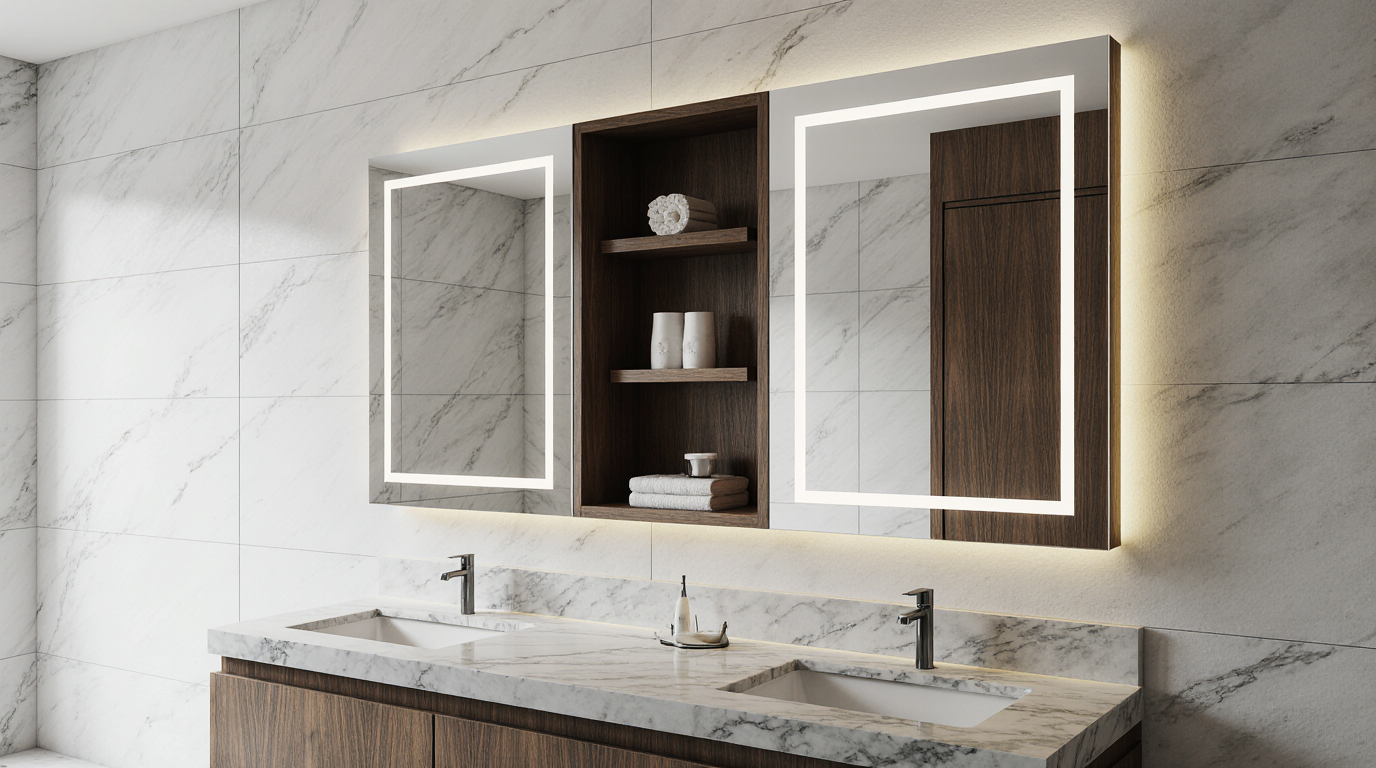
Customization level significantly influences the overall investment required for bespoke cabinetry, with fully custom cabinets designed from scratch according to exact specifications and capable of including built-in hampers, drawer organizers, under-sink pullouts, or integrated lighting. Custom features contribute to seamless functionality and elevate the overall luxury appearance of the bathroom. By contrast, semi-custom options allow some degree of adjustment but do not match the uniqueness or precision of entirely custom cabinetry. Choosing fully tailored solutions allows exact alignment with the homeowner’s aesthetic and practical priorities, creating a bathroom that is truly unique.
Cabinet finish selection can dramatically influence the overall price of custom bathroom installations, with hand-painted or stained finishes raising costs due to labor intensity and material quality. Lacquered surfaces provide a sleek modern appearance but necessitate expert application for flawless results. Enhanced coatings, bespoke hues, and protective finishes designed for wet conditions often drive the pricing higher. Premium finishing techniques contribute to enduring aesthetics and a sophisticated, spa-like environment.
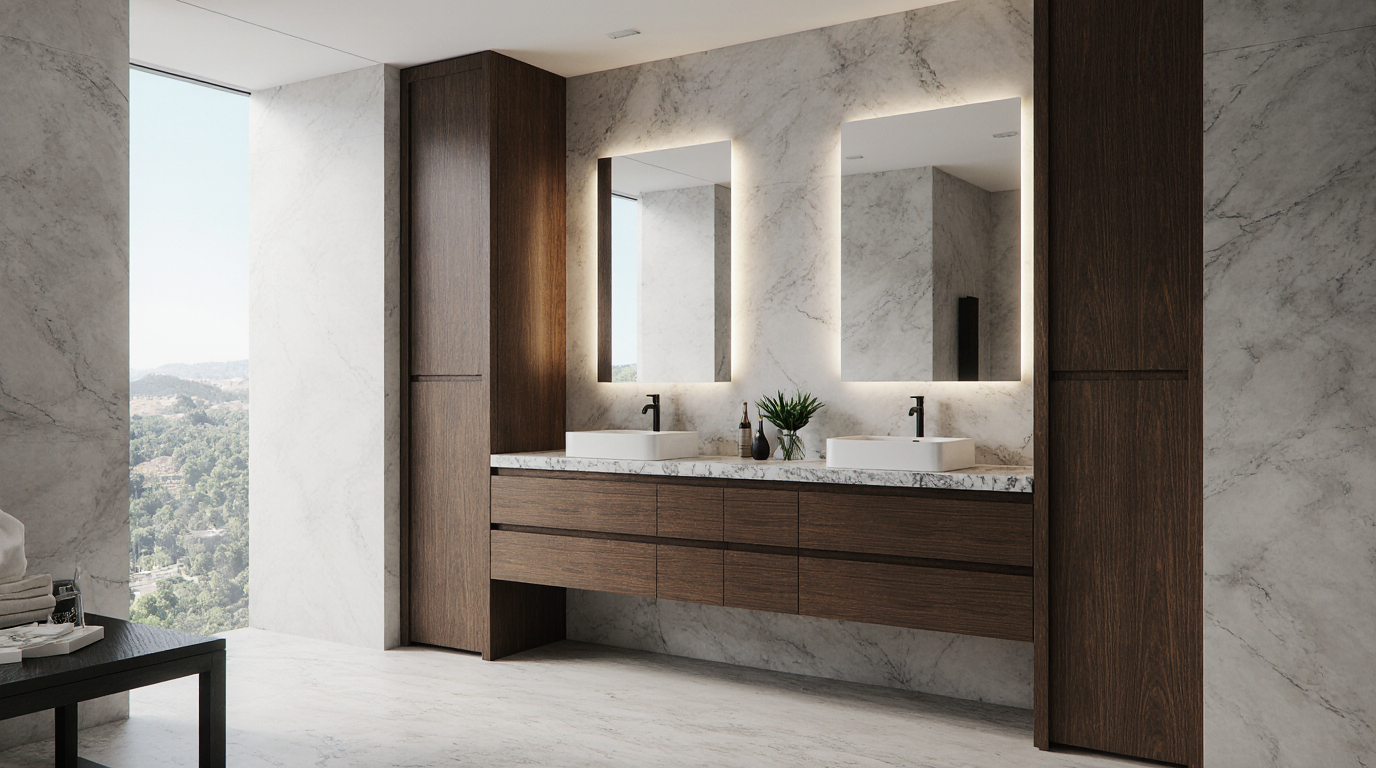
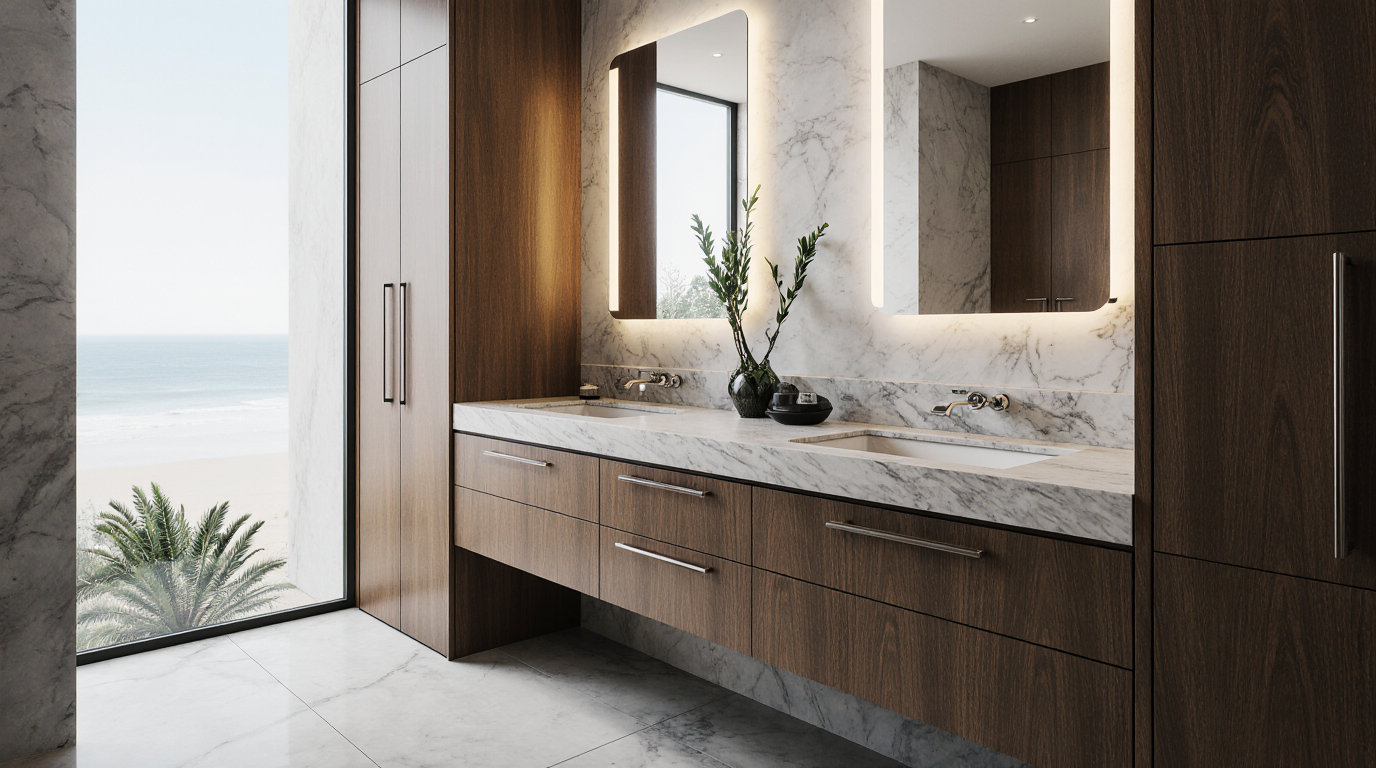
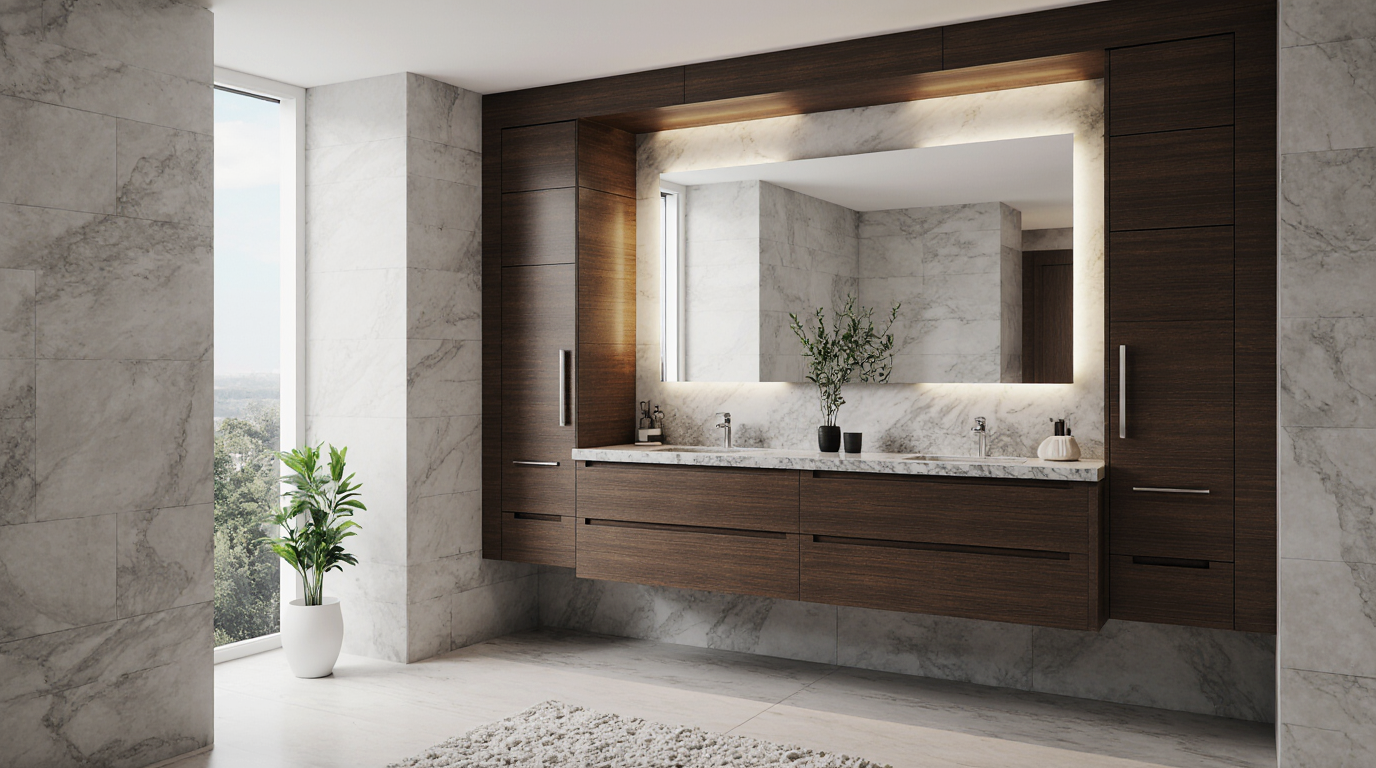
Design complexity directly influences the cost of custom bathroom cabinets, with elaborate features like curved edges, inset doors, and decorative moldings requiring greater craftsmanship and time. Minimalist designs, although generally less expensive, still require precision to achieve seamless results. Advanced custom elements such as floating vanities, integrated mirrors, and wall-to-wall cabinetry can further raise costs due to specialized installation and structural support needs. Many consider these upgrades worthwhile, transforming standard bathrooms into elegant, high-end sanctuaries.
The expertise of artisans significantly impacts pricing for bespoke cabinets, with professional artisans guaranteeing that each component aligns with precise quality benchmarks. Work encompasses detailed planning, cutting, surface finishing, and accurate fitting. Urban areas typically incur elevated labor expenses, whereas smaller markets may offer more affordable skilled labor. Despite higher upfront costs, skilled labor ensures long-term durability, aesthetic perfection, and cabinetry functionality.
Room dimensions and the number of cabinets play a significant role in pricing, with small guest bathrooms needing minimal cabinetry while master bathrooms may require multiple vanities, storage towers, and makeup stations. Adding units naturally elevates both production and installation costs. Larger bathrooms require careful collaboration between designers, plumbers, and electricians to ensure perfect fit around fixtures and utilities. Working with skilled designers reduces costly adjustments and maintains seamless aesthetics.
Geography and project scale affect custom cabinet costs, with metropolitan areas typically seeing higher labor rates and material markups. Projects requiring system modifications may increase total investment. Eco-friendly or sustainable options such as bamboo, reclaimed wood, or low-VOC finishes slightly raise costs but provide long-term benefits.
Hardware selection is a subtle yet significant contributor to overall cost, hardware quality directly affects smooth operation, tactile experience, and long-term durability. Bespoke hardware options provide tailored elegance, integrating seamlessly with design schemes. Even minor investments in top-grade hardware yield substantial improvements in function and style.
Considering cost brackets aids in realistic financial planning for cabinetry. These figures fluctuate according to geographic, design, and workmanship factors. Partnering with skilled designers produces stunning results while maintaining financial control.
Assessing the lasting benefits of bespoke cabinetry adds perspective, in addition to design impact, they elevate home marketability and investment return. Bespoke solutions provide superior storage, intuitive layouts, and ergonomic use, enhancing daily life. High-quality, classic materials maintain both elegance and utility over time.
Fully grasping the expense of bespoke cabinets entails understanding the determinants of price, quality, and usability, including selection of wood, coatings, design complexity, and artisanal skill. While prefabricated options may seem tempting, the true value of custom cabinetry lies in transforming a standard bathroom into a uniquely personal sanctuary. Homeowners pursuing ultimate style and usability benefit greatly from the unique advantages of bespoke cabinets.